Lung cancer surgery that protects every breath you have.
The chest holds the organs we can't spare casually — so thoracic surgery is measured in breaths kept, not just tumours removed. Keyhole-first technique, honest staging before any operation, and support for quitting smoking that never carries a whiff of judgment.
Cancers of the chest
Thoracic oncology covers lung cancer, mediastinal masses and thymoma, pleural disease including mesothelioma, and chest wall tumours. Lung cancer remains among India's commonest — and its early symptoms are easy to blame on cough, cold or “smoker's wheeze” until months have passed.
The modern standard here is a keyhole-first philosophy: VATS (video-assisted thoracoscopic surgery) removes lung tumours through small incisions instead of spreading the ribs — meaning less pain, fewer complications and better tolerance of further treatment afterwards.
Two promises frame this speciality: every operation is planned around the breathing you'll live with afterwards, and anyone who smokes gets cessation support as part of care — without judgment. You already know it's harmful; our job is to help, not to lecture.
“શ્વાસ એ જીવન છે.” (Breath is life.) Every surgical decision in this speciality begins from that sentence.
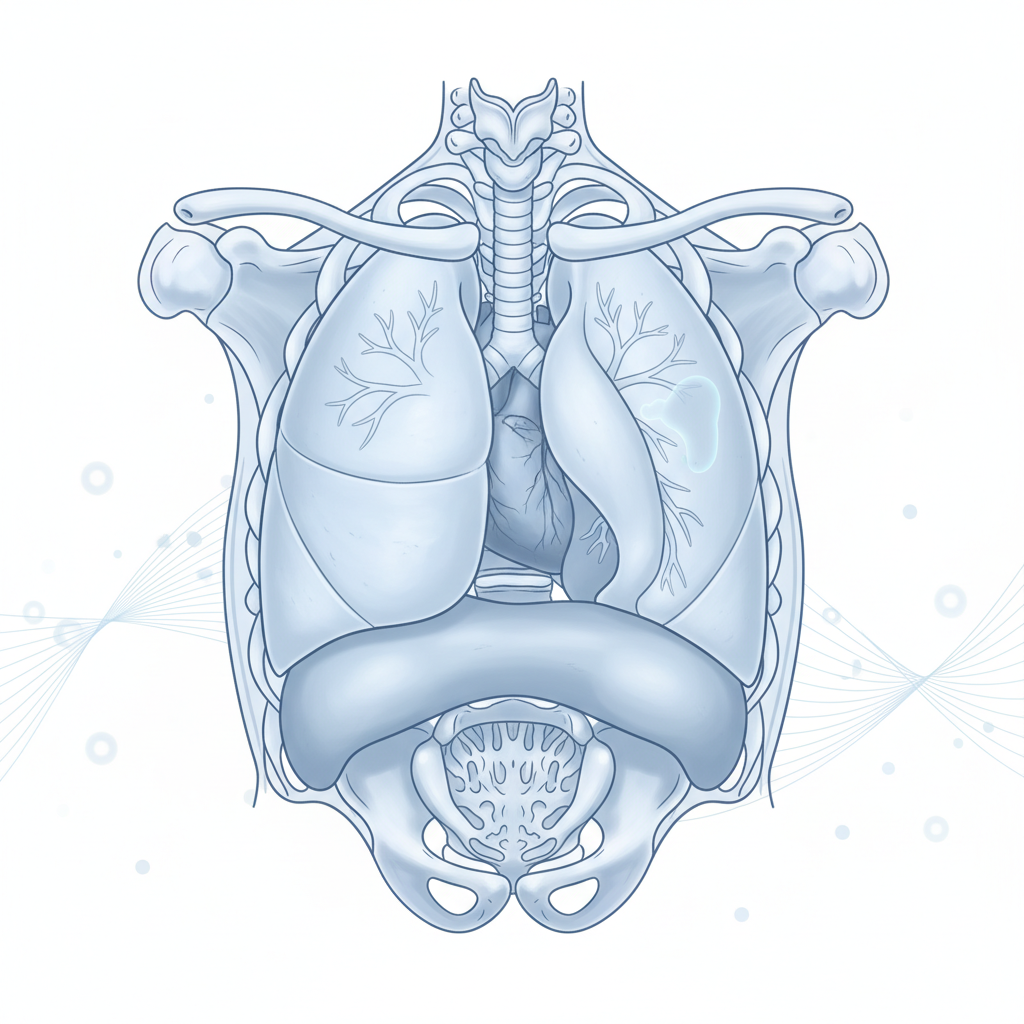
Warning signs of the chest
A cough outliving a cold by three weeks deserves a chest X-ray at minimum — whatever your age, whatever your habits.
- ①A cough lasting more than three weeks, new or changed in character.
- ②Breathlessness that's changing — climbing stairs harder than last season.
- ③Blood-streaked sputum, even once, even a single streak.
- ④Chest pain on one side, constant or worse with deep breaths.
- ⑤New hoarseness without cold or shouting — a nerve signal from the chest.
- ⑥Pneumonia recurring on the same side — an infection that keeps returning to one spot needs explanation.
- ⑦Finger clubbing — fingertips rounding like drumsticks, often unnoticed until pointed out.
- ⑧A shadow on any routine X-ray, even without symptoms — bring the film, not just reassurance.
Cancers we treat in the chest
◆Early Lung Cancer
Nodules and stage-I disease — VATS lobectomy or segmentectomy keeping healthy lung untouched.
◆Locally Advanced Lung Cancer
Sleeve resections and combined plans that avoid removing a whole lung wherever possible.
◆Mediastinal Masses & Thymoma
Tumours between the lungs, excised through minimal-access routes where suitable.
◆Pleural Disease & Mesothelioma
Diagnosis established properly, fluid controlled durably, treatment coordinated honestly.
◆Chest Wall Tumours
Resection with reconstruction restoring both protection and appearance of the chest.
◆Recurrent Chest Fluid
Pleurodesis so effusions stop returning and lungs stay expanded between treatments.
Operations performed here
- ✿VATS lobectomy & segmentectomyKeyhole removal of the tumour-bearing lobe or segment — the default consideration here.
- ✿Open lobectomy / pneumonectomyKept for when they're genuinely indicated, not when keyhole merely feels unfamiliar.
- ✿Sleeve resectionsAirway reconstruction that removes central tumours while saving lung tissue a pneumonectomy would take.
- ✿Thymectomy & mediastinal excisionMasses between the lungs removed with careful nerve and vessel protection.
- ✿PleurodesisDurably sealing the chest lining against recurring fluid.
- ✿Chest wall resection & reconstructionRestoring structure after tumour removal, planned with reconstructive colleagues.
From first visit to full recovery
Listen first
Your cough, your X-ray history and your worries heard fully — including the fear of what smoking history means.
Biopsy done right
Almost always first — through the airway or chest wall, so the operation never starts uninformed.
Honest staging
PET-CT and scans map everything, including nodes — because surprises belong in reports, not operations.
Lung maths
Function tests confirm how much lung can go and how well the rest will carry you.
The operation
VATS keyhole wherever safe; open when wise. Breathing exercises begin the same evening.
Life after
Surveillance scans, quitting support that respects you, and a return to stairs without counting them.
Families usually ask…
For most early lung cancers, VATS gives equal cancer clearance with less pain, shorter stay and faster return to chemotherapy if needed. Open surgery still wins for some large or central tumours. The choice follows your scan findings, not fashion — and you'll see the reasoning written down.
This is exactly why lung-function testing comes before any decision. Most patients having a lobe removed breathe comfortably in daily life afterwards; segmentectomy preserves even more. What changes is reserve — sprinting feels different. Stairs, markets, festivals and life generally do not.
Almost always, yes. Imaging can suggest cancer but cannot name it — and different tumours need entirely different operations and drugs. The rare exceptions are discussed openly when they apply. A biopsy takes minutes; operating blind costs weeks.
Node-positive disease usually means chemotherapy or radiation joins the plan — often before surgery shrinks the tumour. It changes sequence more than hope: combined-modality treatment exists precisely for this situation, and results are far better than families fear.
No. Half our thoracic patients share this history, and lecturing helps nobody's lungs. Quitting support is offered as part of treatment — because it measurably improves surgery outcomes — delivered the way we'd speak to family: practically, kindly, without a syllable of shame.