From food pipe to rectum, treated keyhole-first.
GI cancer surgery is measured in millimetres of margin and centimetres of bowel kept. The standard here: sphincters preserved wherever safely possible, stomas avoided unless truly needed, recovery made shorter than you expect.
What are GI cancers?
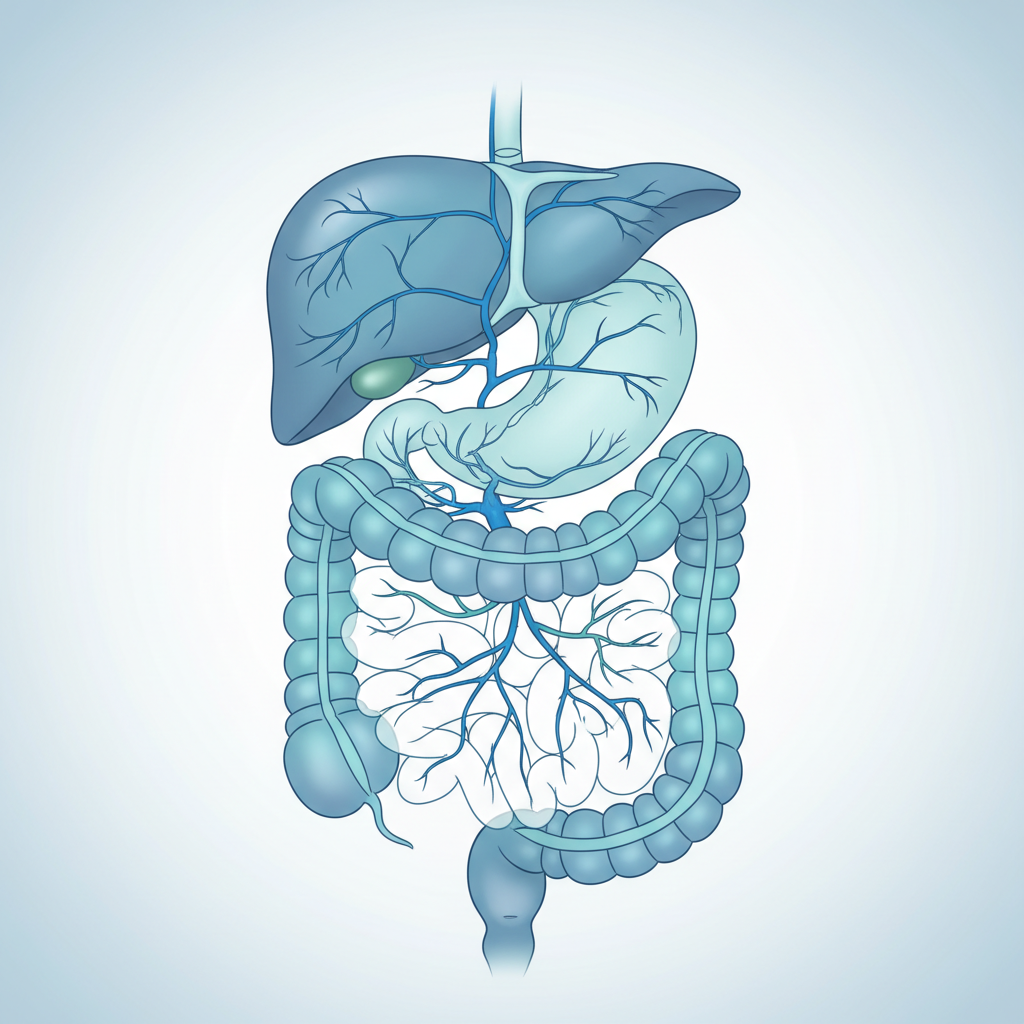
They arise along the digestive tract — oesophagus, stomach, colon, rectum, anal canal and small bowel — and on the peritoneal lining of the abdomen. Many announce themselves quietly: a changed bowel habit, an anaemia found on a routine test, indigestion that no longer settles.
The encouraging part is how much surgery has improved. Where once a large incision was the only route, most of these operations can now be done keyhole — smaller cuts, less pain, faster return to chemotherapy when it is needed.
The rule worth remembering. Any new change in bowel habit lasting beyond four weeks, or blood in the stool, deserves investigation at any age — not only after fifty.
Signs that deserve investigation
Individually these are common complaints; together, or persisting, they are reasons to look properly. Most will be innocent. The ones that are not are why we investigate.
- ①Difficulty swallowing, or food seeming to stick.
- ②Persistent indigestion that does not settle with routine treatment.
- ③Persistent vomiting, or early fullness when eating.
- ④An altered bowel habit lasting more than four weeks.
- ⑤Blood in the stool, or black stools.
- ⑥Unexplained weight loss without dieting.
- ⑦Unexplained anaemia found on a blood test.
- ⑧A lump felt in the abdomen.
Cancers treated here
◆Oesophagus
Food-pipe cancers, staged precisely and often treated with chemotherapy before surgery.
◆Stomach
Gastric cancer managed with D2 gastrectomy — the oncologically complete operation.
◆Colon
Right hemicolectomy and sigmoid colectomy with complete mesocolic excision, keyhole where suitable.
◆Rectum
Sphincter-preserving low anterior resection wherever the tumour allows it.
◆Anal Canal & Small Bowel
Rarer sites handled with the same staging discipline and honest planning.
◆Peritoneal Surface Malignancy
Directed along structured HIPEC referral pathways rather than left unaddressed.
Operations performed here
- ◆OesophagectomyRemoval and rebuilding of the food pipe; minimally invasive where suitable.
- ◆Gastrectomy — subtotal & totalWith D2 lymph node clearance performed as standard, not on request.
- ◆ColectomyRight hemicolectomy and sigmoid colectomy with complete mesocolic excision.
- ◆Sphincter-preserving rectal surgeryLow anterior resection — the permanent bag avoided wherever safely possible.
- ◆APR when requiredAbdominoperineal resection reserved for tumours that truly demand it.
- ◆HIPEC coordinationPeritoneal disease channelled into established cytoreduction–HIPEC pathways.
From first visit to full recovery
Endoscopy & biopsy
The diagnosis established through the scope, not assumed from symptoms.
Staging scans
CT, MRI or PET map depth, nodes and spread before anything is promised.
Tumour board review
Whether chemotherapy comes before or after surgery is decided upfront.
Surgery
Laparoscopic or robotic where suitable; open when open is better.
Recovery & nutrition
Diet rebuilt stepwise; stoma teaching if a stoma proves necessary.
Surveillance
Scopes and scans on schedule — recurrence found early is still treatable.
Questions families ask first
In many rectal and colon cancers, no — sphincter-preserving techniques remove the need entirely. When a stoma is genuinely the safer choice, it is explained clearly beforehand, and many are reversible.
Smaller cuts mean less pain, fewer wound complications, a shorter stay and a quicker return to chemotherapy if it is needed. The cancer operation itself follows the same oncological rules either way.
Small frequent meals, rebuilt stepwise with dietetic guidance. Most patients return to a full, satisfying diet — different in rhythm, not in pleasure.
Because the right operation depends on depth and spread, not on urgency. Operating before proper staging is how the wrong operation gets done. A few well-spent days make surgery safer.
Always. Sometimes the advice confirms your current plan — and that certainty is worth the visit. Bring the reports; we will tell you plainly what we would do and why.