Treating the cancer and honouring the person, in the same operation.
Oncoplastic technique means the two goals are never traded against each other: clear margins first, a natural appearance preserved alongside. Most early breast cancers can be treated without removing the breast.
What does modern breast surgery mean?
That removing the whole breast is no longer the default. For most early cancers, a lumpectomy with oncoplastic reshaping achieves the same cure with the breast preserved. Where mastectomy is genuinely the safer choice, skin-sparing and nipple-sparing techniques keep options open.
The armpit is handled with equal restraint: a sentinel node biopsy answers the nodal question through the smallest possible operation, sparing the shoulder and arm the older, heavier surgeries.
The quiet advantage. Pathology reports return quickly here, so decisions about further treatment are made on facts, within days — not left hanging for weeks.
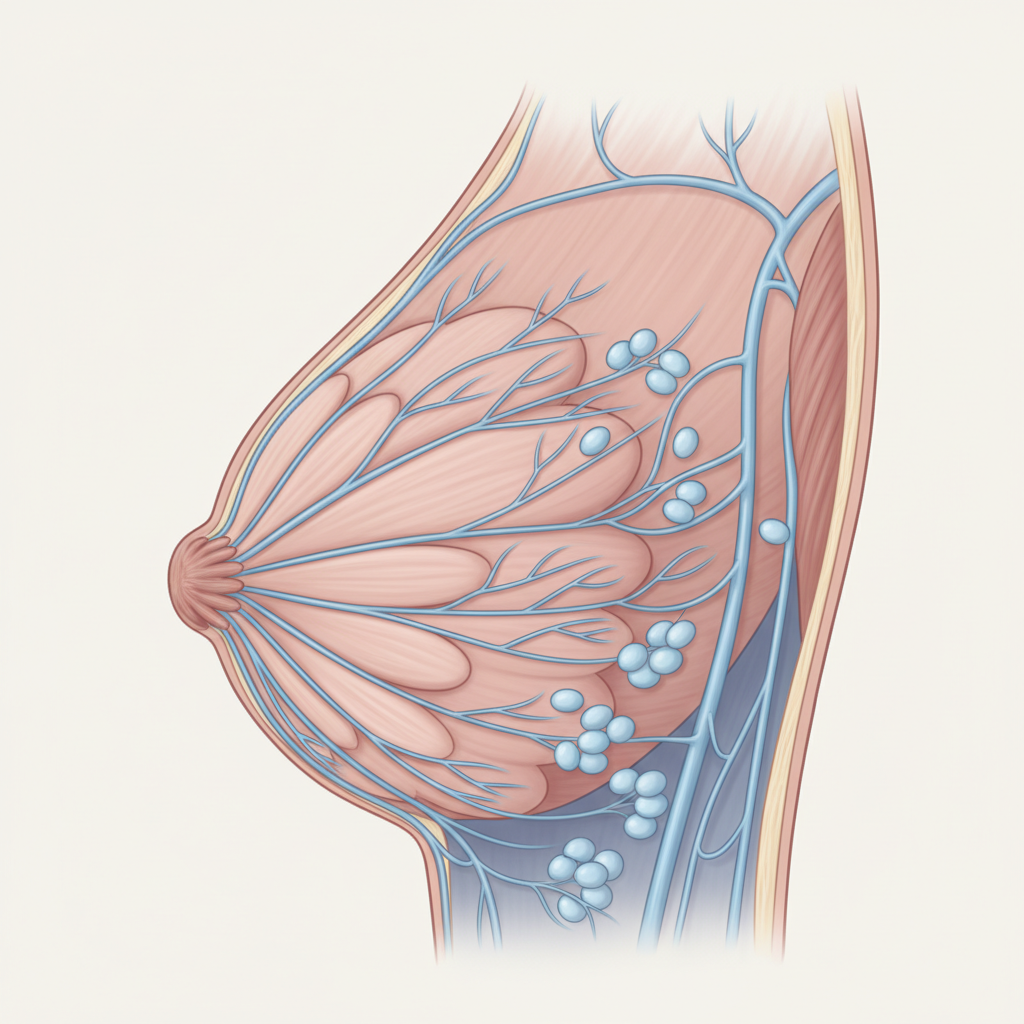
Signs that deserve examination
Most breast changes are not cancer. But every new change deserves a proper look — because the ones that matter are easiest to treat when they are found small.
- ①A painless lump in the breast — the commonest first sign.
- ②Skin dimpling, like the texture of an orange peel.
- ③The nipple beginning to pull inward, or changing direction.
- ④Blood-stained discharge from the nipple.
- ⑤A change in the size or shape of one breast.
- ⑥New asymmetry between the breasts that was not there before.
- ⑦A lump or swelling in the armpit (axilla).
- ⑧Redness or scaling on the nipple or skin that does not settle.
Cancers & conditions treated here
◆Early Breast Cancer
Conservation suitable for most early tumours — clearance and appearance addressed together.
◆Locally Advanced Breast Cancer
Treatment sequenced with medical and radiation oncology so surgery lands at the right moment.
◆Mastectomy Options
Simple, skin-sparing and nipple-sparing approaches — chosen for safety first, appearance close behind.
◆Axillary Node Disease
Sentinel node biopsy and axillary dissection, kept as light as the pathology allows.
◆Benign Breast Lumps
Assessed properly, removed neatly when needed — and often simply watched, honestly.
◆Reconstruction Coordination
Planned with plastic-surgery colleagues so nothing is decided in haste.
Operations performed here
- ◆Breast conservation surgeryLumpectomy with oncoplastic reshaping — cancer clearance and a natural result in the same operation.
- ◆MastectomySimple, skin-sparing and nipple-sparing variants where oncologically safe.
- ◆Sentinel lymph node biopsyThe armpit answered through the smallest possible surgery.
- ◆Axillary dissectionComplete nodal clearance when pathology genuinely requires it.
- ◆Rapid pathology reportsMargins confirmed quickly, so decisions are never left hanging.
- ◆Fertility & family planning counsellingHeld with young women before treatment choices are fixed — not after.
From first visit to full recovery
Triple assessment
Examination, imaging and biopsy aligned — a diagnosis built on evidence.
Staging scans
The full picture established before any decision is made.
Tumour board review
Medical and radiation oncology weigh in before surgery, not after.
Surgery
Oncoplastic technique chosen for your cancer and your body.
Recovery
Physiotherapy begins early; drains, dressings and doubts are managed personally.
Surveillance
Scheduled reviews and imaging catch anything new while it is small.
Questions families ask first
For most early cancers, yes — survival is equivalent in large studies. What differs is follow-up and sometimes radiation. When conservation is not the right choice for your tumour, you will be told exactly why.
It depends on size, grade, nodes and receptor status — not on habit. Some small cancers need none at all. The decision is made on your final pathology, explained line by line.
Oncoplastic technique exists precisely for this — reshaping the remaining tissue so the result looks and feels natural. It is not cosmetic surgery added on; it is part of how the operation is done.
Conservation surgery: usually two to three weeks. Mastectomy: three to four, earlier for desk work. You receive a written recovery plan before admission.
No — but treatment sequencing matters, which is why fertility counselling happens before decisions are locked in. Options exist, and they are discussed openly and early.