Keyhole lung surgery that protects every remaining breath.
Lung, mediastinum, pleura, chest wall. VATS lobectomy and segmentectomy through small incisions — chosen because lung function is a budget you spend only once.
What is thoracic cancer?
Lung cancer rarely hurts early — it borrows symptoms you would blame on weather or age: a cough crossing three weeks, breathlessness changing pace, pneumonia returning to the same side.
When surgery is the treatment, the philosophy is simple: remove the diseased part, defend the rest. VATS lobectomy or segmentectomy through keyhole incisions means less pain, faster mobilisation and more lung left doing its job afterwards.
Smokers are met without lectures here — quitting support is folded into treatment quietly, because outcomes improve either way.
● Biopsy-first is the rule of this department: no lung is removed on suspicion alone.
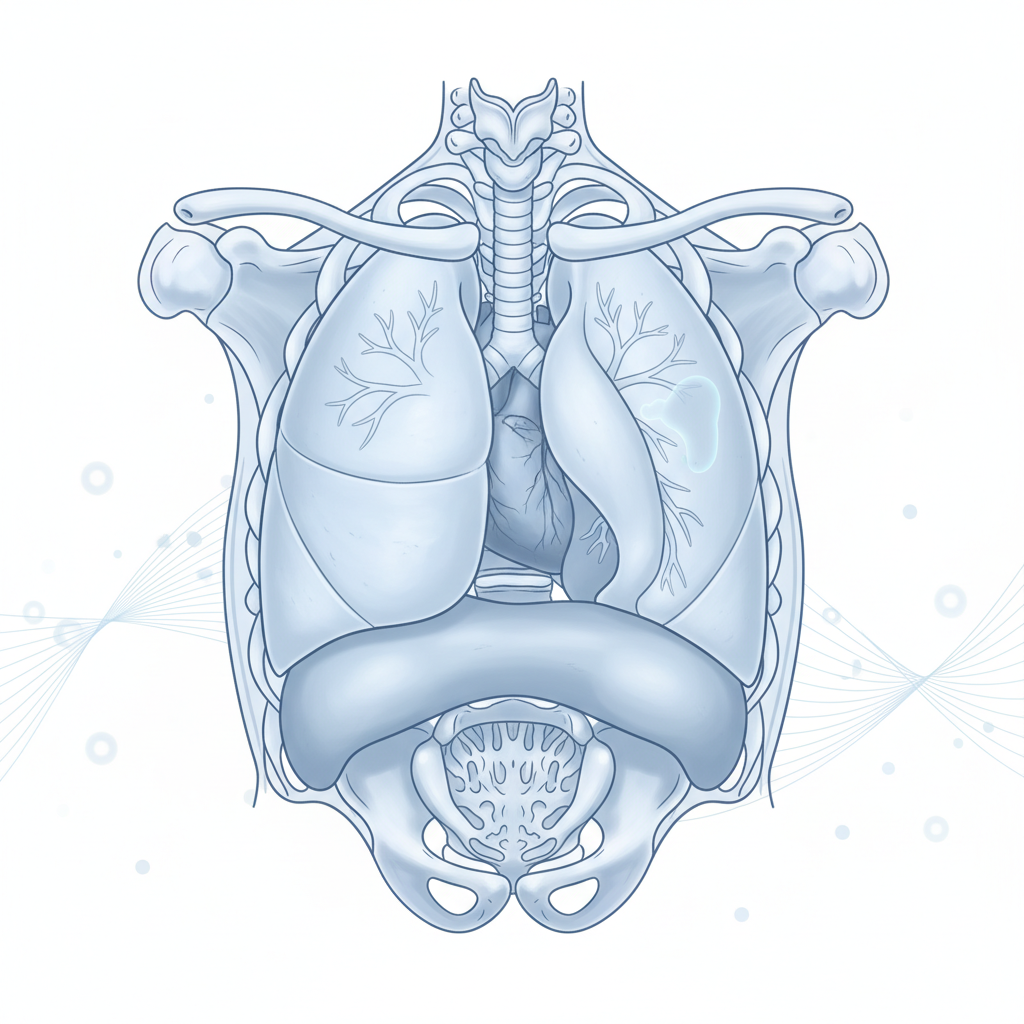
Eight signs your chest is raising
One persistent symptom past three weeks earns an examination and a scan. Most causes are benign — that is what the scan is for.
- ①A cough that crosses three weeks without settling.
- ②Breathlessness changing pace — stairs getting shorter.
- ③Blood-streaked sputum, even once.
- ④Chest pain localised to one side, persistent.
- ⑤New hoarseness.
- ⑥Pneumonia recurring on the same side.
- ⑦Finger clubbing — nails curving unusually at the tips.
- ⑧A shadow on a routine X-ray — bring the film; nodules earn answers.
Conditions this department treats
◆Lung Cancer
Lobectomy and segmentectomy — VATS first wherever anatomy allows.
◆Mediastinal Masses & Thymoma
Thymectomy and excision via approaches matched to anatomy.
◆Pleural Disease & Mesothelioma
Diagnosis, pleurodesis, coordinated multimodal care.
◆Chest Wall Tumours
Resection and reconstruction in the same sitting.
◆Recurrent Pleural Effusion
Pleurodesis to stop fluid refilling the chest.
◆Lung Nodules
Surveillance or resection — decided on evidence, not anxiety.
Operations performed here
- ◆VATS lobectomyKeyhole removal of a lung lobe — less pain, earlier discharge, same cancer operation.
- ◆VATS segmentectomyEven more lung saved — suited to small, early lesions.
- ◆Open lobectomy / pneumonectomyReserved for anatomy that genuinely demands it.
- ◆Sleeve resectionsThe airway rebuilt so healthy lung below the tumour survives.
- ◆Thymectomy & mediastinal mass excisionCleared with nerve-and-vessel precision.
- ◆Chest wall resection & reconstructionRemoved and rebuilt in one operation.
From first visit to full recovery
- 10:00
First consultation
Scans read together on screen; pulmonary function tested before any promises.
- 08:12
Staging & board
Biopsy and node mapping completed; oncology colleagues weigh in on sequence.
- 13:26
The operative decision
Keyhole versus open, lobe versus segment — argued on your own numbers.
- 09:15
Surgery
VATS ports or open incision exactly as planned the day before.
- 06:04
Day-one rounds
Chest drains charted, breathing exercises led by physiotherapy, corridor walks encouraged.
- 17:40
Home & surveillance
Discharge criteria met, drain out, scan calendar issued.
Families usually ask…
When anatomy allows, VATS delivers the same cancer operation with smaller wounds and easier breathing afterwards. Open surgery is not inferior — it is simply reserved for when it is the right tool.
Most single-lobe patients return comfortably to everyday activity; the remaining lung compensates, especially with physiotherapy and stopping smoking. Your own lung-function numbers set the honest expectation.
Yes, in almost every case — no lung is removed on suspicion alone. Tissue confirms the type and guides the entire plan, including targeted therapies when applicable.
Then treatment may combine surgery with chemotherapy or immunotherapy, sequenced by the board — sometimes before the operation, sometimes after. Nodal status changes the order of events, rarely the resolve.
No — you will meet support, not judgment. Quitting around surgery lowers complications, so help is offered either way, and eligibility rests on the disease and your fitness, not your history.