Cancer clearance and the person in the mirror — planned in the same conversation.
Conservation or mastectomy, sentinel-node staging, reconstruction coordination — decided with rapid pathology reports and unhurried counselling, never by defaults.
What does breast surgery decide?
Breast cancer begins when cells in the ducts or lobules divide beyond control. Surgery answers two questions at once: how completely the cancer is cleared — and how much of the breast, its shape and its skin, remains.
Oncoplastic technique treats those as one question, not two. Lumpectomy reshaped in the same sitting; mastectomy with skin-sparing or nipple-sparing options where safe. The goal decades out is a chest you can look at without flinching.
For young women, fertility and family-planning counselling comes before treatment starts — because chemotherapy timing changes decisions that cannot be unmade later.
● Rapid pathology keeps decisions moving while you are still on the ward — not weeks later.
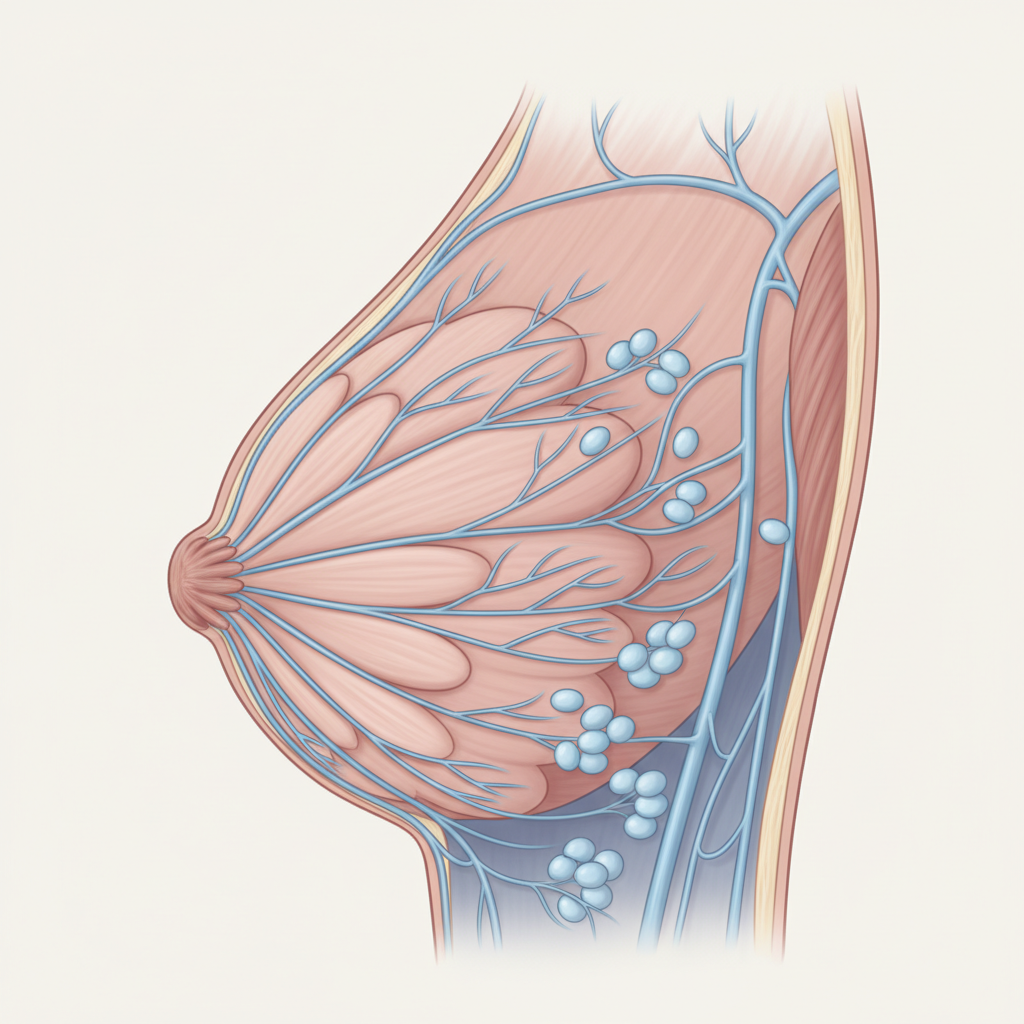
Eight signs worth an examination
Most will be innocent. The discipline is checking promptly anyway — early breast cancer announces itself quietly.
- ①A painless lump in the breast — the one women most often wait on.
- ②A lump in the armpit that stays beyond a couple of weeks.
- ③Skin dimpling — the texture of orange peel.
- ④A nipple beginning to pull inward (retraction).
- ⑤Blood-stained discharge from the nipple.
- ⑥A change in the size or shape of one breast.
- ⑦New asymmetry that was not there before.
- ⑧Any change lasting beyond a cycle — small does not mean dismissible.
What this department covers
◆Breast Conservation
Lumpectomy with oncoplastic reshaping — established as equal to mastectomy for early disease.
◆Mastectomy Options
Simple, skin-sparing and nipple-sparing — matched to tumour and anatomy.
◆Sentinel Node Biopsy
Staging the armpit with the smallest possible footprint.
◆Axillary Dissection
When nodes carry disease, thorough clearance planned honestly.
◆Benign Lumps
Not every lump is cancer. We tell you quickly which is which.
◆Reconstruction Coordination
Planned with plastic-surgery colleagues — before or after, sequenced properly.
Operations performed here
- ◆Lumpectomy + oncoplastyCancer removed with clear margins, the breast reshaped in the same operation.
- ◆Mastectomy — simple / skin-sparing / nipple-sparingThe extent matched to tumour biology and your wishes, discussed before consent.
- ◆Sentinel lymph node biopsyThe first draining node identified and tested — spare the armpit when it can be spared.
- ◆Axillary dissectionFull nodal clearance when disease has spread there.
- ◆Benign lump excisionSmall scars, honest pathology, quick reassurance.
- ◆Reconstruction coordinationImplant or tissue-based plans built with plastic-surgery colleagues.
From first visit to full recovery
- 10:00
Triple assessment
Examination, imaging and biopsy read together — a diagnosis built on evidence before any talk of surgery.
- 08:12
Board review
Medical and radiation oncology weigh in; conservation versus mastectomy argued on your numbers.
- 13:26
The decision visit
Options drawn out honestly — including what reconstruction can and cannot do.
- 09:15
Surgery
Conservation or mastectomy, staged through the sentinel node exactly as planned.
- 06:04
Day-one rounds
Drains charted, physiotherapy started early, pathology reports arriving fast.
- 17:40
Home & surveillance
Wound check done, adjuvant plan timed, follow-up calendar set.
Families usually ask…
For early-stage disease, yes — long-term survival is equivalent across large studies. The choice then becomes personal: appearance, peace of mind, willingness to have radiotherapy. Both cards are laid face up here.
Depends on stage, grade and receptor results — not habit. Some small hormone-sensitive cancers never see a chemotherapy chair; others benefit clearly. Pathology decides.
With oncoplastic technique most conservation patients keep a natural shape and symmetry; nipple-sparing mastectomy preserves even more where safe. Honest expectations are set before consent, with drawings if helpful.
Desk work in roughly two to three weeks for most patients; fuller activity builds over six. Written milestones come at discharge.
It should — and it does here. Fertility counselling happens before treatment starts, because some treatments affect ovarian function and the sequencing matters.