Chest surgery that protects every remaining breath.
Lung tissue is a budget you cannot refill — so keyhole-first technique, segment resections and airway-sparing operations are the default here, chosen to clear the tumour while spending as little of your breathing reserve as possible.
What is thoracic cancer?
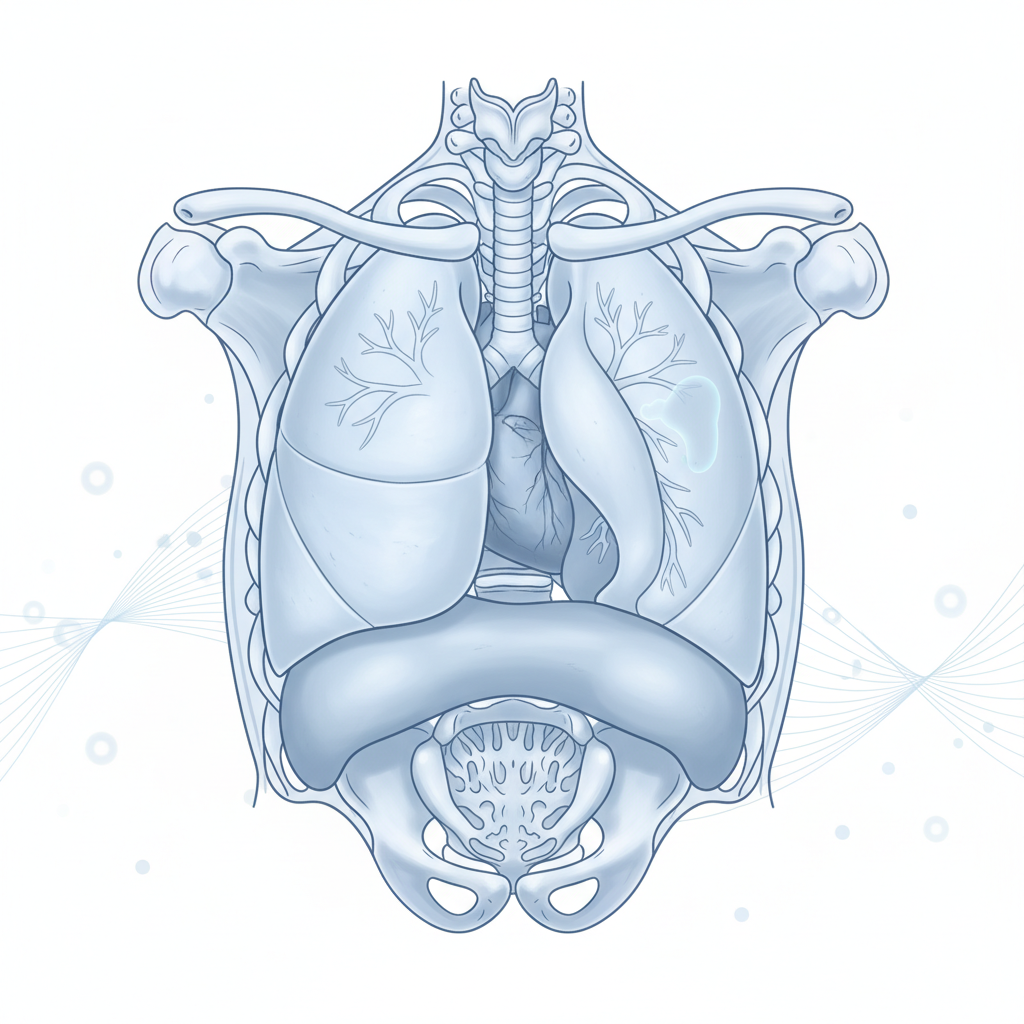
The chest holds four surgical territories: the lungs, the mediastinum between them (home of the thymus), the pleura lining around the lungs (including mesothelioma), and the chest wall. Each behaves differently — and each demands its own plan.
Lung cancer remains frightening, but its surgery has changed profoundly. Where chests were once opened wide, many tumours can now be removed through keyhole VATS incisions, with less pain and faster recovery — and smaller tumours increasingly need only a segment removed rather than the whole lobe.
A note on smoking: if you smoke, you will never be lectured or judged here. Quitting support is simply part of good treatment — offered because it genuinely helps your surgery, recovery and long-term health.
Eight signals that deserve a specialist’s eyes
Lung symptoms get blamed on weather, age and habit. These are the ones that justify a scan rather than another round of cough syrup.
- ①A cough lasting beyond three weeks, new or changed.
- ②Blood-streaked sputum — even once, even a single streak.
- ③Breathlessness that is new or worsening over weeks.
- ④One-sided chest pain that persists without injury.
- ⑤Hoarseness of voice not explained by a sore throat.
- ⑥Pneumonia recurring on the same side — the lung may be harbouring something behind it.
- ⑦Finger clubbing — nails curving gently over enlarged fingertips.
- ⑧A long-time smoker whose cough has changed character — worth checking even when it feels mild.
Cancers treated in this territory
◆Lung Cancer
From solitary nodules to established disease — resected keyhole-first wherever possible.
◆Mediastinal Masses
Growth in the central compartment between the lungs, approached through planned routes.
◆Thymoma
Tumours of the thymus gland, sometimes linked with myasthenia — excised completely.
◆Pleural Disease
Disease of the lung’s lining, including recurrent fluid requiring pleurodesis.
◆Mesothelioma
Rare pleural malignancy managed within combined multidisciplinary pathways.
◆Chest Wall Tumours
Resection with reconstruction restoring both protection and appearance.
Operations performed here
- ◈VATS lobectomy & segmentectomyKeyhole removal through small incisions — less pain, faster return to normal life.
- ◈Open lobectomy / pneumonectomyWhen the tumour demands it, done decisively and to full standard.
- ◈Sleeve resectionsRebuilding the airway itself so an entire lung need not be lost.
- ◈Thymectomy & mediastinal mass excisionCentral chest tumours removed through safe, planned approaches.
- ◈PleurodesisSealing the pleural space so recurring fluid stops stealing your breath.
- ◈Chest wall resection & reconstructionRestoring structural integrity after removing wall-involved tumours.
From first visit to full recovery
Staging CT-PET
The whole picture mapped before any decision is made.
Lung function testing
Your breathing reserve measured — so surgery spends it wisely.
Biopsy by safest route
Diagnosis obtained through the least invasive reliable path.
Multidisciplinary board
Oncology colleagues weigh in on sequence and combination.
Surgery
Keyhole-first philosophy, open only when truly indicated.
Rehabilitation & cessation support
Breathing exercises, plus quit-support if wanted — always without judgment.
Families usually ask…
Neither is universally better; the question is which suits your tumour, position and body. VATS offers faster recovery when applicable, while open access serves complex situations better. You will receive one straight recommendation with reasons — not whichever option is fashionable.
In most cases, yes — that is precisely why lung-function testing comes first. Segmentectomy and sleeve techniques exist to preserve maximum tissue, and patients routinely return to normal daily activity. The pre-operative tests exist to guarantee this planning happens before, not after.
Usually, yes — treating based on imaging alone risks wrong decisions that cannot be undone. There are selected exceptions where radiological certainty allows direct action, but those calls are made deliberately and explained clearly.
Often, yes — nodal involvement usually shifts the plan towards combined treatment (chemotherapy or immunotherapy first) rather than abandoning surgery. The board decides what genuinely offers you more life, and tells you honestly either way.
No judgment here — ever. Surgical candidacy depends on your tumour and your fitness, not on blame. And quitting support is offered at every stage because it measurably improves your operation and recovery, whenever you feel ready.