Clearing the cancer — and honouring how you feel looking in the mirror afterwards.
Oncoplastic breast surgery means one thing: cancer clearance and a natural appearance are planned together, not traded against each other. You should not have to choose between being safe and feeling like yourself.
What is breast cancer?
Breast cancer begins when cells in the breast grow abnormally, usually forming a lump. It is among the most common cancers in Indian women today — and its most common first sign is a lump that doesn’t hurt at all. The absence of pain is never reassurance.
The encouraging truth: when found early, breast cancer outcomes are excellent — and for many women, breast conservation surgery (removing the tumour with oncoplastic reshaping) is as safe as removing the whole breast.
Plenty of breast lumps are benign — fibroadenomas, cysts, hormone-related changes. Every lump still deserves an answer, quickly and clearly. Not every answer needs an operation.
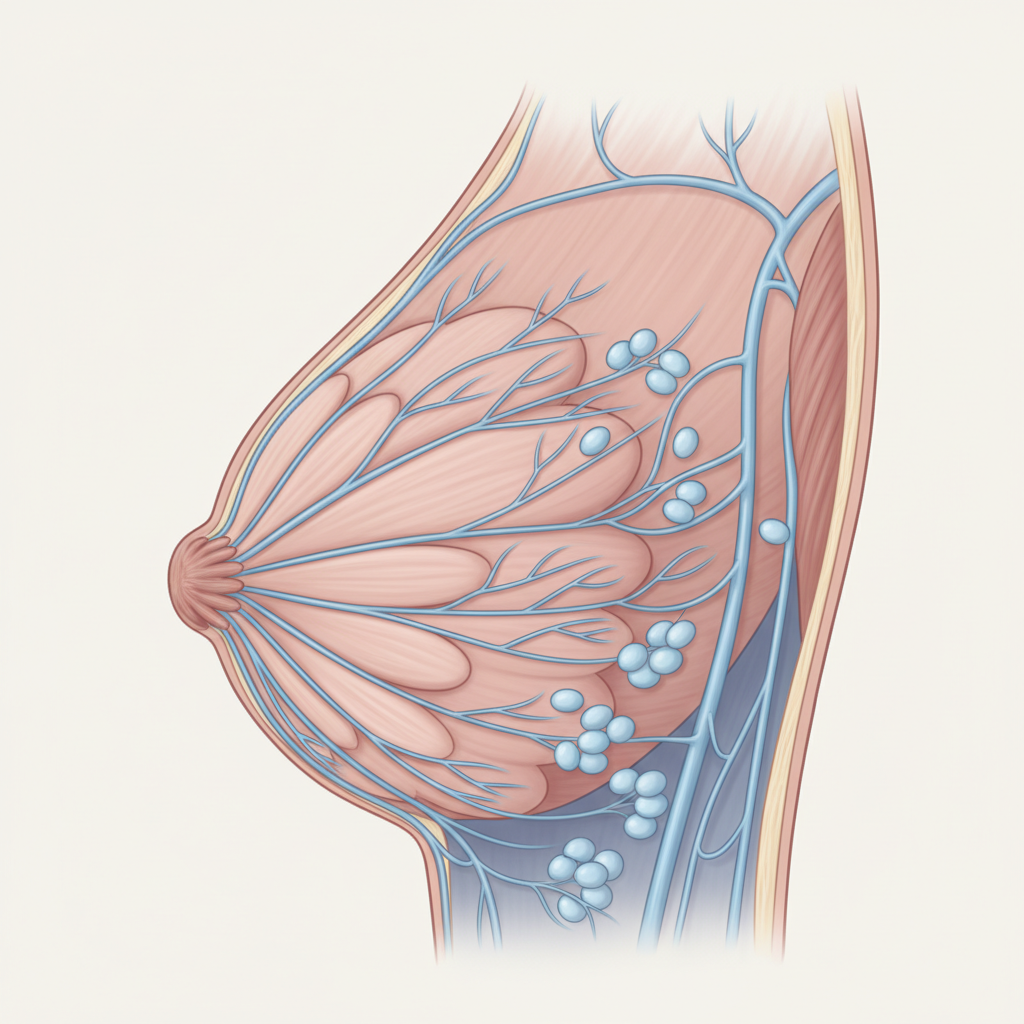
Eight signals that deserve a specialist’s eyes
Most lumps are not cancer — but every new change deserves examination, and it takes minutes to know where you stand.
- ①A painless lump in the breast — most cancerous lumps don’t hurt.
- ②Skin dimpling, sometimes described as an “orange peel” texture.
- ③The nipple turning inward (retraction) without previous reason.
- ④Blood-stained discharge from the nipple.
- ⑤A change in size or shape of either breast.
- ⑥New asymmetry between the breasts developing over weeks or months.
- ⑦A lump in the armpit — lymph nodes can be the first place cancer shows.
- ⑧Any change persisting beyond two weeks — even without other signs, it merits examination.
The full range of breast care here
◆Breast Conservation Surgery
Lumpectomy with oncoplastic technique — treating the cancer while keeping the natural shape.
◆Mastectomy Options
Simple, skin-sparing and nipple-sparing procedures — chosen with you, for your situation.
◆Sentinel Lymph Node Biopsy
Mapping the first draining node so the armpit can be spared whenever it is clear.
◆Axillary Dissection
When nodes are involved, thorough clearance performed to accepted standards.
◆Benign Breast Lumps
Fibroadenomas and cysts answered with clarity — observed or removed only when needed.
◆Reconstruction Coordination
Planning with reconstructive colleagues so appearance is part of the plan from day one.
Operations performed here
- ◈Lumpectomy with oncoplastic closureTumour removed with clear margins while the breast’s shape and contour are actively preserved.
- ◈Mastectomy — simple, skin-sparing, nipple-sparingThe right operation selected honestly for your tumour, your body and your wishes.
- ◈Sentinel lymph node biopsyThe first axillary node identified and tested; full dissection avoided when it is clear.
- ◈Axillary dissectionPerformed to standard when nodal disease demands it, balancing clearance with arm-health.
- ◈Rapid pathology reportsMargins assessed during surgery wherever possible — fewer return trips to theatre.
- ◈Fertility & family-planning counsellingFor young women, treatment plans are built around preserving future options.
From first visit to full recovery
Clinical examination & imaging
Mammogram and ultrasound arranged without waiting games.
Core biopsy & receptor testing
A firm diagnosis — including biology — before any treatment begins.
Multidisciplinary plan
When chemotherapy first would shrink the tumour, that is said plainly upfront.
Surgery
Conservation or mastectomy with node assessment, in one coordinated operation.
Adjuvant decisions
Radiotherapy, chemotherapy or hormone tablets decided from the final report.
Follow-up & survivorship
Scheduled reviews, reconstruction support, life going forward.
Families usually ask…
For many early breast cancers, yes — survival rates are equivalent when conservation is combined with radiotherapy. The decision depends on tumour size relative to the breast, its biology and your preference. You will get a straight recommendation with reasons, not a sales pitch for either option.
Not always. The final pathology report — tumour size, grade, receptors, nodal status — drives that call together with medical oncology. Some small, low-risk cancers are treated with surgery and hormone tablets alone.
Oncoplastic technique exists precisely for this — reshaping is part of the cancer operation itself, not an afterthought. Outcomes vary with tumour size and position, and honest expectations are discussed before you decide anything.
After conservation surgery, most women return within two to three weeks; after mastectomy, three to four weeks typically, sooner for desk work. Recovery expectations are written down before surgery, not guessed afterwards.
Not necessarily. Fertility and family-planning counselling is built into planning for young women — options such as egg preservation and fertility-safe treatment sequencing are discussed before therapy starts, not after.