Chapter 06 — The Craft
Speciality 06 · Urological OncologyKidney units, continence and confidence — kept whole, wherever oncology allows.
Urological cancers touch the most private machinery of daily life. Surgery here is judged not only by clear scans but by how you live afterwards — which is why kidney units are salvaged, nerves are mapped, and honest active surveillance is offered when it truly serves you.
Cancers of the urinary tract
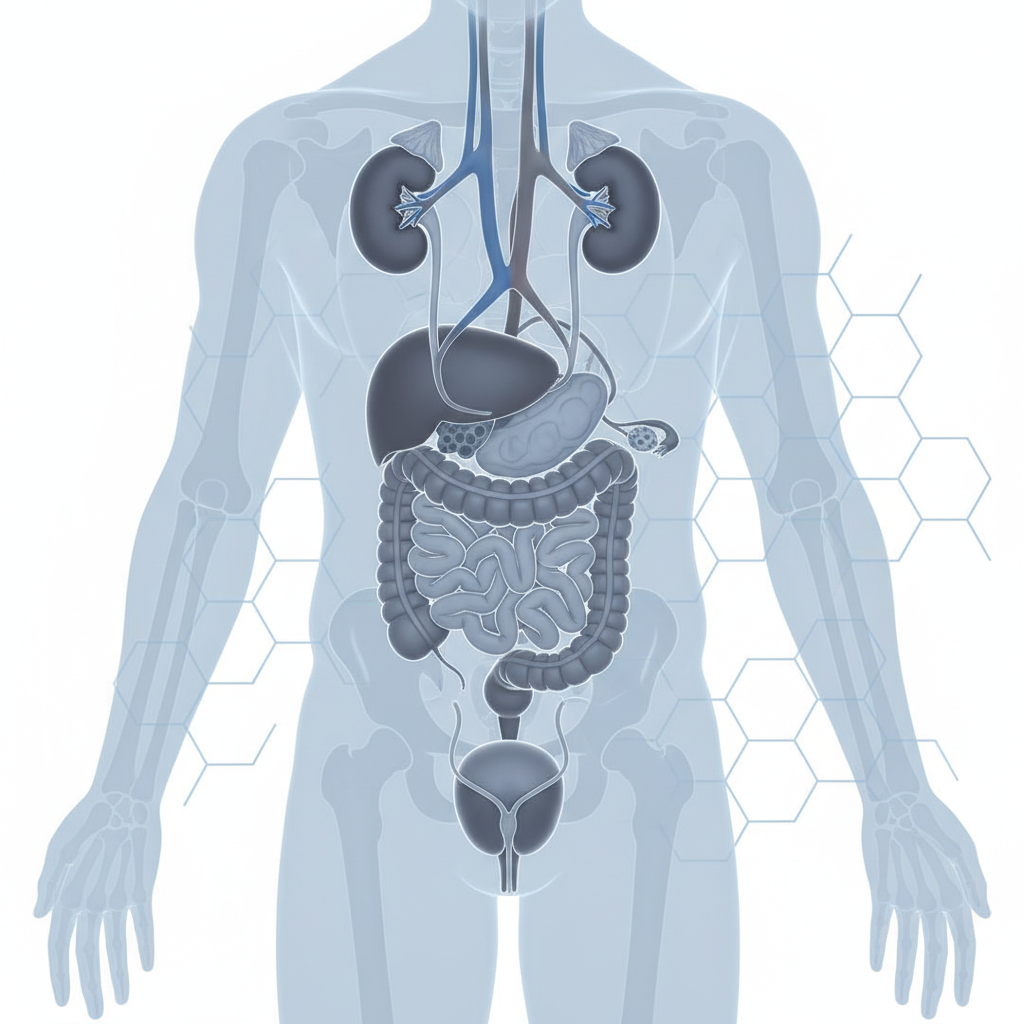
The urinary system runs from kidneys through bladder to prostate, with the testes and adrenal glands nearby. Each organ carries its own signature disease and its own delicate question — how much can be removed while leaving life undiminished?
In the kidney, that question has a beautiful answer: partial nephrectomy. For many tumours, only the lesion is excised and the rest of the kidney stays on duty — vital for those with one kidney, reduced function, or tumours on both sides.
In the prostate and bladder, surgery is a negotiation with nerves: nerve-sparing radical prostatectomy protects continence and potency; robotic technique gives the millimetre control that makes such preservation realistic.
And sometimes wisdom means no operation yet — low-risk prostate cancers can be watched properly instead of treated reflexively. Active surveillance done honestly is medicine, not avoidance.
Signals that deserve a specialist’s eyes
Most of these come from benign causes — infections, stones, prostates behaving their age. Each deserves one proper look so nothing important slips past.
- ①Blood in the urine — even once, even painless, even if it disappeared.
- ②New urinary frequency or urgency — going often, or suddenly needing to.
- ③Burning or discomfort passing urine, persisting after infection is treated.
- ④A testicular lump — firm, painless lumps matter most.
- ⑤A feeling of heaviness or dragging ache in the scrotum that stays.
- ⑥Bone pain — especially back or hips — occurring alongside urinary symptoms.
- ⑦Swelling of the legs without heart or other explanation.
- ⑧An adrenal lump found incidentally on a scan — usually silent, always worth review.
Organs we operate on
✳Kidney
Radical and partial nephrectomy — every nephron that can be saved, is saved.
✳Bladder
TURBT for early tumours; radical cystectomy with ileal conduit or neobladder for muscle-invasive disease.
✳Prostate
Robotic radical prostatectomy with nerve-sparing where safe — plus honest surveillance for low risk.
✳Testis
Orchiectomy and RPLND — testicular cancer being one of the great curable stories of oncology.
✳Penile Cancer
Treated early and function-preserving where possible, without embarrassment or delay.
✳Adrenal
Incidental and hormone-active adrenal masses assessed and removed by appropriate approach.
Sometimes the bravest operation is none at all — surveillance is honesty, not hesitation.
Operations performed here
- ✳Radical & partial nephrectomyWhole-kidney removal only when necessary; tumour-only excision whenever the kidney can stay in service.
- ✳Robotic & laparoscopic approachesFALS-trained keyhole technique for shorter recovery and finer dissection around delicate structures.
- ✳TURBT for bladder tumoursCamera-based removal through natural passages — no external cut for many bladder cancers.
- ✳Radical cystectomy + diversionIleal conduit or neobladder chosen with you — both options explained before decisions.
- ✳Nerve-sparing radical prostatectomyContinence and potency protected wherever oncology permits.
- ✳RPLND & orchiectomyRetroperitoneal node surgery and testicular procedures within coordinated chemotherapy pathways.
From first visit to full recovery
Consultation & urine tests
Your symptoms mapped; blood and urine studies arranged.
Imaging & biopsy
CT/MRI characterises the lesion; biopsy confirms what it is.
Honest options
Including surveillance — when watching properly beats operating reflexively.
Surgery
Keyhole-first, nerve-aware, organ-preserving wherever safe.
Rehabilitation
Pelvic-floor training, stoma education or neobladder coaching as needed.
Surveillance
Scans and markers on schedule, adjusted to your risk.
Families usually ask…
Yes — most people with one healthy kidney live entirely normal lives. This is exactly why partial nephrectomy matters so much here: we fight for every kidney unit today because tomorrow may need it.
Both are legitimate. A neobladder offers passage through the natural route but needs training and daytime discipline; an ileal conduit is simpler and very reliable. Kidney function, fitness and your preferences decide it — together, with real numbers.
Temporary leakage and changes in erections are common early on; nerve-sparing technique and structured pelvic-floor rehabilitation improve both substantially over months. You’ll hear the full picture before consenting — not after.
Sperm banking is discussed before any treatment begins. Many men father children afterwards; RPLND and chemotherapy plans are built with this question asked out loud from day one.
Not always. Small kidney tumours and low-risk prostate changes can qualify for proper active surveillance — scheduled scans and reviews. When watching is genuinely safe, we say so plainly.