Chapter 03 — The Craft
Speciality 03 · Gastrointestinal OncologyFrom food pipe to rectum, keyhole-first — with sphincters saved wherever safely possible.
GI cancers affect the most everyday acts of life: eating, digesting, the dignity of the bathroom. Surgery here is planned around three promises — remove the disease completely, use the smallest cuts that cure, and protect normal function at every turn.
Cancers of the digestive tract
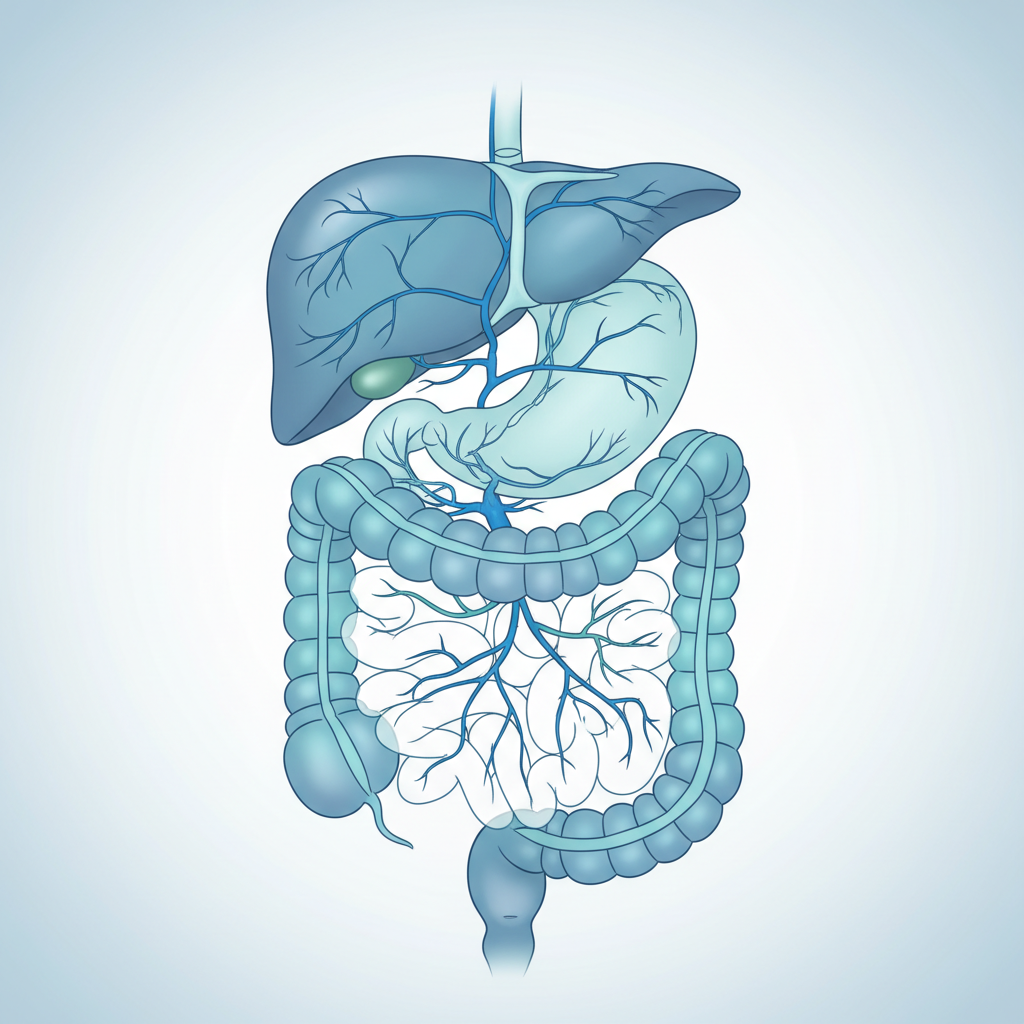
The gastrointestinal tract runs from the oesophagus through stomach, colon and rectum, to the anal canal — with the small bowel and peritoneal lining along the way. Cancers here are common in Gujarat, and they announce themselves quietly: a changed bowel habit, an anaemia nobody can explain, food that suddenly will not go down comfortably.
The encouraging news is how much technique now protects quality of life. Rectal cancers that once meant a permanent colostomy can often be removed with the sphincter preserved. Stomach and colon surgery that once demanded long incisions is frequently done laparoscopically or robotically.
Staging before surgery is the quiet hero of good GI oncology — scans and endoscopy that map the disease precisely decide whether chemotherapy comes first, whether the tumour is resectable, and what to expect from the operation.
Nutrition is treated as part of the cure here: diet planning begins before admission, not after complications. A body well fed heals better — this is not a slogan, it is surgical strategy.
Signals that deserve a proper look
Indigestion and irregular bowels are usually innocent. These patterns are different — they deserve investigation rather than another course of antacids.
- ①Difficulty swallowing — food feeling stuck on the way down, first solids then softer foods.
- ②Persistent indigestion or vomiting that continues despite routine treatment.
- ③Bowel habit changed for more than four weeks — new constipation, new looseness, thinner stools.
- ④Visible blood in the stool, even if piles have been blamed before.
- ⑤Black, tarry stools — digested blood from higher in the gut.
- ⑥Unexplained weight loss without dieting or exercise changes.
- ⑦Anaemia found on a blood test without obvious reason — a silent bleed can be the cause.
- ⑧A lump felt in the abdomen, even one that isn’t painful.
Organs we operate on
✳Oesophagus
Food-pipe cancers with staging-led treatment — sometimes therapy first, always a plan before the knife.
✳Stomach
Gastric cancer surgery to international D2 standards, subtotal or total as the disease dictates.
✳Colon
Hemicolectomies with complete mesocolic excision — the technique associated with better survival.
✳Rectum
Sphincter-preserving low anterior resection wherever margins allow; APR only when truly required.
✳Anal Canal & Small Bowel
Rare but real sites — worked up carefully, often combined with radiotherapy colleagues.
✳Peritoneal Surface
Peritoneal malignancy assessed for cytoreduction with HIPEC referral pathways where suitable.
You leave the theatre the way you came in — intact — wherever oncology allows it.
Operations performed here
- ✳OesophagectomyRemoval of the food pipe with gastric pull-up reconstruction, staged properly beforehand.
- ✳Gastrectomy — D2 standardSubtotal or total, with the extended lymph-node clearance evidence favours.
- ✳Colectomy + complete mesocolic excisionRight hemicolectomy and segmental resections done to the plane that improves outcomes.
- ✳Sphincter-preserving rectal surgeryLow anterior resection designed to keep natural function whenever oncologically safe.
- ✳APR when requiredAbdomino-perineal excision offered honestly when it is the right operation — with stoma education built in.
- ✳Laparoscopic & robotic approachesFALS-trained keyhole technique wherever it genuinely benefits recovery.
From first visit to full recovery
Scopes & biopsy
Endoscopy or colonoscopy with biopsy — seeing the disease directly.
Staging
CT/MRI maps depth, nodes and spread before any decision.
Therapy first, when it helps
Chemotherapy or radiation before surgery where it improves the outcome.
Surgery
Keyhole where suitable, open where wiser — chosen per patient.
Nutrition & recovery
Diet plans, stoma training if needed, early mobilisation.
Surveillance
Scopes and scans on schedule, so recurrence never gets a head start.
Families usually ask…
Often no. Sphincter-preserving rectal surgery avoids a permanent stoma whenever clear margins allow. When one is genuinely necessary, you will hear it honestly and early — and meet a stoma therapist before the operation, not after.
Smaller cuts mean less pain, fewer wound complications, quicker return of bowel function, faster discharge — and importantly, earlier start of chemotherapy when it is needed next.
Small frequent meals become the pattern — six small ones instead of three big ones. A dietitian plans this with you before discharge, and most patients return to enjoyable eating within months.
Because the stage changes everything: which operation, whether therapy comes first, what to expect. Operating without complete staging risks doing the wrong procedure well — which helps no one.
Many are — suitability depends on tumour position, stage and your prior surgeries. You will get a straight recommendation with reasons, including when open surgery is simply the better tool.