From food pipe to rectum — treated precisely, sparing all that can be spared.
Digestive cancers unsettle the most ordinary parts of daily life: eating, digestion, dignity. The approach here is steady and staged — proper staging first, then keyhole techniques where suitable, and sphincter preservation wherever safely possible.
What are gastrointestinal cancers?
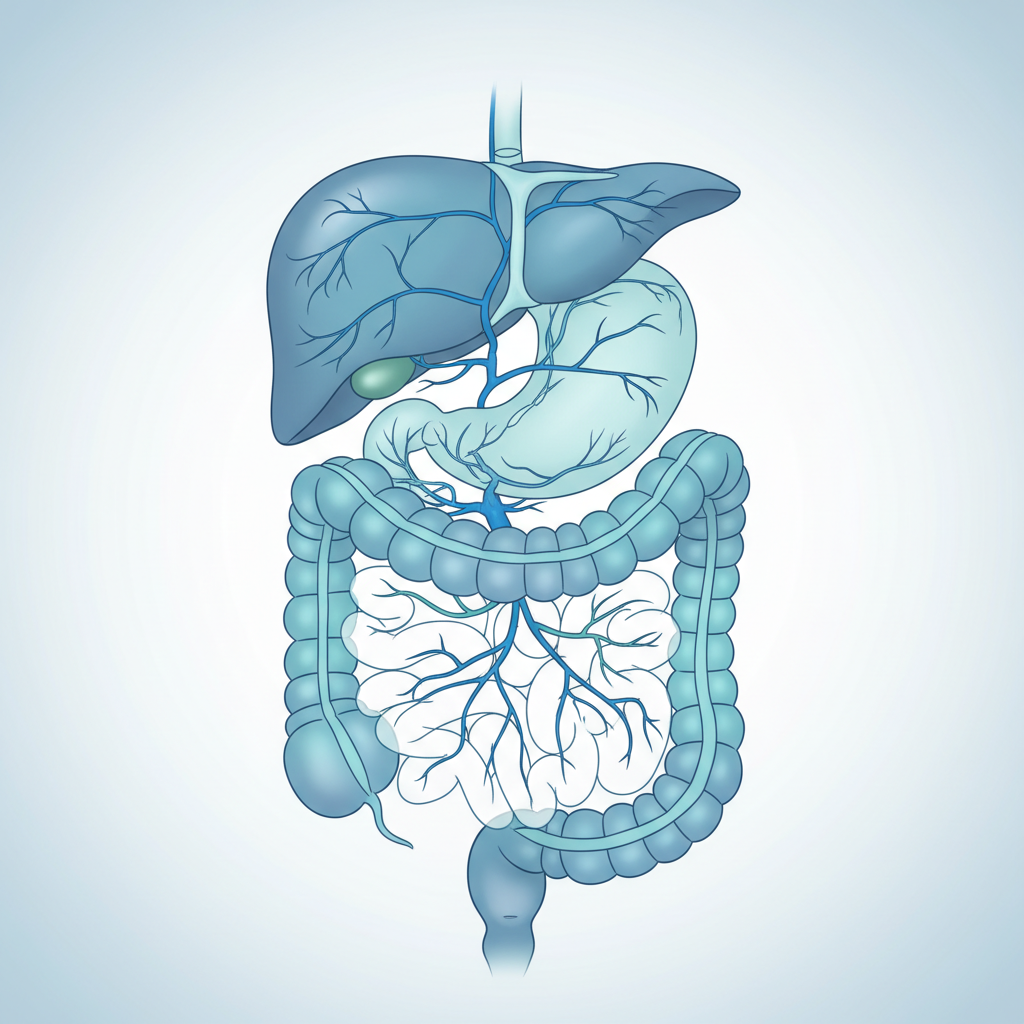
They arise anywhere along the digestive passage — oesophagus, stomach, small bowel, colon, rectum, anal canal — and on the peritoneal surfaces that line the abdomen. Symptoms often masquerade as everyday complaints: acidity, irregular motions, tiredness from anaemia.
That is why staging comes before everything. Scans and endoscopy map exactly where the disease begins and ends; the operation is then planned around the map, not around guesswork. Good surgery here is quiet arithmetic done in advance.
The philosophy throughout is preservation: sphincter-preserving rectal surgery instead of automatic colostomy, laparoscopic and robotic approaches where they genuinely help, and nutrition treated as part of the cure rather than an afterthought.
“Most people fear the bag more than the cancer. Both fears deserve honest conversation.”
Warning signs worth investigating
Any of these persisting beyond a few weeks deserves a proper look — most causes are benign, but the ones worth catching are caught this way.
- ①Difficulty swallowing, food feeling held up on the way down.
- ②Persistent indigestion that does not settle with routine treatment.
- ③Repeated vomiting without an obvious cause.
- ④A change in bowel habit lasting over four weeks — new constipation or looseness.
- ⑤Blood in the stool, or black stools.
- ⑥Unexplained weight loss.
- ⑦Unexplained anaemia found on blood tests — often the first silent signal.
- ⑧A lump in the abdomen.
Organs and regions treated
〜Oesophagus
Food-pipe cancers, approached with equal attention to cure and to swallowing afterwards.
〜Stomach
Gastric cancer surgery including D2 gastrectomy — the thorough standard.
〜Colon
Right hemicolectomy and segmental resections with complete mesocolic excision.
〜Rectum
Sphincter-preserving low anterior resection wherever oncologically safe.
〜Anal Canal & Small Bowel
Treated within combined protocols alongside radiation and medical oncology.
〜Peritoneal Surface Disease
Managed through structured HIPEC referral pathways where appropriate.
Operations performed here
- ◆OesophagectomyRemoval and reconstruction of the food pipe, planned around your swallow.
- ◆Gastrectomy — subtotal & total (D2)The standard lymphadenectomy done properly, with nutrition planning built in.
- ◆Colectomy with complete mesocolic excisionRight hemicolectomy, sigmoid colectomy — along the correct tissue planes.
- ◆Sphincter-preserving low anterior resectionRectal cancer removed while keeping natural bowel continuity whenever safe.
- ◆APR when requiredAbdomino-perineal resection offered honestly when it is genuinely the safer route.
- ◆Laparoscopic & robotic approachesSmaller cuts, less pain, quicker recovery — used where evidence supports them.
From first visit to full recovery
Listen first
Symptoms heard fully; existing reports reviewed personally.
Scope & stage
Endoscopy and scans coordinated so the tumour is mapped completely.
Honest plan
Whether chemotherapy or radiation should come first — said plainly.
Surgery
Keyhole where suitable; sphincters preserved wherever safe.
Recover together
Nutrition support central to recovery; family updated every day.
Life after
Surveillance scopes scheduled; normal eating is the goal we work toward.
Questions families usually ask
In many rectal and colon cases, no — sphincter-preserving surgery is the default aim wherever margins allow. When a stoma truly is the safer choice, you will hear why honestly, and it will not be presented casually.
Smaller incisions mean less pain, fewer wound complications and faster return to normal life — and, importantly, a quicker start to chemotherapy when it is needed. It is chosen where it genuinely benefits you, never as theatre decoration.
With guidance, most people settle into smaller, more frequent meals and adapt well. Dietitian support is part of recovery from the first day — eating well is treated as medicine.
Because the right operation depends entirely on how far the disease has travelled. Staging decides whether surgery comes first, or chemo and radiation do. A few days spent staging properly makes the whole treatment safer.
Yes — share scans, endoscopy and pathology on WhatsApp for a structured review. If the current plan is already right, you will be told exactly that.