Clearing the cancer completely — while you stay recognisably yourself.
A breast diagnosis arrives with a tide of fear about everything that follows. Here, the plan is built around two equal goals: curing the cancer, and honouring how you will feel in the mirror for decades afterwards.
Surgery that treats both the disease and the person
The scope here covers the full current: breast conservation surgery (lumpectomy with oncoplastic reshaping), mastectomy in its modern forms — simple, skin-sparing and nipple-sparing — sentinel lymph node biopsy, axillary dissection, benign lumps, and coordination of reconstruction.
Oncoplastic technique means one operation pursues two goals at once: complete cancer clearance and a natural appearance. The tumour is removed with generous margins; the remaining tissue is reshaped so that what is preserved still looks and feels like you.
Pathology reports move quickly here, because waiting is its own kind of suffering. And for young women, fertility and family-planning counselling happens before treatment begins — never as an afterthought once decisions are already made.
“ડર સ્વાભાવિક છે — પણ તમે એકલી નથી.” — The fear is natural, but you are not alone.
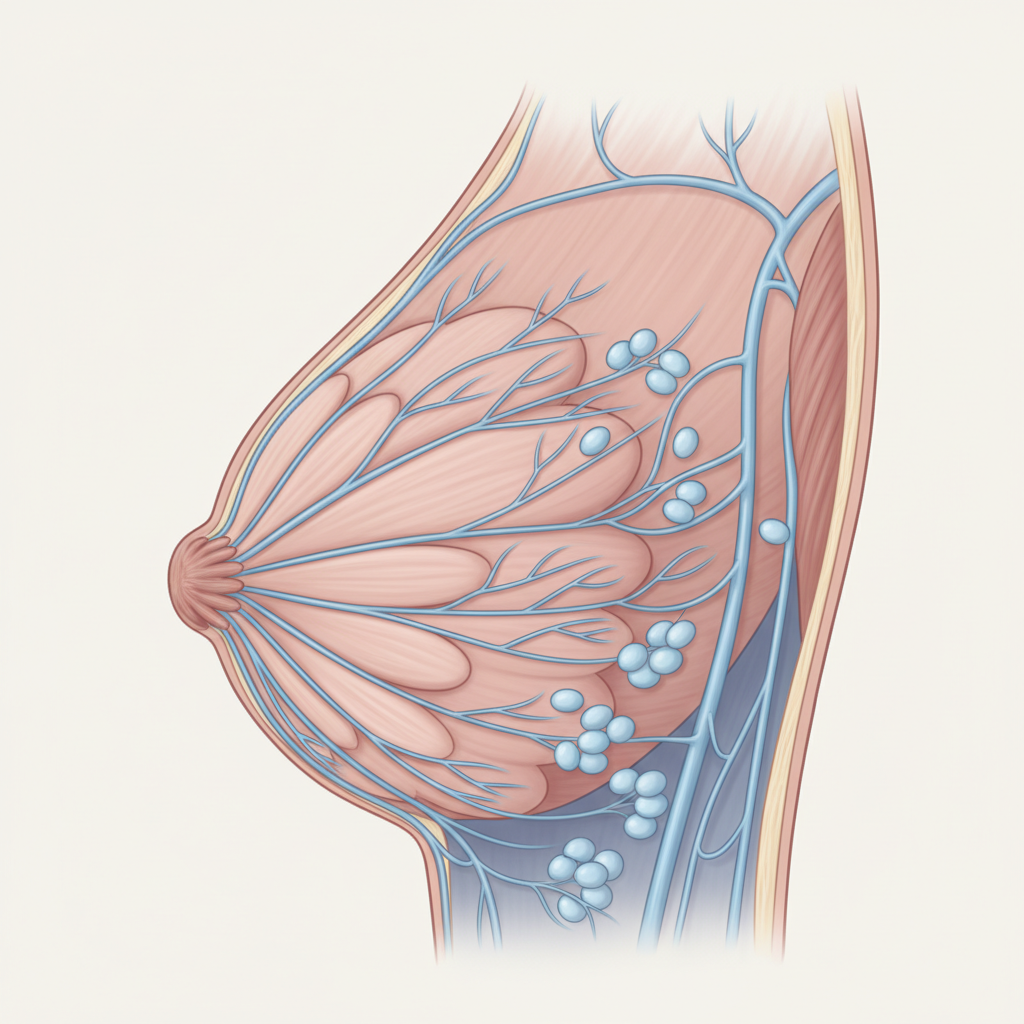
Changes worth showing a specialist
Most breast changes are not cancer — but every change deserves an unhurried look, and lumps are easier to face when they are checked early.
- ①A painless lump anywhere in the breast or armpit — painless ones are ignored longest.
- ②Skin dimpling, sometimes called an “orange peel” texture.
- ③Nipple retraction — the nipple turning inward or changing direction.
- ④Blood-stained discharge from the nipple.
- ⑤A change in the size or shape of one breast.
- ⑥New asymmetry that has appeared recently, not lifelong.
- ⑦A lump in the armpit (axilla).
- ⑧A lump checked before that now feels different — re-examination is always worthwhile.
What this service covers
〜Breast Conservation
Lumpectomy combined with oncoplastic reshaping — cancer clearance and appearance together.
〜Mastectomy Options
Simple, skin-sparing and nipple-sparing approaches, matched to each situation honestly.
〜Sentinel Node Biopsy
The first draining lymph node tested — sparing full axillary surgery whenever it is safe.
〜Axillary Dissection
Node clearance performed when the disease genuinely requires it.
〜Benign Lumps
Not every lump is cancer — but every lump deserves a calm, definitive answer.
〜Reconstruction Coordination
Planned alongside reconstructive colleagues so the whole journey is mapped from day one.
Operations performed here
- ◆Breast conservation + oncoplastyTumour removal with immediate reshaping — the standard first consideration, not the exception.
- ◆Mastectomy — simple / skin-sparing / nipple-sparingChosen for the right reasons, with reconstruction coordinated.
- ◆Sentinel lymph node biopsyPrecise mapping so healthy nodes stay untouched where possible.
- ◆Axillary dissectionPerformed when nodal disease demands it — no more than necessary.
- ◆Rapid pathology reportingMargins confirmed during the process, so decisions are not left hanging.
- ◆Fertility & family planning counselFor young women, options are discussed before treatment starts.
From first visit to full recovery
Listen first
Your story heard fully — the lump examined without hurry or alarm.
Triple assessment
Examination, imaging and biopsy together give a definite answer, not a guess.
Honest plan
Conservation versus mastectomy discussed openly, including what each means long-term.
Surgery
Oncoplastic technique chosen for clearance and appearance alike.
Recover together
Daily rounds, physiotherapy, wound care and family updates at every step.
Life after
Follow-up surveillance planned, and return to work and life discussed early.
Questions families usually ask
For many tumours, yes — survival outcomes are equivalent when conservation is combined with clear margins and appropriate radiation. You will be told plainly which option suits your specific cancer, and why.
That depends on biology — tumour size, grade, receptors and nodes — decided with medical oncology through proper testing, never by assumption. Some small cancers need none at all.
Oncoplastic technique exists precisely for this reason — many women are delighted by how natural conservation plus reshaping looks and feels. Expectations are shown and discussed honestly before you decide anything.
It varies with the operation and your healing — conservation recovers far faster than mastectomy with reconstruction. A realistic timeline is part of the written plan you receive before consenting.
Come. Most lumps are not cancer, and even the ones that are respond best to early, well-planned treatment. The consultation itself is designed to be gentle — nothing is decided in panic, and nothing is rushed.