Every breath is worth protecting — keyhole surgery that treats the tumour and keeps the rest of the lung working.
Lung, mediastinal, pleural and chest wall cancers treated with a keyhole-first philosophy: VATS lobectomy and segmentectomy wherever suitable, open surgery when indicated — and smoking-cessation support without a trace of judgment.
What is thoracic oncology?
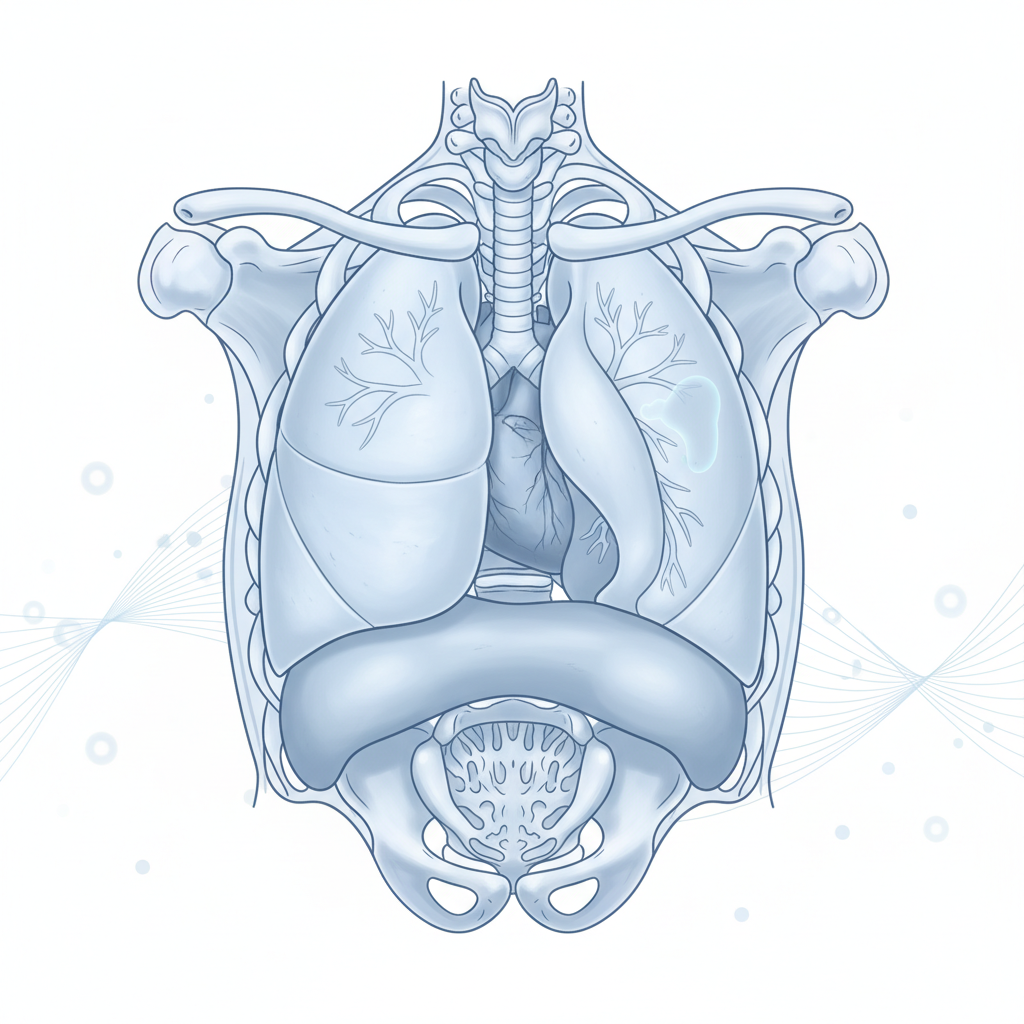
Thoracic surgery covers cancers of the lung, masses of the mediastinum (the central compartment including the thymus), disease of the pleura — the lining around the lung, including mesothelioma — and tumours of the chest wall.
The encouraging truth: for early lung cancer, keyhole (VATS) resection offers cure with dramatically faster recovery than open surgery. Where larger tumours demand it, open lobectomy or pneumonectomy is done properly; sleeve resections can even save lung that older techniques would have removed.
The three-week rule: any cough lasting beyond three weeks — especially with blood-streaked sputum or one-sided chest pain — deserves imaging, not another round of waiting.
Eight signals that deserve a specialist’s eyes
Any of these warrants investigation rather than waiting. Most will be innocent; the ones that aren’t are exactly why we check.
- ①A cough lasting more than three weeks.
- ②Breathlessness that is new, or changing from your usual.
- ③Blood-streaked sputum — even once deserves an answer.
- ④Chest pain, often on one side, persistent or positional.
- ⑤Hoarseness of the voice without a cold to explain it.
- ⑥Pneumonia that keeps returning on the same side.
- ⑦Finger clubbing — widening and rounding of the nail beds.
- ⑧Any of these in a smoker or ex-smoker — past or present smoking makes checking non-negotiable, whatever the symptoms.
Cancers we treat in this region
◆Lung Cancer
From solitary nodules to advanced disease — staged properly, operated selectively.
◆Thymoma & Thymic Tumours
Mediastinal masses requiring specialised thymectomy approaches.
◆Other Mediastinal Masses
The central compartment worked up systematically before any incision.
◆Pleural Disease & Mesothelioma
Diagnosis and management of pleural malignancy within combined pathways.
◆Chest Wall Tumours
Resection with reconstruction where the structure demands it.
◆Pleurodesis & Effusion Care
Relieving fluid recurrence so breathing — and living — gets easier.
Operations performed here
- ◆VATS lobectomy / segmentectomyKeyhole removal of lobe or segment — smaller cuts, less pain, faster return of function.
- ◆Open lobectomy / pneumonectomyWhen tumours demand it — done properly, never reluctantly.
- ◆Sleeve resectionsAdvanced technique preserving healthy lung while clearing airway involvement.
- ◆Thymectomy & mediastinal mass excisionCentral tumours removed via planned, safe approaches.
- ◆PleurodesisStopping recurrent fluid around the lung — comfort restored.
- ◆Chest wall resection & reconstructionStructural rebuild coordinated with reconstruction colleagues.
From first visit to full recovery
Consultation & CT review
Scans read personally; history taken properly.
Biopsy first, always
Tissue diagnosis before treatment — no blind flights.
Lung-function testing
Your breathing capacity measured so surgery preserves it.
Tumour board plan
Oncology and radiation weigh in before the operation date.
Surgery — keyhole first
VATS where anatomy allows; open when it truly doesn’t.
Breathing recovery
Physiotherapy and smoking-cessation support without judgment, built into follow-up.
Families usually ask…
VATS keyhole surgery gives equal cancer outcomes with faster recovery in suitable tumours — so it’s the default consideration here. Open surgery is chosen honestly when the tumour’s position or size demands it.
In most cases, yes — that’s what lung-function testing before surgery is for. We only offer resection when your remaining lung can carry you comfortably through daily life.
Almost always. Treating the wrong disease in the chest is a costly mistake — tissue diagnosis comes first, arranged quickly so it delays nothing.
Nodal involvement changes the sequence — often chemotherapy or radiation first, then reassessment for surgery. The tumour board decides this together, and you get the reasoning plainly.
No. You will be offered surgery on the same evidence-based terms as anyone else, and smoking-cessation support is part of care here — offered without judgment, because outcomes improve when you succeed.