Keyhole-first lung surgery that protects every breath after it.
Thoracic surgery is measured in what remains: how much lung is spared, how quickly you walk again, whether treatment fits the life you still want to live. VATS keyhole technique, sleeve resections and honest staging make that measurement generous.
What is thoracic oncology?
Thoracic oncology covers cancers of the lung, the mediastinum (the central compartment holding the thymus), the pleura (lining of the chest, including mesothelioma) and the chest wall itself. Each lives in territory where every millimetre counts twice — for cure and for breathing.
The philosophy here is keyhole-first. VATS (video-assisted thoracoscopic surgery) achieves the same cancer clearance as open surgery through small incisions: less pain, fewer complications, faster return to chemotherapy when it is needed. Open surgery remains exactly right for certain cases — the choice follows the tumour, never fashion.
And one thing is said plainly to every patient: smoking history changes nothing about how you are treated here. Guilt is not a medical finding. Quitting support comes without judgment, because lungs you keep matter more than lungs you regret.
“You will breathe easier about the surgery than you expect — that is what planning is for.”
આવી જ સવાર તમારી પણ છે — such a morning is yours too.
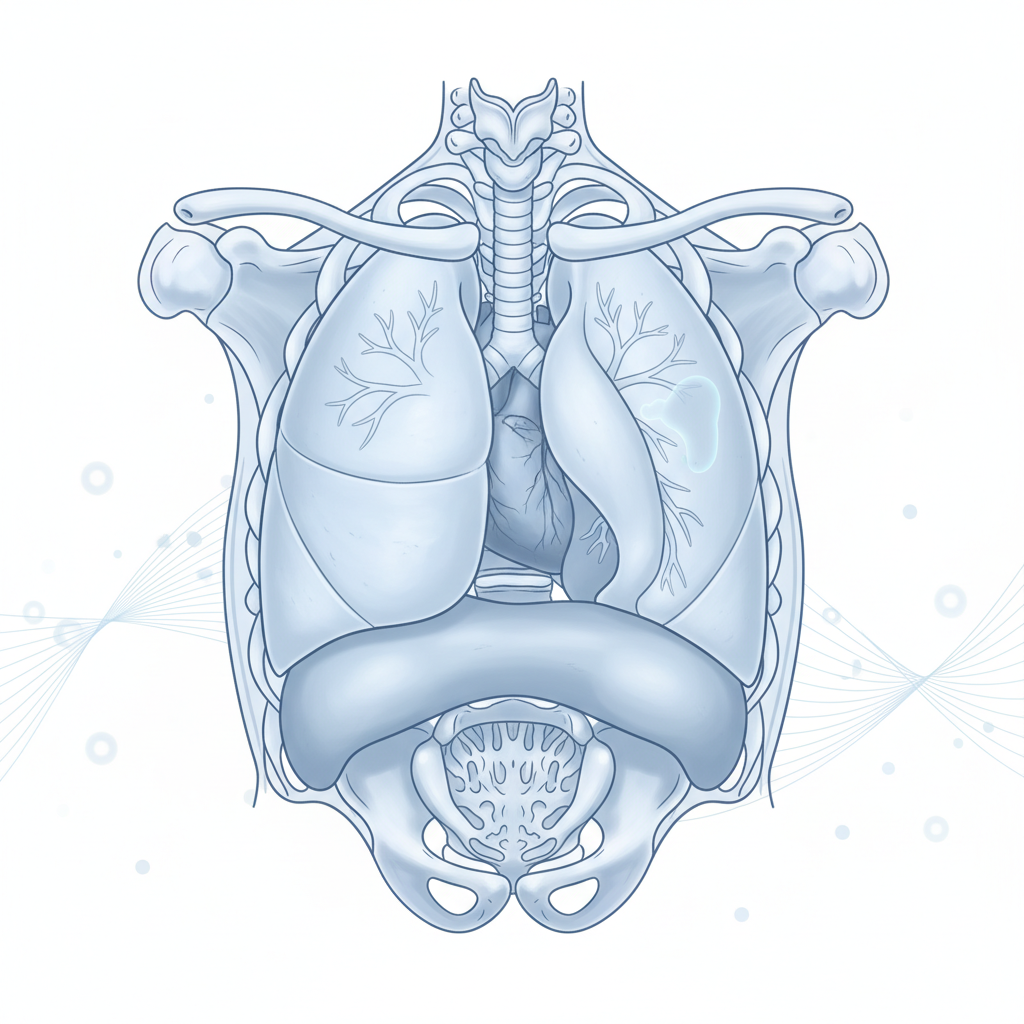
Eight signs a chest specialist should hear about
A cough outlasting three weeks — especially with any smoking history — deserves one good scan more than another round of cough syrup. Most results will be benign; that certainty itself is worth the visit.
- ①A cough lasting more than three weeks, new or changed in character.
- ②Breathlessness that has changed — climbing stairs you managed easily before.
- ③Blood-streaked sputum, even once.
- ④Chest pain on one side, especially persistent or worse with deep breaths.
- ⑤Hoarseness of voice without cold or shouting to explain it.
- ⑥Pneumonia recurring on the same side — an infection that keeps returning to the same address needs investigation.
- ⑦Fingertip clubbing — nails curving over rounded fingertips.
- ⑧A long smoking history with any of the above — five minutes of checking buys years of clarity.
Conditions we treat
◆Lung Cancer
Staged properly, then resected keyhole-first — lobectomy or segmentectomy as the tumour allows.
◆Thymoma & Mediastinal Masses
Tumours of the chest’s central compartment, approached with careful vascular planning.
◆Pleural Disease & Mesothelioma
Fluid control with pleurodesis and management pathways for pleural malignancy.
◆Chest Wall Tumours
Resection with reconstruction so structure and appearance both survive the operation.
◆VATS Keyhole Programme
Video-assisted thoracic surgery as the default approach wherever it serves the patient.
◆Operability Second Opinions
A calm review of whether proposed lung surgery truly fits your scans and your reserves.
Operations performed here
- ◆VATS lobectomy & segmentectomyKeyhole removal of a lobe or just its segment — preserving every working piece of lung possible.
- ◆Open lobectomy / pneumonectomyWhen extent or anatomy demands it, done through incisions planned for recovery too.
- ◆Sleeve resectionsTumours at airway junctions removed while rebuilding the airway — saving whole lobes that older surgery would have sacrificed.
- ◆Thymectomy & mediastinal mass excisionCentral chest tumours removed with nerve and vessel protection.
- ◆PleurodesisStopping recurring fluid around the lung — often the single biggest comfort gain available.
- ◆Chest wall resection & reconstructionWall tumours removed and the framework rebuilt for protection and appearance.
From first visit to full recovery
CT review & biopsy route
The nodule characterised properly; tissue obtained by the least invasive adequate method.
Lung function testing
Spirometry answers what can safely be removed — surgery planned around YOUR reserve.
Full staging
PET-CT and nodal sampling establish the true stage before anyone promises anything.
Tumour board plan
Medical and radiation oncology align — some lungs do better treated before surgery.
Surgery + early mobilisation
VATS where suitable; walking usually begins within a day, chest physio from day one.
Surveillance & support
Scan schedule set, quitting support continued quietly for those who want it.
Patients usually ask…
For most early lung cancers, VATS keyhole gives equal cancer clearance with less pain and faster recovery. But large or central tumours, prior chest surgery and anatomical surprises sometimes make open the wiser route. The recommendation you receive will explain which applies and why.
Most patients return to everyday activities comfortably after lobectomy — the remaining lung expands and adapts, especially when pre-operative lung-function testing guided how much was taken. Segmentectomy goes further, sparing even more. Climbing several flights may feel different; living normally does not.
Almost always — operating on an undiagnosed nodule risks either under-treating a cancer or removing half a lung for something benign. There are rare situations where imaging makes biopsy unnecessary or risky; if yours is one, you will be told why in plain terms.
Nodal involvement changes the sequence more than the goal — frequently chemotherapy or radiation comes first, with surgery reassessed afterwards. Some node-positive patients still reach curative surgery; others are better served without it. Staging first means this fork is navigated with eyes open.
No. Smoking history is medical information here, nothing more. If you want to quit — before surgery or after — structured support is part of the service. The only agenda is keeping whatever lung you have working well.