From food pipe to rectum — keyhole first, with everything that matters kept.
GI cancers are often dismissed as acidity for months before anyone looks properly. Here the work is precise: complete cancer clearance by international standards, minimally invasive wherever suitable, and a permanent colostomy only when it is genuinely the right answer.
What are GI cancers?
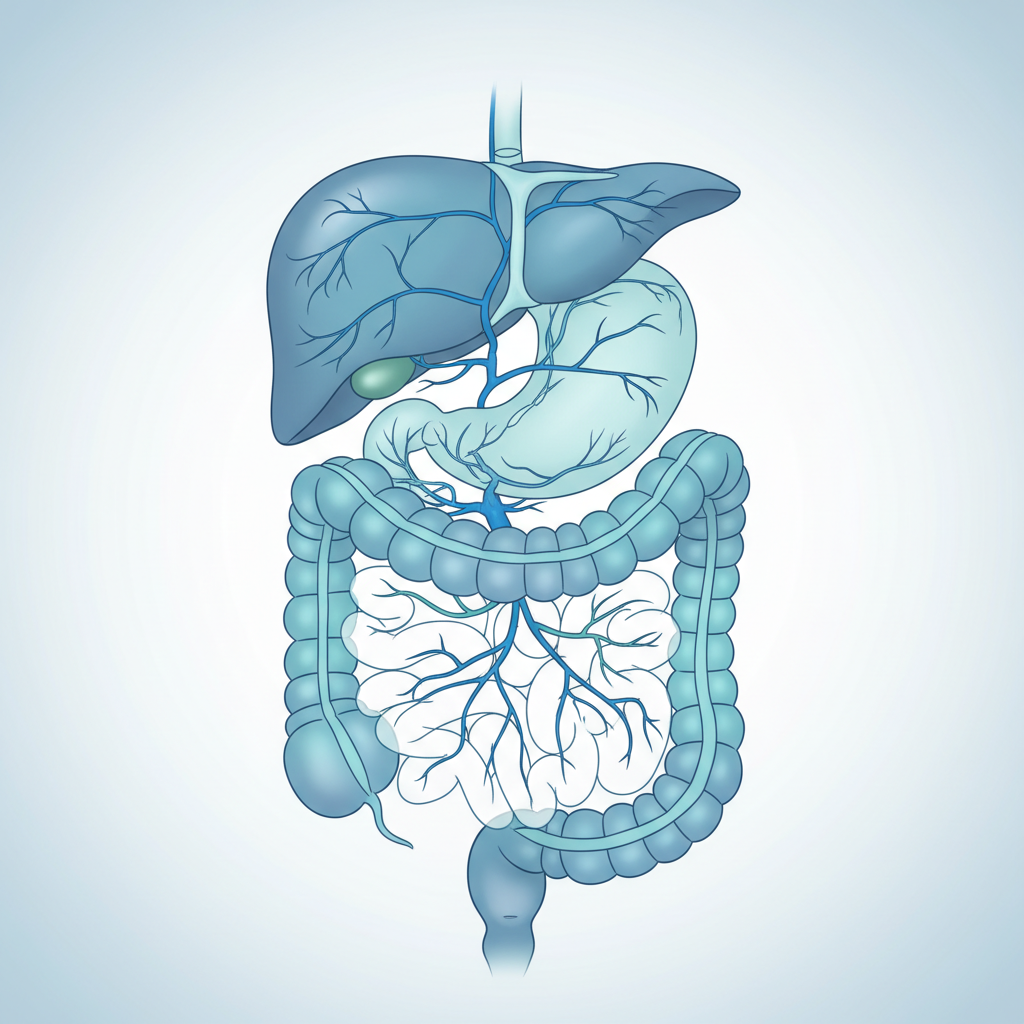
Gastrointestinal cancers arise along the digestive tract — oesophagus, stomach, colon, rectum, anal canal and small bowel — plus the peritoneal lining in some patients. Their early symptoms are cruelly ordinary: indigestion, a change of bowel habit, tiredness from slow blood loss.
This is why staging comes before anything else here. Scans and endoscopy establish exactly what the disease is, because the right operation for the wrong stage is still the wrong operation.
The good news is real: surgery for GI cancer has been transformed. Laparoscopic and robotic approaches, where suitable, mean smaller cuts, less pain and faster recovery — and modern rectal surgery frequently preserves the sphincter muscles that older operations sacrificed routinely.
“The question is never just ‘can we remove it’ — it is ‘what kind of life does this leave behind?’ Both get answered.”
વ્યક્તિની સારવાર, ફક્ત કેન્સરની નહીં — treating the person, not only the cancer.
Eight signs your gut has been trying to report
Each of these is common and usually harmless. But when one persists — or several arrive together — an endoscopy or scan settles the question quickly and painlessly.
- ①Difficulty swallowing, food seeming to hold up on the way down.
- ②Persistent indigestion that no longer responds to routine treatment.
- ③Repeated vomiting, especially after meals or with weight loss.
- ④A change in bowel habit lasting over four weeks — new constipation, diarrhoea, or narrower stools.
- ⑤Blood in the stool, or black stools — never assume haemorrhoids without being checked.
- ⑥Unexplained weight loss without dieting or extra activity.
- ⑦Unexplained anaemia — low haemoglobin found on a routine test deserves a source.
- ⑧A lump felt in the abdomen, even one that is not painful.
Organs and regions we treat
◆Oesophagus
Food-pipe cancers, worked up with endoscopy and staging before any decision to operate.
◆Stomach
Gastric cancer surgery to D2 lymphadenectomy standards — completeness proven, not assumed.
◆Colon
Right and left colon cancers with complete mesocolic excision for best long-term outcomes.
◆Rectum
Sphincter-preserving low anterior resection wherever oncology allows; APR only when truly required.
◆Anal Canal
Tumours of the anal canal managed within combined-modality pathways.
◆Small Bowel & Peritoneum
Small-bowel tumours and peritoneal surface malignancy, including HIPEC referral coordination.
Operations performed here
- ◆OesophagectomyRemoval and reconstruction of the food pipe, planned around nutrition and lung protection.
- ◆Gastrectomy — subtotal & total (D2)Standard lymphadenectomy performed laparoscopically where suitable.
- ◆Colectomy — right / hemi / sigmoid (CME)Complete mesocolic excision as routine quality standard, keyhole-first.
- ◆Sphincter-preserving low anterior resectionThe rectum-and-control-sparing option pursued seriously before alternatives are discussed.
- ◆APR when requiredDone honestly, explained thoroughly, with stoma care training beginning before surgery day.
- ◆HIPEC referral pathwaysPeritoneal disease coordinated to dedicated HIPEC centres without losing ownership of your care.
From first visit to full recovery
Endoscopy & biopsy
The diagnosis confirmed at the source, with samples taken correctly the first time.
Staging scans
CT and MRI map depth, nodes and spread — the facts every later decision stands on.
Tumour board plan
Some GI cancers need chemotherapy or radiation first; the sequence is decided together, openly.
Surgery
Keyhole where suitable, open when right — chosen for your tumour, not for statistics.
Nutrition recovery
Dietitian-led rebuilding of intake; eating well again is a milestone we track deliberately.
Surveillance
Scopes and scans on schedule, so recurrence — if it ever comes — is met early.
Patients usually ask…
In most rectal and colon surgeries today, no — sphincter-preserving technique avoids it whenever oncology safely allows. When a permanent stoma IS the right answer, you will know before consenting, meet a stoma nurse beforehand, and learn to live confidently with it. Temporary stomas protecting a healing join are common and reversed later.
Smaller cuts mean less pain, less blood loss, fewer wound complications and a shorter stay — which also means chemotherapy, if needed, starts sooner. The cancer clearance itself matches open surgery when done to standard. That last clause is why the approach is offered selectively, not universally.
Smaller, more frequent meals become the pattern; most patients return to a full, satisfying diet over months with dietitian support. Weight settles lower but stabilises. You receive written guidance before discharge — not vague reassurance.
Because stage changes everything — the operation, the sequence of chemo and radiation, even whether surgery should happen at all yet. Operating on incompletely staged disease is the most common and most avoidable error in this field.
Margins are the rim of healthy tissue removed around the tumour — clear margins mean nothing visible was left behind. Nodes are the lymph glands checked for spread. These two lines of your pathology report predict long-term outcome more than almost anything else, which is why surgical quality around them matters so much.