Treating the cancer while keeping you feeling like yourself in the mirror.
A breast cancer diagnosis arrives with a hundred fears at once — and most of them are answerable. Oncoplastic surgery means cancer clearance AND natural appearance are planned together, never traded against each other.
What breast cancer surgery looks like here
A lump in the breast is frightening precisely because the mind runs ahead of the reports. So the first job is always the same: a proper diagnosis — examination, imaging and biopsy read together — before anyone speaks about operations.
For many early cancers, breast conservation surgery (lumpectomy with oncoplastic reshaping) is as safe as mastectomy while keeping the breast. When mastectomy is the right call, skin-sparing and nipple-sparing techniques often make reconstruction far more natural.
Oncoplastic technique means one plan answers two duties: clear margins for the cancer, and a shape a woman can live in without grief. Pathology reports come back quickly, because waiting well is part of treatment.
For younger women, fertility and family-planning counselling happens before surgery, not after decisions that close doors quietly.
ચિંતા નહીં — સારવાર પર ધ્યાન આપીએ. Not worry — focus on the treatment. The rest is our work.
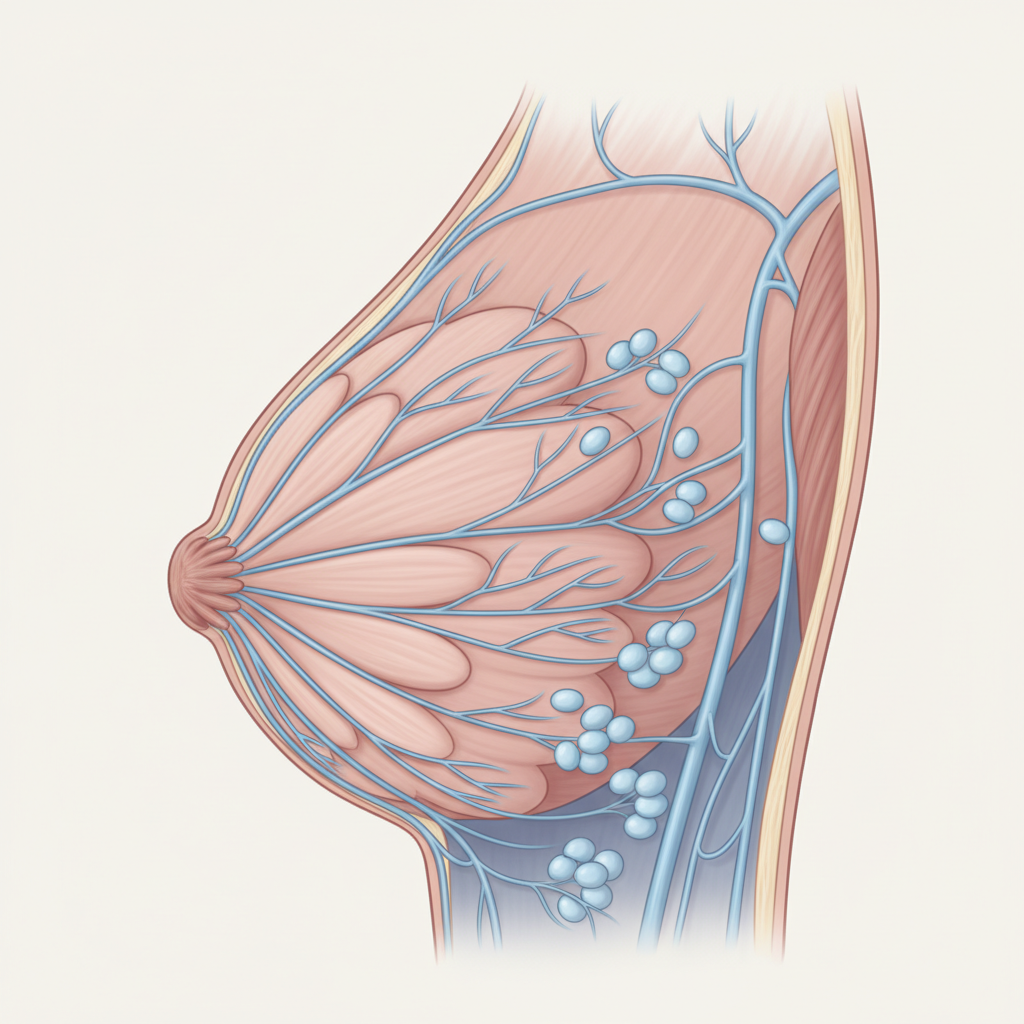
Eight signs worth a specialist’s examination
Most breast changes are not cancer. But the ones that matter are quiet — which is why every persistent new change earns a proper look, not a month of waiting to see.
- ①A painless lump in the breast — painless lumps are the ones ignored longest.
- ②Skin dimpling, or an orange-peel texture over any part of the breast.
- ③Nipple retraction — the nipple turning inward or shifting position.
- ④Blood-stained discharge from the nipple, on clothing or on pressing.
- ⑤A change in the size or shape of either breast.
- ⑥New asymmetry between the breasts that was not there before.
- ⑦A lump in the armpit (axilla), even when the breast feels normal.
- ⑧Any new change lasting beyond a few weeks — checking costs little; certainty is worth it.
Everything this service covers
◆Breast Conservation
Lumpectomy combined with oncoplastic reshaping — wide clearance and natural contour from the same plan.
◆Mastectomy Options
Simple, skin-sparing and nipple-sparing approaches chosen for the tumour and the person, not by default.
◆Sentinel Node Biopsy
The modern first step — sampling the first draining node to spare most women full axillary surgery.
◆Axillary Dissection
Complete node clearance performed carefully when staging or nodes demand it.
◆Benign Breast Lumps
Lumps, pain and discharge that turn out non-cancerous — assessed properly and put to rest honestly.
◆Reconstruction Coordination
Planning with reconstructive colleagues so timing and options are discussed before the first cut.
How treatment is built around you
- ◆Lumpectomy + oncoplastyCancer removed with healthy margins; the remaining tissue reshaped so the breast keeps its form.
- ◆Mastectomy — simple / skin-sparing / nipple-sparingThe least extensive operation that is still the right one for your cancer.
- ◆Sentinel lymph node biopsyAxillary staging without unnecessary removal — fewer arms with lasting swelling.
- ◆Axillary dissectionWhen nodes are involved, thorough clearance done with attention to arm function.
- ◆Rapid pathology reportsMargins confirmed quickly so no woman waits weeks wondering whether she is finished.
- ◆Fertility & family planning counsellingEgg preservation and timing options discussed openly for young women before therapy starts.
From first visit to full recovery
Listening consultation
Your history heard fully; examination and imaging arranged the same week where possible.
Proper biopsy
Core biopsy done the right way, so later planning never has to be redone.
Combined plan
Medical and radiation oncology review together — sometimes chemotherapy comes first, and we explain why.
Surgery
Conservation or mastectomy, executed to plan, with reconstruction coordinated where chosen.
Recovery together
Physiotherapy for the shoulder and arm, wound care, and family kept informed throughout.
Life after
Follow-up schedule, screening rhythm, and honest answers to everything that surfaces later.
Women usually ask…
For many early cancers, yes — survival is equivalent when radiation follows and margins are clear. Whether YOUR tumour allows conservation depends on size relative to the breast, its spread, and biology. You get the straight version, including when mastectomy is genuinely the better choice.
Not everyone does. The decision rests on tumour biology, size and node status — sometimes chemotherapy comes before surgery to shrink the tumour, sometimes it is not needed at all. We walk through your specific reports line by line.
Oncoplastic technique exists exactly for this — many women after conservation look entirely natural in clothing and in the mirror. With mastectomy plus reconstruction, results can also be very good. We show you what is realistic for your case rather than promising perfection.
Desk work is usually possible within two to three weeks after conservation; mastectomy or reconstruction needs longer, and drains must be out first. Physiotherapy continues alongside — returning to your life is part of the plan, not an afterthought.
Not necessarily — and this conversation happens BEFORE treatment begins. Fertility-preservation options exist and are coordinated promptly, because some windows are short. Ask early; we will make time.