From food pipe to rectum: precise resections, keyhole where suitable, and your normal way of life kept wherever safely possible.
The digestive tract is the region where technique shows in daily life — whether you eat normally, whether a bag is needed, how soon you walk out of hospital. Those outcomes are designed, not hoped for.
What does this region cover?
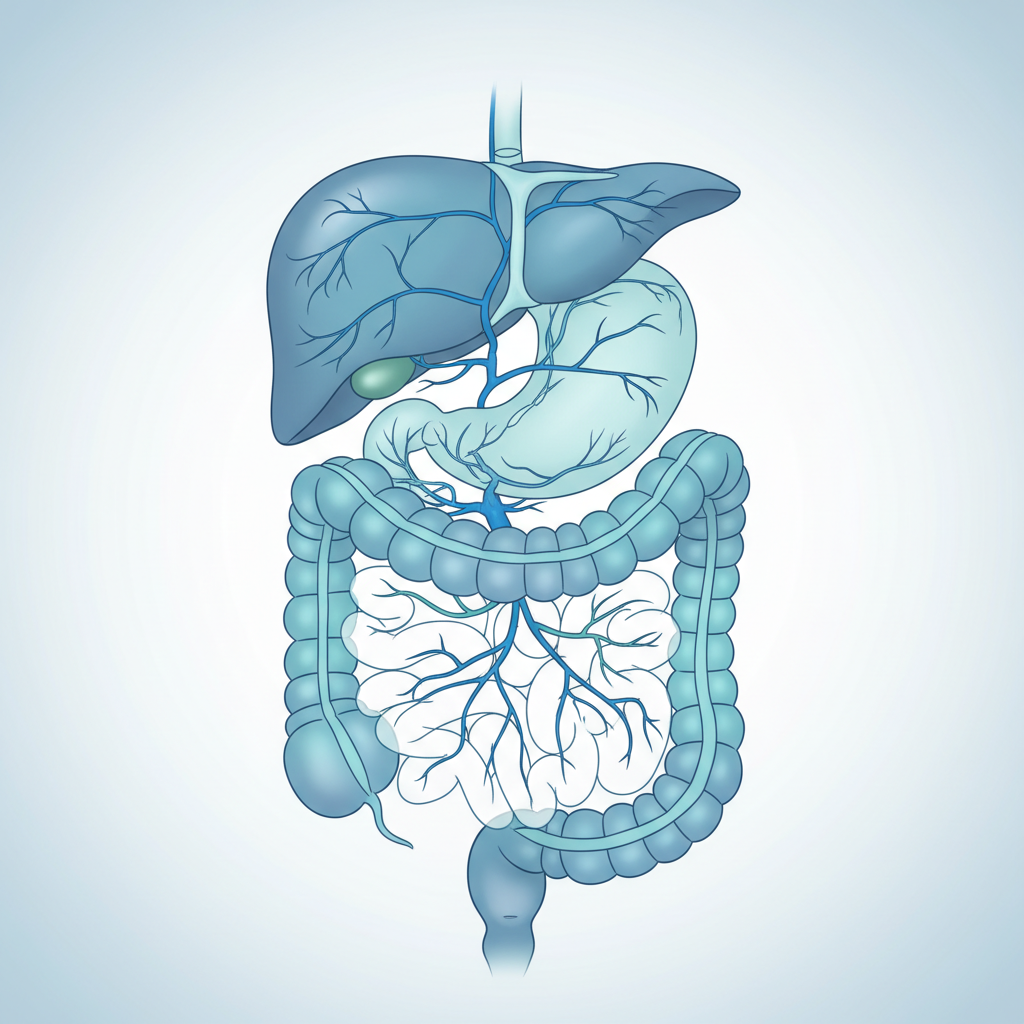
The entire digestive tract can be affected by cancer: the oesophagus, the stomach, the colon and rectum, the anal canal, the small bowel, and the peritoneal surfaces lining the abdomen.
The surgical philosophy here is function-first within curative boundaries. Sphincter-preserving rectal surgery instead of permanent colostomy whenever oncologically safe. Laparoscopic and robotic approaches where they genuinely help. D2 gastrectomy and complete mesocolic excision as standard, because the quality of lymph-node clearance is what makes these operations work.
Staging before surgery is non-negotiable — the right operation depends entirely on knowing depth, nodes and spread first.
Eight signals from the gut
Most will turn out to be acidity, piles or infection. The few that aren't make checking worth it — every single time.
- ①Difficulty swallowing — food seeming to catch on the way down.
- ②Persistent indigestion that no longer responds to routine treatment.
- ③Persistent vomiting, especially when new.
- ④Altered bowel habit lasting more than four weeks — new constipation or looseness.
- ⑤Blood in the stool, or black stools.
- ⑥Unexplained weight loss without dieting.
- ⑦Unexplained anaemia found on blood tests.
- ⑧An abdominal lump — anything new and persistent deserves imaging.
Cancers we treat in this region
◆Oesophagus
Food-pipe cancers staged endoscopically and resected through planned routes.
◆Stomach
Gastric cancer with D2 lymphadenectomy as the standard of clearance.
◆Colon
Hemicolectomies with complete mesocolic excision for proper nodal yield.
◆Rectum
Sphincter-preserving low anterior resection wherever margins allow.
◆Anal Canal & Small Bowel
Managed within combined pathways with radiation and medical oncology.
◆Peritoneal Surface Malignancy
Assessed and routed into HIPEC pathways where appropriate.
Operations performed here
- P·01OesophagectomyRemoval and reconstruction of the food pipe, route chosen per tumour height.
- P·02Gastrectomy — subtotal & total, with D2The lymph-node clearance standard that decides long-term outcome.
- P·03Right hemicolectomy with complete mesocolic excisionAnatomy-respecting colonic surgery with full nodal harvest.
- P·04Sphincter-preserving low anterior resectionThe rectal-cancer operation that lets most patients avoid a permanent bag; APR performed only when required.
- P·05Sigmoid colectomyTargeted segmental resection, laparoscopic where suitable.
- P·06HIPEC referral pathwaysPeritoneal disease assessed and coordinated into cytoreduction-plus-HIPEC care.
From suspicion to surveillance
Listen first
Symptoms and prior endoscopy reports reviewed personally.
Scope & stage
Endoscopy with biopsy, then CT/MRI — depth, nodes, spread mapped before decisions.
Honest plan
Sequencing agreed with medical/radiation oncology — sometimes chemo-radiation first.
Surgery
Keyhole where suitable; sphincter preserved wherever margins safely allow.
Recovery together
Early feeding protocols, physio, stoma training if one was unavoidable.
Life after
Nutrition guidance plus surveillance scoping on schedule.
Families usually ask…
In most rectal cancers today, no — sphincter-preserving surgery removes the tumour while keeping the natural passage, provided safe margins are achievable. When a temporary stoma is used for healing, reversal is usually planned. A permanent bag happens only when anatomy genuinely demands it, and you'll know before consenting.
Same cancer operation, smaller windows: less pain, fewer wound complications, faster return of bowel function and shorter stay. It's offered where evidence supports it — not everywhere suits keyhole, and we say so plainly.
Small frequent meals at first, guided by a structured nutrition plan from day one. Most patients settle into comfortable, satisfying eating patterns — the transition has a map, not guesswork.
Because the right operation depends on it: depth decides extent, nodes decide fields, spread decides sequence. Staging done properly is the difference between surgery once and surgery right.
Always — including diagrams of exactly which part is being removed and why. Family members are welcome in every discussion.