Clearing the cancer and honouring how you feel in the mirror afterwards.
Breast surgery has two measures of success: whether every cancer cell left, and whether you can look down months later and still feel like yourself. Oncoplastic technique exists precisely so you never have to choose between them.
Why oncoplastic breast surgery?
Older textbooks treated the breast as territory to clear. Modern practice treats it as part of the person. Oncoplastic technique means the operation is planned for cancer clearance and natural appearance at the same time — reshaping done as part of removal, not as an afterthought.
For most early cancers, conservation surgery (lumpectomy with oncoplastic reshaping) is as safe as mastectomy while keeping the breast. Where mastectomy is genuinely the wiser choice, skin-sparing and nipple-sparing approaches preserve as much of your natural form as oncology allows.
Rapid pathology means margins are checked during or immediately after surgery, so re-operation is the exception, not the routine. And if you are young and haven’t completed your family, fertility and family-planning conversations happen before treatment begins — not after decisions are locked.
Fear of losing a breast is real, and naming it out loud is the first step to a plan that respects it.
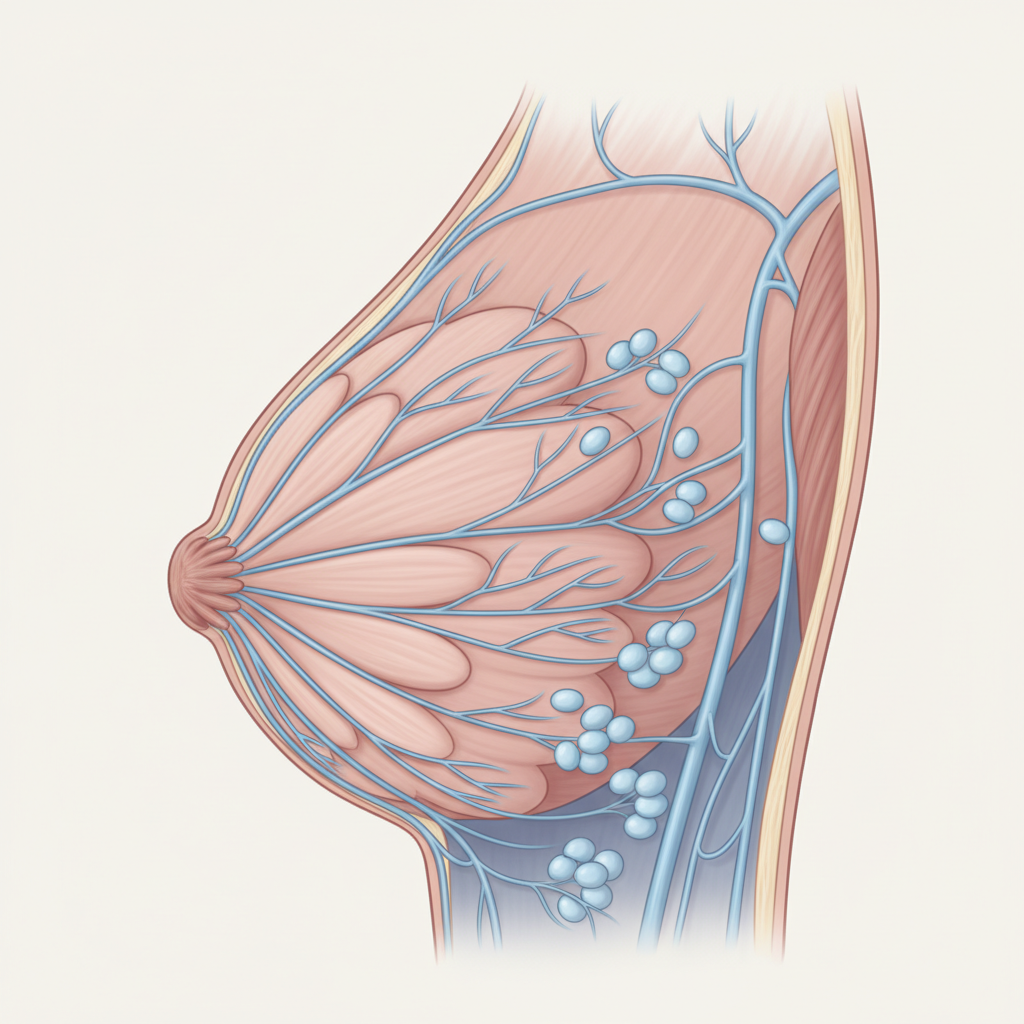
Warning signs that deserve a specialist’s eyes
Most breast changes are benign — but only examination can tell which ones. Any of these warrants assessment.
- ①A painless lump in the breast — lumps that don’t hurt get ignored longest.
- ②Skin dimpling that looks like orange peel over any part of the breast.
- ③Nipple retraction — a nipple newly pulled inward or pointing differently.
- ④Blood-stained discharge from the nipple.
- ⑤A change in size or shape of one breast that isn’t part of your normal cycle.
- ⑥New asymmetry between the breasts developing over weeks or months.
- ⑦A lump in the armpit, even when the breast itself feels normal.
- ⑧Any new change that simply doesn’t settle across a few weeks — bring it in, however small it seems.
Everything this service covers
From the first worrying lump to long-term follow-up — one coordinated pathway.
◆Breast Conservation
Lumpectomy with oncoplastic reshaping — clearing the cancer while preserving how the breast looks.
◆Mastectomy Options
Simple, skin-sparing and nipple-sparing procedures chosen on merit, with honest discussion of each.
◆Sentinel Node Biopsy
The keyhole answer to “has it spread?” — avoiding full armpit clearance when nodes are clear.
◆Axillary Dissection
Careful node clearance when cancer has reached them, protecting nerves and lymphatic drainage.
◆Benign Breast Lumps
Most lumps are not cancer. They still deserve proper imaging, answers — and tidy excision when needed.
◆Reconstruction Coordination
Planning with plastic-surgery colleagues so reconstruction is discussed from day one, never as a leftover question.
Operations performed here
- ✦Oncoplastic lumpectomyTumour removed with healthy margins; the defect closed by reshaping, so the breast keeps its contour.
- ✦Skin-sparing & nipple-sparing mastectomyWhen the whole breast must go, the outer form is preserved wherever oncology safely allows.
- ✦Sentinel lymph node biopsyDye-guided sampling of the first draining node — accurate staging through the smallest window.
- ✦Axillary dissectionFuller node clearance when involved, with nerve preservation to reduce arm swelling risk.
- ✦Benign lump excisionScar-conscious removal of non-cancerous lumps that cause worry or discomfort.
- ✦Rapid pathology & reconstruction planningMargins checked without delay; immediate or staged reconstruction arranged with specialist colleagues.
From first visit to full recovery
Listen & examine
Your history heard fully; clinical examination the same day where possible.
Triple assessment
Examination, imaging and biopsy read together — no decision on one test alone.
Honest plan
All options compared, including family-planning conversations for younger women.
Surgery
Conservation-first wherever safe; margins confirmed rapidly.
Adjuvant decisions
Radiation, chemotherapy or hormone therapy added only when they truly add years.
Life after
Surveillance schedule, arm-care guidance, and support back into full confidence.
Families usually ask…
For most early-stage cancers, yes — large studies show equal survival. The trade-off is radiation therapy after lumpectomy. When conservation isn’t suitable, we say so plainly and plan the best mastectomy approach instead.
It depends on size, grade, node status and receptor biology — not on habit. Some small cancers need none at all. Decisions follow your final pathology, discussed with medical oncologists, in language you understand.
Oncoplastic technique exists for exactly this goal. Many patients are surprised how natural the breast looks and feels after reshaped conservation — some even report better symmetry than before. Honest photos and expectations are shared before you decide.
After most conservation surgeries: one to two weeks. After mastectomy, or with reconstruction: three to six weeks depending on what you do. A written recovery timeline comes with your discharge summary.
Not automatically — but the conversation must happen before treatment starts. Fertility-preserving options and timing strategies exist, and counselling for young women is built into our pathway rather than bolted on later.