Curing the tumour while protecting every breath that comes after.
Lung surgery is judged decades later — by how well you breathe at sixty, seventy, eighty. That is why keyhole-first technique and lung-function preservation shape every plan here from the very first scan.
What does thoracic surgery cover?
Lung cancer in all its stages, plus mediastinal masses and thymoma, pleural disease including mesothelioma, and chest wall tumours. Each demands its own balance between clearing disease and preserving function.
The encouraging shift: most early lung cancers can now be removed through VATS keyhole surgery — small cuts, camera-guided precision, dramatically faster recovery than open operations of the past.
And one more thing: if you smoke, you will never be lectured here. Cessation support is part of the treatment, offered without judgment — because the goal is your next twenty years.
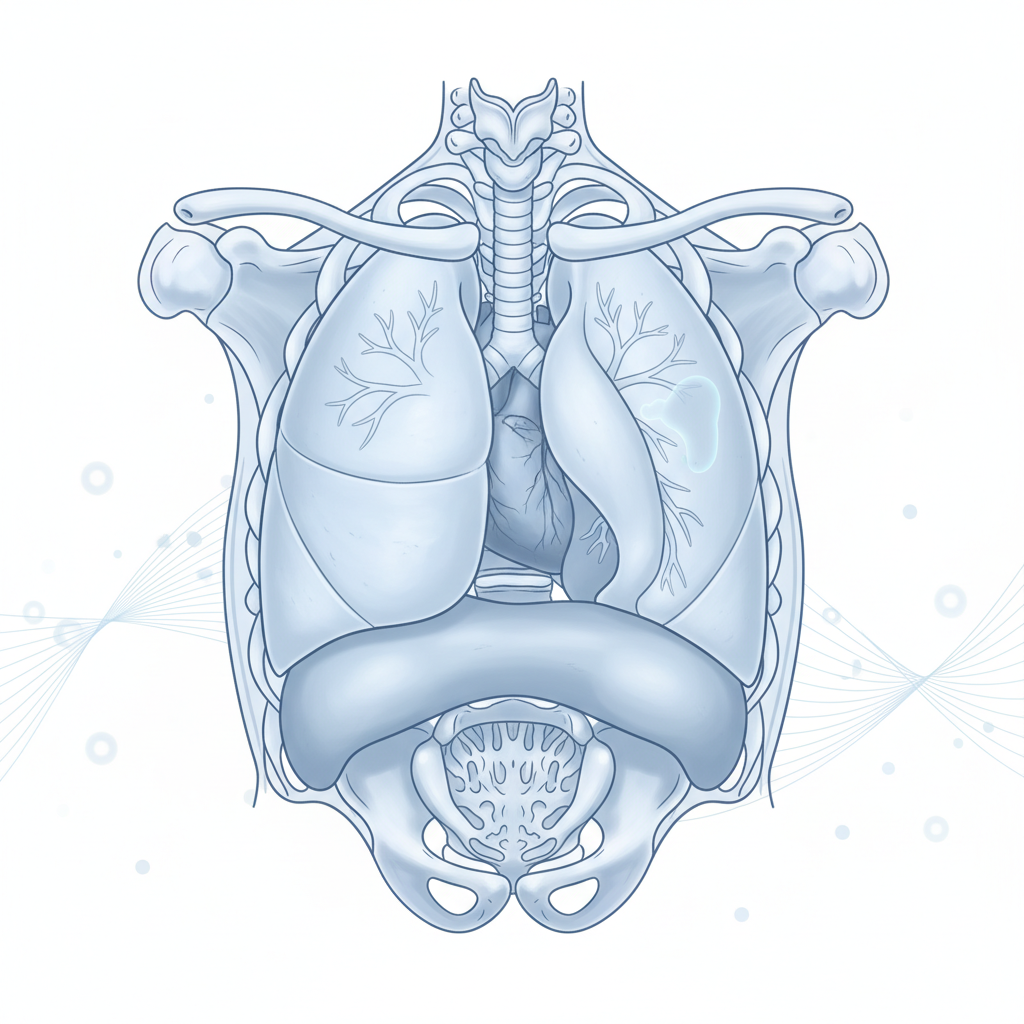
Warning signs lungs whisper first
Lungs rarely shout early. These quiet signals are exactly what a scan can settle quickly.
- ①A cough lasting more than three weeks, new or changed.
- ②Breathlessness that has changed — climbing the same stairs now costs more.
- ③Blood-streaked sputum, even once.
- ④Chest pain on one side, deep or persistent.
- ⑤Hoarseness arriving without any cold or shouting.
- ⑥Pneumonia returning on the same side — the same spot twice deserves a CT.
- ⑦Finger clubbing — nails curving over rounded fingertips.
- ⑧A long smoking history with any of these — worth checking today; you’ll never be judged here for yesterday.
Conditions we treat
◆Lung Cancer
From small nodules to advanced disease — staged properly, treated completely.
◆Mediastinal Masses & Thymoma
Tumours of the central chest removed with nerve and vessel protection.
◆Pleural Disease & Mesothelioma
Recurring fluid managed decisively with pleurodesis and biopsy pathways.
◆Chest Wall Tumours
Resection with reconstruction restoring both protection and appearance.
◆Sleeve Resections
Airway-preserving bronchoplasty — removing tumour while saving healthy lung.
◆Second Opinions
Scans read fresh before anyone commits you to an operation.
Operations performed here
- ◆VATS lobectomy & segmentectomyKeyhole removal of lobe or segment — less pain, quicker return of full breathing.
- ◆Open lobectomy & pneumonectomyPerformed when truly indicated — chosen by evidence, not by comfort zone.
- ◆Sleeve resectionsRebuilding the airway so more lung survives the operation.
- ◆Thymectomy & mass excisionMediastinal tumours removed with phrenic and recurrent nerves protected.
- ◆PleurodesisEnding the cycle of fluid re-accumulation and repeat drainings.
- ◆Chest wall resection & reconstructionRestoring structure where tumour has involved the framework itself.
From first visit to full recovery
Imaging review
CT and PET read carefully — nodules measured against their history.
Biopsy first
Tissue diagnosis guides everything that follows.
Lung-function testing
Your breathing reserve decides how much lung can safely go.
Tumour board plan
Oncology weighs in — sometimes therapy comes before surgery.
Surgery
Keyhole wherever possible, open when evidence insists.
Breathing recovery
Physiotherapy from day one, plus cessation support without judgment.
Families usually ask…
For suitable early cancers, keyhole VATS offers the same cancer clearance with less pain and faster recovery — it is our default consideration. Open surgery remains the right answer for some complex or advanced cases, and we say so plainly when it is.
Most patients return to normal daily activities after losing a lobe — the remaining lung expands and compensates, especially when pre-operative lung-function testing shaped the plan. What we protect deliberately is your reserve.
Almost always. Treating a shadow without tissue diagnosis risks the wrong operation entirely. The exceptions are rare and specific — and explained fully when they apply.
Nodal spread changes the sequence, not the commitment — often chemotherapy or immunotherapy comes first, then reassessment. Many node-positive patients still reach curative surgery after good responses.
No. Half of medicine would disappear if only perfect people needed it. Quitting support is simply part of your treatment here — offered whenever you want it, pushed never.