Treating the cancer completely — and honouring the person who carries it.
Breast surgery today does not force a choice between survival and self-image. Oncoplastic technique means every operation is planned for two outcomes at once: clear margins, and a natural result you can live happily with.
What does modern breast surgery mean?
It means conservation wherever safely possible: lumpectomy reshaped with oncoplastic technique so cancer clearance and natural appearance are planned together — never treated as competing goals.
Where mastectomy is the right call, options like skin-sparing and nipple-sparing techniques keep conversations about reconstruction open from day one, coordinated with plastic surgery colleagues.
The rule we hold to: rapid pathology reports, so your treatment plan moves at the speed of certainty — not of paperwork. And for young women, fertility and family planning counselling happens early, because those decisions belong to you.
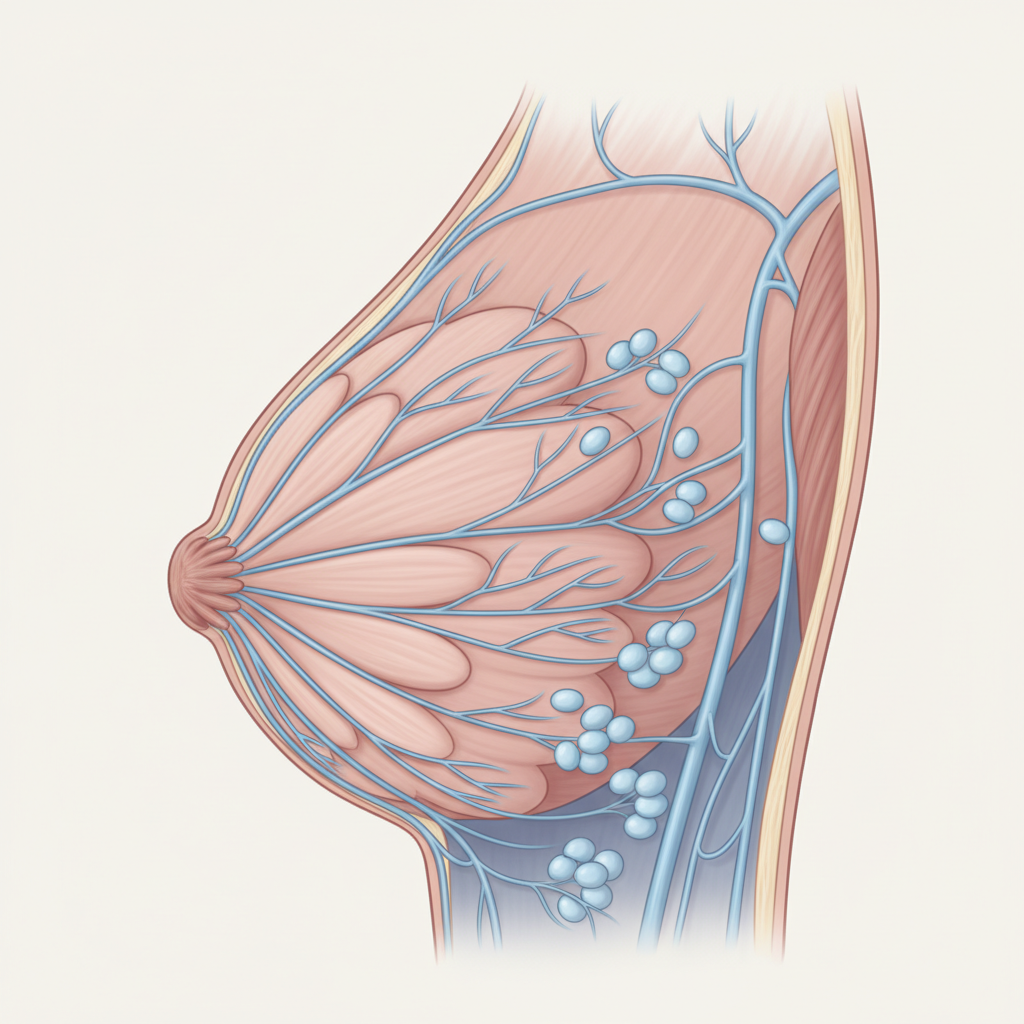
Warning signs worth an examination
Most will turn out innocent. The ones that aren’t are exactly why checking early matters — early breast cancers are the ones with the most options.
- ①A painless lump in the breast or armpit — often first noticed by accident while bathing.
- ②Skin dimpling, or an "orange peel" texture on the skin.
- ③Nipple retraction — a nipple pulling inward or pointing a new way.
- ④Blood-stained discharge from the nipple, on clothing or a pillow.
- ⑤A recent change in size of one breast compared with the other.
- ⑥A change in shape or contour visible when arms are raised.
- ⑦New asymmetry that wasn’t there before.
- ⑧An axillary (armpit) lump — nodes speak early; we listen.
Everything this specialty covers
◆Breast Conservation
Lumpectomy combined with oncoplasty — treating the cancer and preserving the natural form.
◆Mastectomy Spectrum
Simple, skin-sparing and nipple-sparing approaches chosen on tumour and anatomy, not habit.
◆Sentinel Node Biopsy
The first draining nodes mapped and tested — sparing the rest when they are clear.
◆Axillary Dissection
Performed precisely when nodal disease genuinely requires it.
◆Benign Lumps
Assessment, reassurance or removal — lumps without cancer deserve calm answers too.
◆Reconstruction Coordination
Planned alongside plastic surgery colleagues so decisions are made once, properly.
Principles behind every plan
- ◆Oncoplastic by defaultCancer clearance and natural appearance designed together, not negotiated afterwards.
- ◆Rapid pathology reportsMargins confirmed quickly, so the next decision never waits on paper.
- ◆Nodes respectedSentinel biopsy first; fuller dissection only when disease truly calls for it.
- ◆Fertility conversations earlyFamily planning counselling for young women happens before treatment starts — not after.
From first visit to full recovery
Examination & imaging
Clinical assessment with mammogram and ultrasound where needed.
Tissue diagnosis
Core biopsy gives answers before any treatment decision.
Tumour board review
Medical and radiation oncology shape the plan together.
Surgery
Conservation or mastectomy — chosen for your body and your stage.
Adjuvant therapy
Radiation or chemotherapy coordinated seamlessly if advised.
Surveillance
Scheduled reviews that catch anything early, when it’s still easy.
Women usually ask…
For many early cancers, yes — long-term survival is equivalent when conservation is combined with radiation. Suitability depends on tumour size relative to the breast and your preference. You get both sides honestly before deciding.
Not everyone. The decision follows pathology — tumour biology and nodal status — through a tumour board, never a fixed formula. Some small, favourable cancers need none at all.
Oncoplastic technique exists precisely for this: reshaping is part of the operation itself. Many women are surprised how natural conservation results look — and reconstruction options exist where mastectomy is needed.
Most women resume desk work within two to three weeks after conservation surgery; mastectomy plus reconstruction takes longer. Physiotherapy and drain care are explained day by day before discharge.
Most lumps at young ages are benign — but every new lump deserves an ultrasound and proper assessment rather than waiting. Getting checked costs little; peace of mind is worth it.