Less lung lost. More life kept. Keyhole-first.
You only get the lungs you were born with — so every gram of breathing reserve matters. Thoracic surgery here is keyhole-first by philosophy, lung-function preserving by design, and judgment-free about how you got here.
What is thoracic oncology?
This series covers lung cancer, thymoma and other mediastinal masses, pleural disease including mesothelioma, and chest wall tumours — everything that grows inside or on the cage you breathe with.
Lung surgery has a paradox at its centre: the operation that saves your life also removes breathing equipment. That's why technique matters more here than almost anywhere — VATS (video-assisted thoracoscopic surgery) achieves the same cancer clearance through small incisions instead of a large opening, protecting lung function and speeding recovery.
And a promise made explicit: whether you've smoked for forty years or never touched a cigarette, you will be treated with the same seriousness and the same respect. Smoking-cessation support is offered alongside treatment — without judgment, because the fight in front of us is the cancer.
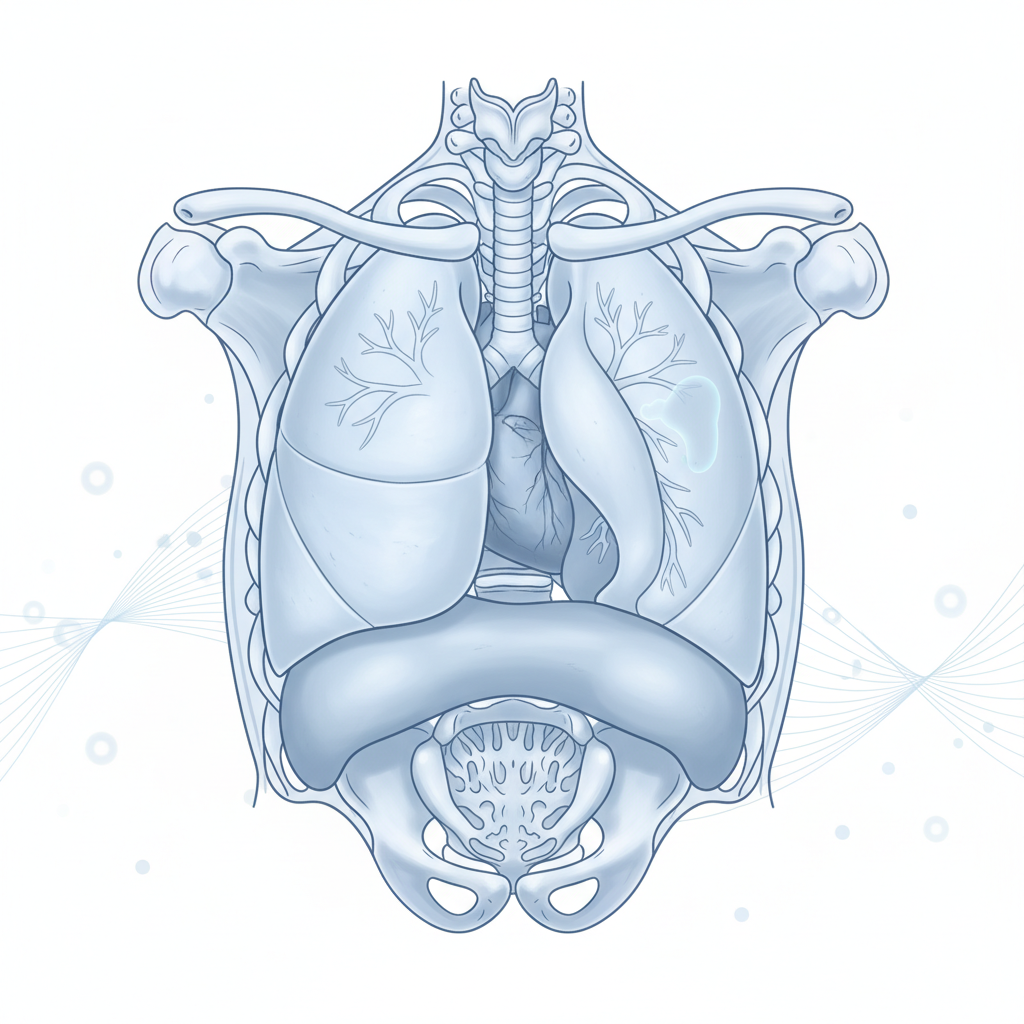
Eight signals from inside the chest
The lung is famously quiet until it isn't. These are the sounds worth listening for.
- ①A cough lasting more than three weeks, especially one that's new or changed character.
- ②Breathlessness that is new, or noticeably worse than your normal.
- ③Blood-streaked sputum — even once, even a single streak.
- ④Chest pain on one side that persists rather than coming and going with posture.
- ⑤Hoarseness of voice without cold or shouting to explain it.
- ⑥Recurrent pneumonia on the same side — infection that keeps returning to one address is a clue, not bad luck.
- ⑦Finger clubbing — nails curving over rounded fingertips; the body sometimes signs its own reports.
- ⑧A long smoking history plus any of the above — that combination deserves a scan this month, and zero lecturing when you arrive.
Conditions this series covers
▸Early Lung Cancer
Nodules and stage I–II disease where keyhole resection offers the best cure.
▸Locally Advanced Disease
Combined with chemo/radiation pathways; sleeve resections to avoid pneumonectomy.
▸Thymoma
Tumours of the thymus gland behind the breastbone, removed via thymectomy.
▸Mediastinal Masses
The space between the lungs hosts many structures — each mass worked up properly.
▸Pleural Disease
Mesothelioma and recurrent pleural collections managed with pleurodesis and more.
▸Chest Wall Tumours
Resection with reconstruction to keep both protection and appearance.
Operations performed here
- ▸VATS lobectomy & segmentectomyKeyhole removal of a lobe — or less, where less suffices — preserving maximal lung function.
- ▸Open lobectomy / pneumonectomyPerformed when indicated, honestly chosen rather than habitually avoided or reached for.
- ▸Sleeve resectionsAirway-preserving surgery that can save an entire lung from being removed.
- ▸Thymectomy & mediastinal mass excisionSafe removal from the crowded middle space of the chest.
- ▸PleurodesisStopping fluid repeatedly filling the pleural space — comfort as a surgical goal.
- ▸Chest wall resection & reconstructionRemoving tumour while rebuilding structure and contour.
From first visit to full recovery
CT & PET staging
The tumour mapped precisely — size, position, nodes, distant activity.
Tissue diagnosis
Biopsy before decisions; lung cancer has many types with different plans.
Lung function testing
Your breathing reserve measured, so surgery fits YOUR physiology.
Honest plan
Keyhole versus open discussed plainly — chosen for benefit, not fashion.
Surgery & chest physio
Precision resection with breathing rehabilitation starting early.
Support & surveillance
Smoking-cessation help without judgment, plus scheduled follow-up scans.
Families usually ask…
For most early lung cancers, VATS gives equal cancer outcomes with less pain and faster recovery — but "most" isn't "all". Tumour size, position and your lung function decide. You'll hear the honest recommendation for your case, not a slogan.
Lung function testing happens precisely so we remove only what you can comfortably spare. Most patients return to normal daily activities; segmentectomy exists specifically to protect those with tighter reserves.
In nearly all cases yes — different lung cancers behave completely differently, and treatment must match the actual enemy. Rarely, imaging alone decides; if so, you'll be told why.
It changes the sequence more than the destination: drug or radiation treatment often comes first, then surgery reassesses. Node-positive disease is harder — but "harder" and "hopeless" are different words, and staging tells us which applies.
No. You'll be treated like any patient — and offered cessation support alongside your cancer care, asked for nothing except honesty about what you use. The judgment stays outside the consultation room.