Clearing the cancer. Keeping the person. Both.
A breast cancer diagnosis arrives with two fears at once — for life, and for womanhood. Oncoplastic surgery refuses that trade-off: remove the cancer completely, and restore a natural appearance while doing it.
Why oncoplasty changes the story.
Breast surgery has two jobs that many people assume are opposites: cancer clearance and natural appearance. Oncoplastic technique exists precisely so you never have to choose between them — the tumour is removed with adequate margins, and the remaining tissue is reshaped in the same operation.
Not every breast needs a mastectomy, and not every lump needs one either. The honest conversation is about what YOUR tumour allows: conservation where it is safe, mastectomy options where it isn't — including skin-sparing and nipple-sparing approaches when appropriate.
Rapid pathology reports during surgery mean decisions aren't dragged across weeks. And for young women, fertility and family-planning counselling happens before treatment starts, not after choices are already locked in.
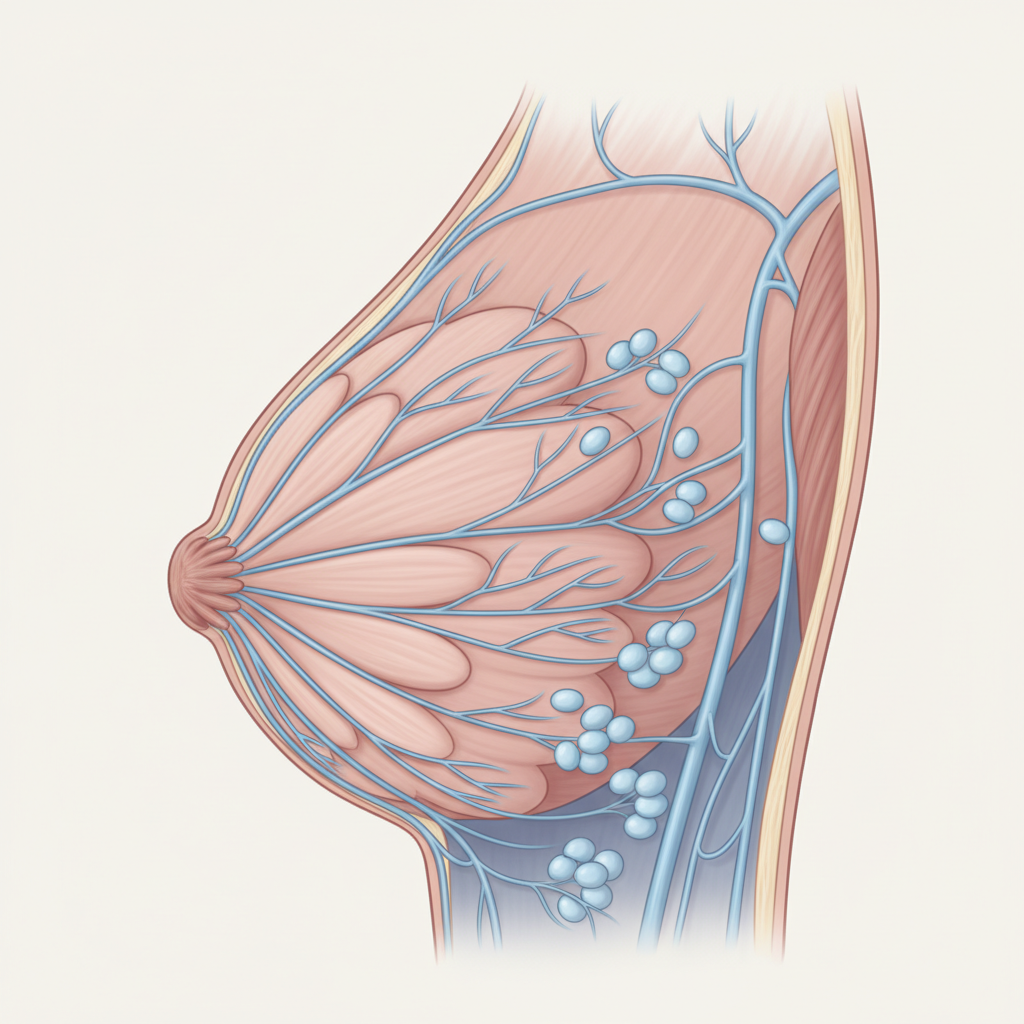
Eight signals nobody should sit on
Most turn out to be benign. But the only way to know is examination — and early is always easier.
- ①A painless lump in the breast — most breast cancers don't hurt; painlessness is exactly why they get ignored.
- ②Skin dimpling that looks like orange peel anywhere on the breast.
- ③Nipple retraction — the nipple turning inward or changing direction.
- ④Blood-stained discharge from the nipple, on clothing or on pressure.
- ⑤A change in the size of one breast without reason.
- ⑥A change in shape or contour, especially visible when arms are raised.
- ⑦New asymmetry between the breasts that wasn't there before.
- ⑧A lump in the armpit (axilla) — nodes live there too, and they count.
What this series covers
▸Breast Conservation
Lumpectomy combined with oncoplastic reshaping — treating cancer while honouring appearance.
▸Mastectomy Options
Simple, skin-sparing and nipple-sparing approaches, matched honestly to each situation.
▸Sentinel Node Biopsy
The first draining lymph node is tested before larger axillary surgery is ever considered.
▸Axillary Dissection
Performed when nodes are involved — no more, no less than the situation demands.
▸Benign Lumps
Not every lump is cancer — but every worrying one deserves a proper answer.
▸Reconstruction Coordination
Reconstruction planned alongside your cancer timeline, not as an afterthought.
Operations performed here
- ▸Lumpectomy with oncoplastic closureCancer clearance AND natural appearance — the defining principle of this approach.
- ▸Simple, skin-sparing & nipple-sparing mastectomyThe type is chosen by tumour biology and patient priority, discussed openly beforehand.
- ▸Sentinel lymph node biopsyAccurate nodal staging through the smallest possible surgery.
- ▸Axillary dissectionReserved for proven node involvement, done to modern standards.
- ▸Benign lump excisionComplete removal with a cosmetically considered incision.
- ▸Reconstruction coordinationTimed with your cancer treatment plan so neither step compromises the other.
From first visit to full recovery
Listen first
Your story heard personally — history, examination, existing reports reviewed.
Precise diagnosis
Imaging and biopsy coordinated properly before anything irreversible is decided.
Honest plan
Conservation versus mastectomy explained candidly — including fertility counselling for young women.
Surgery
Oncoplastic technique chosen for THIS patient, with rapid pathology guiding the operation.
Recover together
Daily rounds, physiotherapy, nutrition and family updates throughout.
Life after
Surveillance plan, survivorship goals, and follow-up that actually follows up.
Families usually ask…
For suitable tumours, yes — survival outcomes are equivalent when conservation is followed by the recommended radiotherapy. The decision depends on tumour size relative to breast size, its biology, and your preference after full discussion.
Not everyone does — it depends on stage, grade and receptor reports, not habit. Where chemotherapy comes first can even shrink a tumour enough to make conservation possible. We explain exactly which category applies to you.
Oncoplastic technique exists for this exact purpose — clearing the cancer while reshaping for natural appearance. As one survivor put it: "I regained full confidence. His oncoplastic approach preserved so much."
Most women return to desk work within two to three weeks after conservation surgery; mastectomy recovery takes somewhat longer. You'll receive an honest, written expectation before consenting.
Fertility and family-planning counselling is part of the process for young women here, before treatment decisions are made — so options can be protected rather than regretted later.