Keyhole-first surgery that protects every breath you keep.
Chest surgery is judged by what remains: how well you breathe afterwards. That is why lung operations here default to VATS — small cuts, preserved function, and support for quitting without judgment.
What is thoracic oncology?
It covers cancers of the lung, masses in the mediastinum (the space between the lungs, home of the thymus), disease of the pleura — the lining around the lung — and tumours of the chest wall. Each demands its own approach; all share one priority: removing the disease while keeping breathing as normal as possible.
The quiet revolution here is VATS — video-assisted thoracoscopic surgery. Instead of opening the chest, lobes are removed through small incisions using a camera. Less pain, faster recovery, and often better tolerance of the chemotherapy that sometimes follows.
A lung can also be resected partially rather than entirely when margins allow — segmentectomy preserves more function for those whose lungs have already given years to smoke or illness.
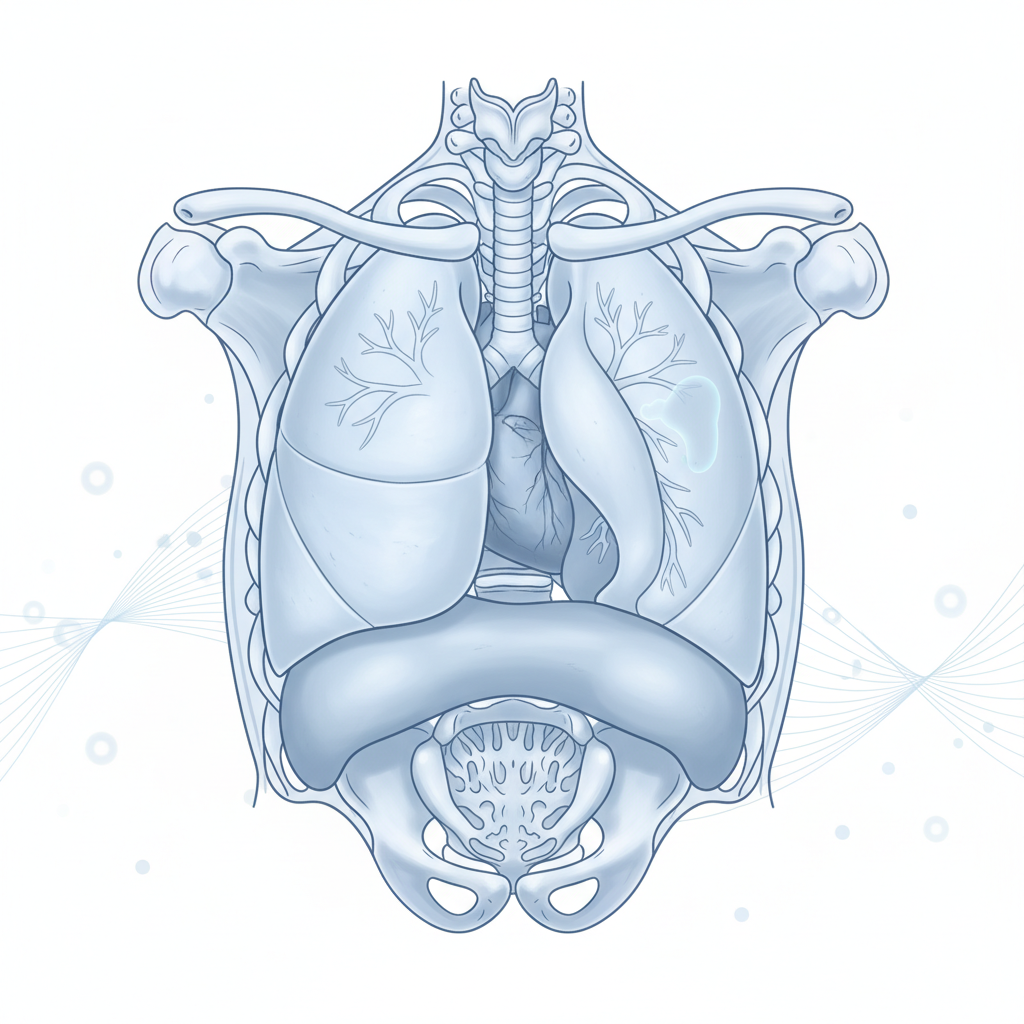
Eight signs worth a chest specialist's time
Especially over forty, especially with a smoking history — but none of these require one to be taken seriously.
- ①A cough lasting beyond three weeks, new or changed in character.
- ②Blood-streaked sputum, even once, even a faint tinge.
- ③New breathlessness on exertion that wasn't there last year.
- ④Breathlessness gradually worsening despite treatment.
- ⑤Chest pain confined to one side, persistent and unexplained.
- ⑥Hoarseness of the voice lasting weeks without cold or strain.
- ⑦Pneumonia recurring in the same area of the lung — twice is a pattern.
- ⑧Finger clubbing — fingertips widening, nails curving like watch glass.
Conditions treated in the chest
◆Lung Cancer
Lobectomy or segmentectomy planned around your remaining lung reserve.
◆Thymoma & Thymic Masses
Thymectomy for tumours of the thymus, often linked with myasthenia care.
◆Other Mediastinal Masses
Excision of growths between the lungs, approached safely through keyhole where suitable.
◆Pleural Disease & Mesothelioma
Diagnosis and control of disease on the lung's lining.
◆Recurrent Pleural Effusion
Pleurodesis so fluid stops returning to steal your breath.
◆Chest Wall Tumours
Resection with reconstruction to restore both protection and form.
Operations performed here
- ◆VATS lobectomy & segmentectomyKeyhole removal of lobe or segment — less pain, quicker return to normal life.
- ◆Open lobectomy / pneumonectomyWhen anatomy or extent truly calls for it, done properly and without apology.
- ◆Sleeve resectionsTumours removed while rebuilding the airway — saving lung that older methods would have sacrificed.
- ◆Thymectomy & mediastinal mass excisionGrowth between the lungs removed with careful nerve and vessel protection.
- ◆PleurodesisStopping recurrent chest fluid so breathing stays easy.
- ◆Chest wall resection & reconstructionDefects rebuilt for both safety and appearance.
From first visit to full recovery
CT review & examination
Scans studied personally; questions answered before any test is ordered.
Biopsy & staging
Tissue diagnosis first, PET/staging scans next — no blind operations.
Lung function testing
Your reserve measured so the operation fits the lung you actually have.
Surgery — keyhole-first
VATS chosen wherever safe; open only when genuinely indicated.
Recovery & chest physio
Early mobilisation and breathing exercises from day one.
Surveillance scans
Structured reviews catch anything early — and celebrate clean ones.
Families usually ask…
For most early lung cancers, VATS achieves the same cancer clearance with less pain and faster recovery — which is why it is the default consideration here. Open surgery remains the right answer for certain larger or centrally placed tumours; the choice follows your scans, not fashion.
This is exactly why lung-function tests come before any decision. Most people live normally after losing a lobe; the remaining lung expands and adapts. Where reserve is already limited, smaller segmental resections are preferred precisely to protect your breathing.
Nearly always. Operating on an undiagnosed spot risks either under- or over-treating. The rare exceptions are discussed openly when they arise. Tissue truth first — then surgery.
Node involvement changes the sequence, not the fight: treatment usually starts with medication or radiation, and surgery joins when it adds real benefit. Staging exists precisely so this decision is made correctly the first time.
No. You will be treated — and offered genuine quitting support alongside your care, because stopping helps healing and outcomes at any point. No lectures, just help when you want it.