Clearing the cancer and honouring the person — both, at once.
Breast surgery is no longer a choice between survival and self-image. Oncoplastic technique treats the cancer while preserving a natural appearance — with honest counselling at every step.
A lump is a question, not a verdict.
Most breast changes are benign — but every new lump deserves an answer. When it does turn out to be cancer, stage decides strategy: many early breast cancers are treated with conservation surgery, removing the tumour with clear margins while keeping the breast.
The oncoplastic approach exists so that cancer clearance and natural appearance are not competing goals. The tumour is removed completely; what remains is reshaped so the result looks like you.
Rapid pathology reports mean decisions about further treatment are made on facts, quickly — not on guesswork or long anxious waits.
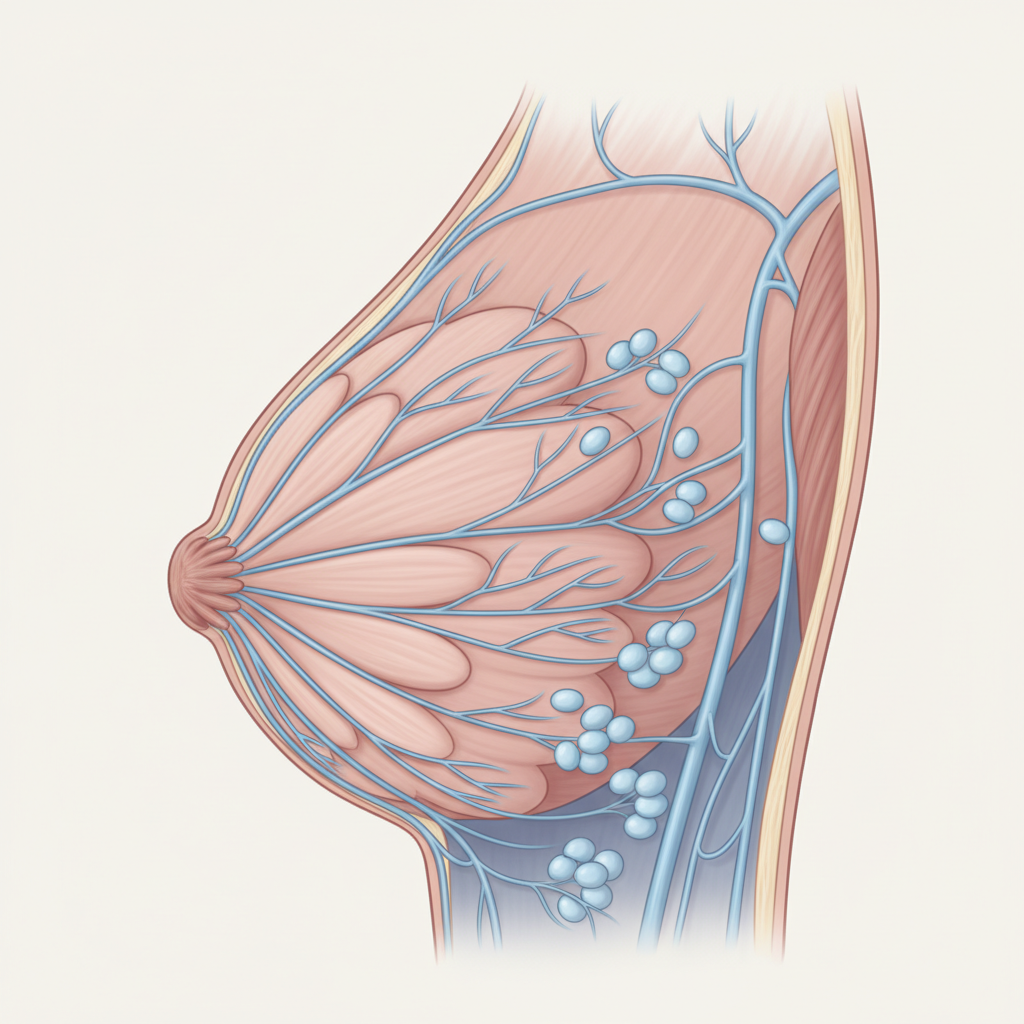
Eight changes worth showing a specialist
None of these automatically means cancer. All of them deserve to be looked at properly — most turn out harmless.
- ①A painless lump in the breast — the most common reason cancers are found.
- ②Skin dimpling that looks like orange peel over part of the breast.
- ③Nipple retraction — a nipple newly turning inward.
- ④Blood-stained nipple discharge from a single duct.
- ⑤A change in size of one breast, recent and unexplained.
- ⑥A change in shape or contour visible when arms are raised.
- ⑦New asymmetry between the breasts that has developed over months.
- ⑧A lump in the armpit (axilla), even when the breast itself feels normal.
What this practice covers
◆Breast Conservation
Lumpectomy combined with oncoplasty — cancer clearance with a preserved, natural shape.
◆Mastectomy Options
Simple, skin-sparing and nipple-sparing procedures matched to tumour and preference.
◆Sentinel Node Biopsy
The first lymph node checked accurately — often sparing the rest from full dissection.
◆Axillary Dissection
When nodes do need clearing, done with attention to arm function and lymphoedema risk.
◆Benign Lumps
Lumps without cancer operated only when needed — reassurance is also a valid outcome.
◆Reconstruction Coordination
Planned alongside reconstructive colleagues where a woman chooses it.
How surgery works here
- ◆Breast conservation surgeryLumpectomy plus oncoplastic reshaping — the cancer cleared and the appearance honoured together.
- ◆Mastectomy — simple, skin-sparing, nipple-sparingThe least extensive option that is still safe for your particular tumour.
- ◆Sentinel lymph node biopsyAxillary surgery limited to what pathology proves necessary.
- ◆Axillary dissectionFull node clearance performed when indicated, with function preservation.
- ◆Benign lump surgeryMinimal excision of non-cancerous lumps causing worry or symptoms.
- ◆Fertility & family planning counsellingBuilt into care for young women before treatment choices are locked in.
From first visit to full recovery
Clinical examination
An unhurried hands-on assessment, with imaging coordinated immediately.
Triple assessment
Examination, imaging and biopsy agreeing before any plan is made.
Honest plan
Conservation versus mastectomy explained plainly, including reconstruction options.
Surgery
Oncoplastic technique chosen for clearance and appearance alike.
Pathology & next steps
Rapid reports decide whether anything more is needed — usually within days.
Surveillance
Structured follow-up so recurrence, if ever, is caught early.
Families usually ask…
For many early tumours, yes — survival outcomes are comparable when conservation removes the cancer fully and radiation follows as planned. The decision depends on your tumour's size relative to the breast, its biology and your preference. Both options are laid out honestly.
Not always — it depends on stage, node status and tumour biology. Pathology after surgery guides this precisely. What we promise is a straight answer based on evidence, and coordination with medical oncology if it is needed.
Oncoplasty was invented for exactly this reason. By reshaping the remaining tissue at the time of lumpectomy, most women keep a natural silhouette. Patients regularly tell us they feel like themselves again — that outcome is designed, not left to chance.
After conservation surgery, most women resume desk work within two to three weeks; mastectomy recovery takes somewhat longer. You get a written recovery expectation before consenting.
This deserves a conversation before treatment starts, not after. Fertility and family planning counselling is part of the plan here — options exist to protect fertility during chemotherapy, and they are discussed early.