Keyhole-first surgery that protects every remaining breath.
Lung surgery has one extra duty: whatever we remove must leave you breathing well for decades. VATS keyhole technique, careful nodal staging and honest talk about smoking — all without judgment.
What is thoracic oncology?
Thoracic oncology covers cancers of the lung, the mediastinum (the central compartment holding the thymus and nodes), the pleura lining the chest cavity, and the chest wall itself.
The philosophy here is keyhole-first: most anatomical lung resections are done by VATS (video-assisted thoracoscopic surgery) — two small cuts instead of a large incision, less pain, faster return of full breathing.
The encouraging truth: a lung cancer found as a single nodule and removed properly can be a complete cure. The tragedy is only when shadows on X-rays are watched until they are no longer small.
“If you smoke, you’ll get help quitting here — never a lecture.”
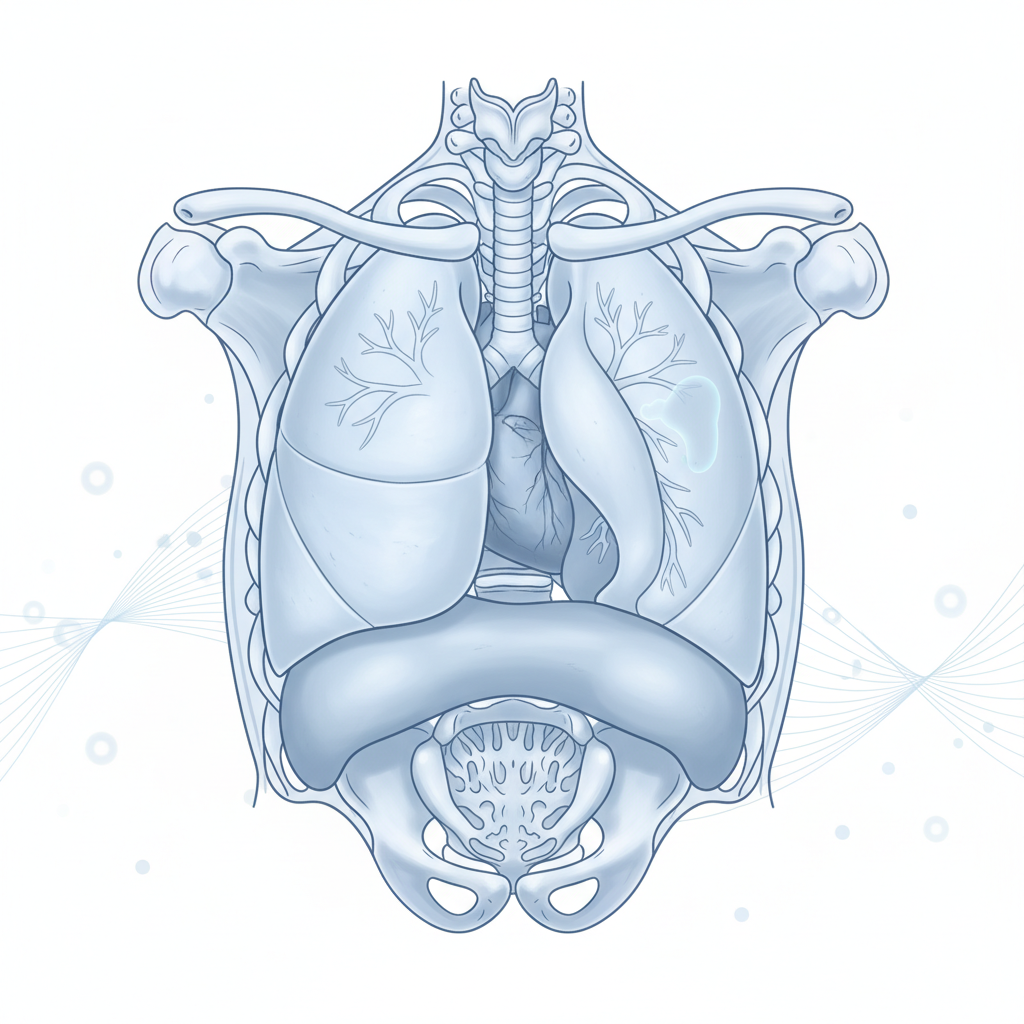
Warning signs that deserve a specialist’s eyes
Especially over age 40, or with long smoking history — but none of these rules anyone out.
- ①Cough lasting more than three weeks, new or changed.
- ②Breathlessness that changes — less tolerance than last season.
- ③Blood-streaked sputum, even once.
- ④Chest pain on one side, constant or recurring in the same spot.
- ⑤New hoarseness beyond three weeks.
- ⑥Recurrent pneumonia on the same side — an obstructing tumour is a classic hidden cause.
- ⑦Finger clubbing — nail beds rounding and fingertips widening.
- ⑧A shadow on a routine X-ray — never just watch it; get it characterised.
Cancers we treat in this region
◆Early Lung Cancer
Nodules and stage I–II disease — VATS lobectomy or segmentectomy with rapid recovery.
◆Locally Advanced Lung Cancer
Sleeve resections and angioplasty techniques that spare more lung than classic surgery allows.
◆Mediastinal Masses
Thymoma and germ-cell tumours approached through the right corridor with multidisciplinary cover.
◆Myasthenia & Thymectomy
Gland removal that often improves myasthenia symptoms alongside tumour control.
◆Pleural Disease
Mesothelioma and recurrent effusions — pleurectomy or talc pleurodesis chosen honestly.
◆Chest Wall Tumours
En-bloc resection with mesh/titanium reconstruction restoring both protection and appearance.
Operations performed here
- ◆VATS lobectomy & segmentectomyKeyhole anatomic resection — the default where anatomy and stage allow.
- ◆Open & sleeve resectionsWhen airways demand reconstruction, or exposure truly serves safety.
- ◆Systematic nodal dissectionStaging done properly at the time of surgery — it directs everything after.
- ◆ThymectomyVATS or sternotomy per anatomy, with neurology co-management.
- ◆Pleural proceduresPleurectomy and pleurodesis for mesothelioma and recurring fluid.
- ◆Chest wall resection & reconstructionComposite defects rebuilt with prosthetic material for stable, comfortable chests.
From first visit to full recovery
CT-PET staging
Whole-body mapping so surgery happens for the right patients.
Tissue diagnosis
Biopsy by the least invasive adequate route before resection.
Lung function testing
PFTs predict how much lung can safely go — measured, not guessed.
Tumour board sequencing
Chemo or radiation first when it shrinks disease or improves cure.
Surgery
VATS keyhole wherever suitable; chest drain out early, walking by day one.
Breathing rehabilitation
Incentive spirometry, physio and cessation support — then surveillance scans.
Families usually ask…
For most early lung cancers, VATS keyhole offers equal cancer outcomes with less pain and faster recovery — it is our default. Open surgery remains essential for complex anatomy, sleeve reconstructions and some advanced cases; the choice is made on evidence from your scans, not preference.
The remaining lung expands and the other side compensates remarkably. Patients with reasonable pre-op lung function usually walk stairs comfortably within months. This is exactly why we test function BEFORE committing to how much lung to remove.
Almost always — treating a suspicion instead of a diagnosis risks removing lung unnecessarily or operating for the wrong disease. Exceptions exist (highly suspicious PET-positive masses), and we explain them when they apply.
Nodal spread changes sequence rather than ending hope: many node-positive lung cancers are treated with chemo/radiation first (sometimes immunotherapy), with surgery afterwards in selected cases. Proper staging tells us which story is yours.
No. You will get the same urgent, thorough care as anyone — plus genuine help quitting if you want it, because quitting improves surgical outcomes and second-cancer risk. Guilt is not medicine; support is.