Cancer clearance and the woman you are — surgery that refuses to choose between them.
Breast cancer treatment has changed. With oncoplastic technique, rapid pathology and honest counselling, most women today keep both their lives and their reflection.
What is breast cancer care here?
A breast lump is not a diagnosis — it is a question. Every lump gets a structured answer: examination, imaging and a core biopsy read by specialists, before anyone uses the word cancer.
When it IS cancer, the modern approach is oncoplastic surgery: removing the tumour completely while reshaping the breast so the result still looks and feels natural. For larger or multifocal tumours, skin-sparing and nipple-sparing mastectomy with reconstruction coordination keeps options open.
The encouraging truth: early breast cancer treated properly has excellent cure rates — and conservation, where suitable, does not compromise them.
“You will make every decision with clear information — never out of fear.”
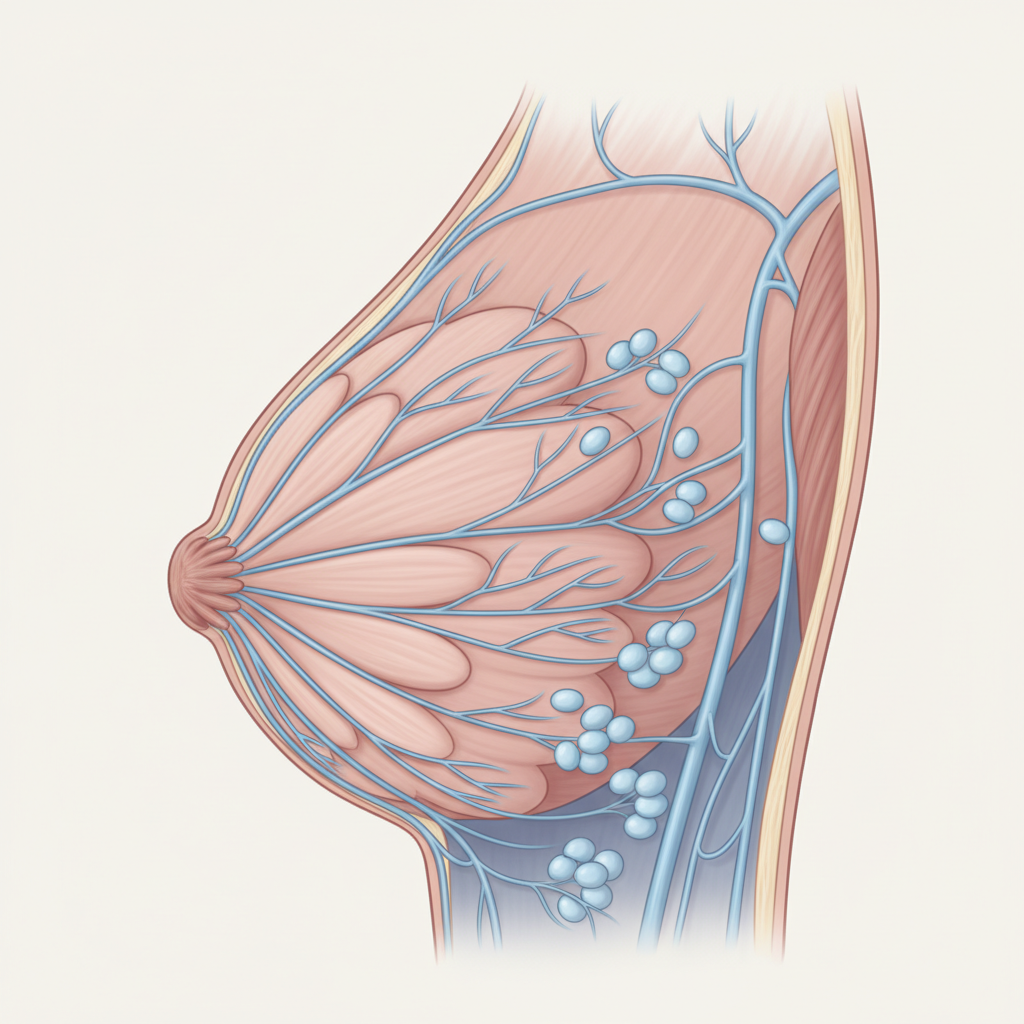
Warning signs that deserve a specialist’s eyes
Most breast changes are benign. But any of these deserves a proper examination — especially after age 40, or with family history.
- ①A painless lump in the breast or armpit — the commonest first sign, and the one people wait longest on.
- ②Skin dimpling — an “orange peel” texture on the breast skin.
- ③Nipple retraction — a nipple newly pulled inward or changing direction.
- ④Blood-stained discharge from the nipple, single duct or spontaneous.
- ⑤Change in size of one breast, new or progressive.
- ⑥Change in shape or contour — visible only in certain positions.
- ⑦New asymmetry between the breasts without weight-change explanation.
- ⑧An axillary (armpit) lump, even when breast examination feels normal.
Everything from a benign lump to complex reconstruction planning
◆Breast Conservation
Lumpectomy with oncoplastic reshaping — cancer clearance AND natural appearance.
◆Mastectomy Options
Simple, skin-sparing and nipple-sparing approaches chosen for your tumour and wishes.
◆Sentinel Node Biopsy
The modern standard — axillary surgery only when nodes truly need treating.
◆Axillary Dissection
Complete nodal clearance when pathology demands it, with arm-care protocols.
◆Benign Lumps
Fibroadenomas, cysts and worries — assessed honestly, removed only when needed.
◆Reconstruction Coordination
Planned with plastic-surgery colleagues — implant or tissue-based pathways discussed upfront.
What makes treatment here different
- ◆Oncoplastic technique as defaultVolume displacement and reshaping planned before the first incision — not improvised after.
- ◆Rapid pathology reportsMargins and nodes reported fast, so adjuvant decisions aren’t left waiting.
- ◆Fertility & family planning counsellingYoung women get egg/embryo preservation and timing conversations before chemo starts.
- ◆Sentinel node-first philosophyFull axillary dissection reserved for when nodes are genuinely involved.
- ◆Reconstruction coordinationImplant or autologous pathways planned with microvascular colleagues where chosen.
- ◆Lymphoedema preventionArm exercises, skin care and monitoring taught from day one after axillary surgery.
From first visit to full recovery
Clinical examination & imaging
Mammogram and ultrasound the same week wherever possible.
Core biopsy
Tissue diagnosis before treatment — no surgery on assumption.
Multidisciplinary plan
Medical and radiation oncology review the case together with us.
Surgery
Conservation or mastectomy — with margins checked and shape preserved.
Adjuvant therapy
Radiation, chemotherapy or hormonal therapy sequenced without delay.
Survivorship
Regular surveillance, lymphoedema watch, and back-to-life goals.
Families usually ask…
For suitably sized tumours, yes — long-term survival studies show equal outcomes between well-conducted lumpectomy plus radiation and mastectomy. The decision depends on tumour-to-breast size, multifocality and your preference, all explained plainly.
Not always. It depends on stage, grade, hormone receptors and node status. Modern genomic tests can spare many women chemotherapy entirely — we discuss exactly what YOUR numbers say.
In most conservation cases, remarkably close to normal — that’s the whole point of oncoplasty. After mastectomy, reconstruction offers several paths; photographs of real outcomes are shown during consultation so expectations are honest.
After conservation surgery, most women return to desk work in 2–3 weeks; after mastectomy or reconstruction, plan for 4–6 weeks. Drainage tubes usually come out within the first week.
It changes the conversation, not the quality of options. Fertility preservation before chemotherapy, conservation-friendly surgical choices and pregnancy-after-treatment planning are all discussed upfront — at no extra consultation charge of time.