Removing the cancer while preserving the parts of life that matter quietly.
Urological cancer surgery is measured not just in clear margins but in what continues working afterwards — kidney units saved, continence kept, confidence intact. These outcomes are planned before the first cut.
What are urological cancers?
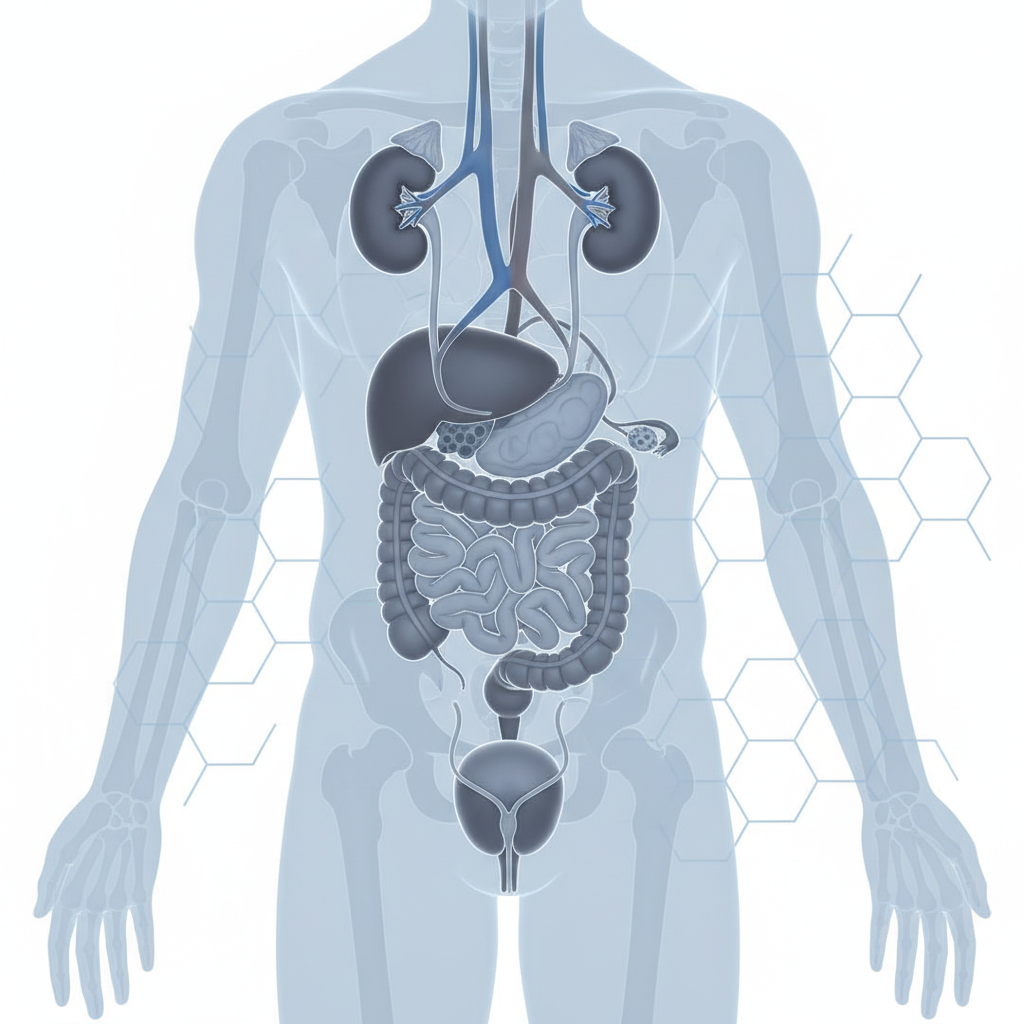
This field covers the kidney, bladder, prostate, testis, penis and adrenal glands. Each behaves differently — testicular cancer is among the most curable of all cancers, while small kidney tumours sometimes need watching rather than operating.
The encouraging truth: modern techniques mean a kidney tumour often needs only partial removal, keeping the rest of that kidney working. Robotic and laparoscopic approaches make recovery faster across this whole field.
An honesty note: some small prostate and kidney cancers are best watched with scheduled reviews, not operated. Recommending surveillance when it is right is part of good surgery, not a failure of it.
Warning signs that deserve review
Most causes will be benign — but each sign below earns proper examination, because the ones that aren't benign are exactly why we check.
- ①Blood in urine — even once, even painless — is never dismissed as age or heat until examined.
- ②A change in urinary flow, frequency or burning that persists beyond a few weeks.
- ③A testicular lump or heaviness — checked the same week; early testicular cancer cures at very high rates.
- ④Bone pain together with urinary symptoms — worth connecting the dots properly.
- ⑤Swelling of both legs, new and unexplained, especially alongside urinary change.
- ⑥Fatigue plus urinary changes together — anaemia from silent blood loss deserves exclusion.
- ⑦An unexplained lump in the groin lasting beyond three weeks.
- ⑧Rising PSA on repeated tests — a trend deserves interpretation by a specialist, not alarm by internet.
Cancers we treat here
◆Kidney
Partial nephrectomy to preserve the organ wherever safely possible; radical removal when required.
◆Bladder
From camera-based tumour removal to full reconstruction decisions made openly with you.
◆Prostate
Nerve-sparing radical surgery selected against honest criteria — including active surveillance when right.
◆Testis
Among the most curable cancers; coordinated chemo-surgery pathways for advanced disease.
◆Penile
Tissue-preserving approaches where oncologically safe, dignity maintained throughout.
◆Adrenal
Functional and malignant adrenal masses assessed jointly with endocrinology.
Operations performed here
- ◆Radical & partial nephrectomyKidney-unit preservation prioritised; the healthy remainder keeps filtering.
- ◆Robotic & laparoscopic approachesFALS-trained keyhole technique across this whole field for faster recovery.
- ◆TURBT for bladder tumoursCamera-based removal through natural passages — no external cut.
- ◆Radical cystectomy with reconstructionIleal conduit or neobladder — chosen with you after honest comparison.
- ◆Radical prostatectomy — nerve-sparingContinence and potency preservation built into technique where anatomy allows.
- ◆RPLND & orchiectomy for testis cancerCoordinated with chemotherapy timing for the best long-term results.
From first visit to full recovery
Examination & imaging
Ultrasound, CT or MRI mapping exactly what we are treating.
Tissue diagnosis where needed
Biopsy or markers obtained without unnecessary delay.
Tumour board plan
Including the option of active surveillance when evidence supports it.
Surgery
Keyhole-first approach with preservation goals stated beforehand.
Function rehabilitation
Pelvic-floor training and support for continence and confidence.
Surveillance
Blood tests and scans scheduled to catch anything early.
Families usually ask…
Yes — one healthy kidney handles filtration comfortably for a lifetime. This is precisely why partial nephrectomy matters: keeping kidney tissue today protects you decades ahead. Blood pressure and hydration get routine attention afterwards.
Both give excellent cancer control; they differ in daily life. A neobladder means passing urine more naturally but requires training and night-time discipline; a conduit is simpler and predictable. We compare honestly against your health, fitness and preference — no default pushing either way.
The two that worry men most — urinary control and erections — depend heavily on nerve-sparing technique and your starting baseline. Most men regain continence within months; erectile function recovers gradually where nerves were preserved. Rehabilitation starts early and expectations are set honestly before consenting.
Often fertility continues unchanged, especially caught early. Where chemotherapy or radiation enters the plan, sperm banking beforehand is arranged as standard practice. Many fathers have had children after full treatment — this cancer rarely takes that future away.
No — many small renal masses grow slowly or barely at all, particularly in older patients. Active surveillance with scheduled scans is legitimate, evidence-based medicine. We assess size, growth and your overall picture, then recommend operate-or-watch with reasons, not reflexes.