Keyhole-first from food pipe to rectum — with the bag as a last resort, never a default.
GI cancer surgery is precision work on organs you use every day. The goal is always the same: complete cancer removal, digestive function preserved, and a stoma avoided wherever safely possible.
What are GI cancers?
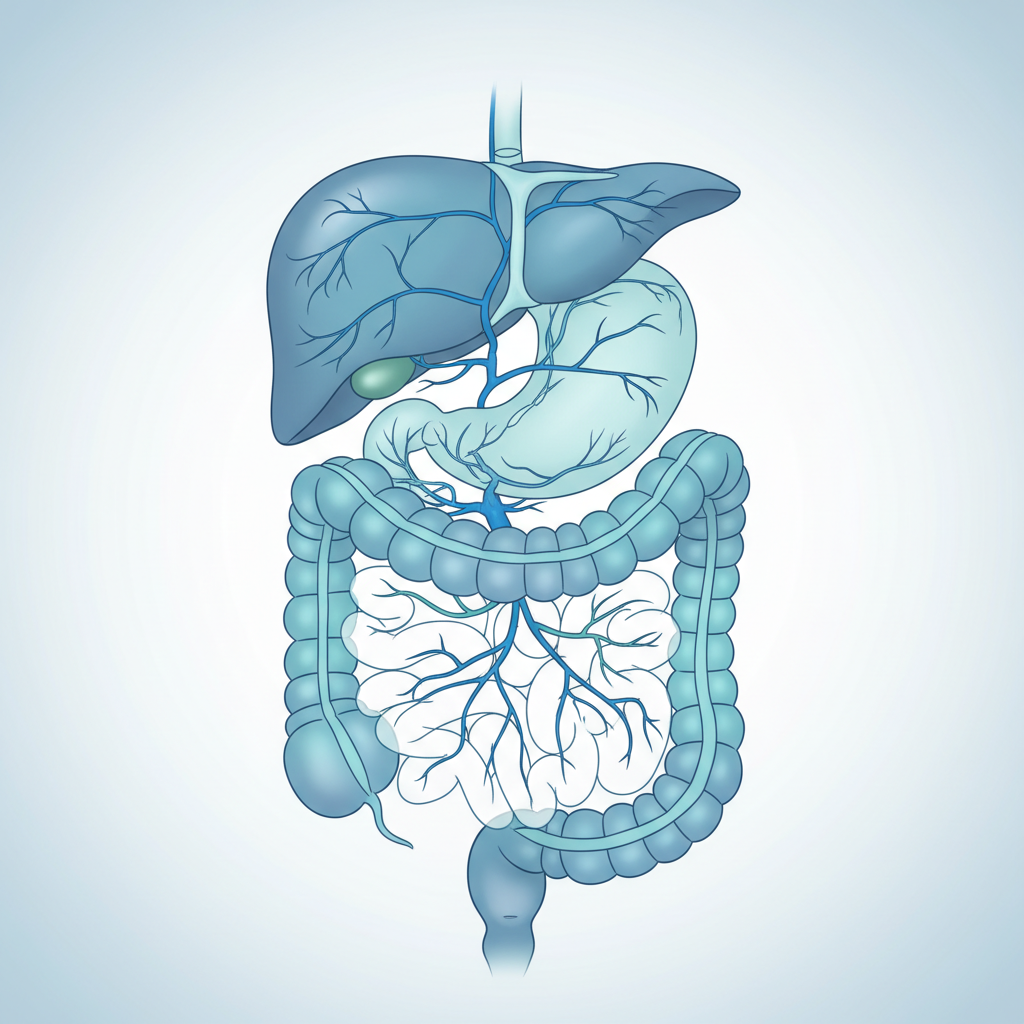
Gastrointestinal cancers arise along the digestive tract — oesophagus, stomach, colon, rectum, anal canal and small bowel, plus peritoneal surface malignancies. They are among the commonest cancers in Gujarat, and among the most treatable when staged properly.
The encouraging truth: surgery for these cancers has transformed. Keyhole techniques mean smaller cuts, less pain, faster recovery of bowel function, and quicker return to chemotherapy when it is needed.
The rectal cancer note: with modern low anterior resection techniques and honest pre-treatment planning, permanent colostomy is needed far less often than patients fear.
Warning signs that deserve investigation
Symptoms like these persisting beyond four weeks deserve proper staging — most causes turn out treatable, and the ones that aren't are exactly why we check early.
- ①Difficulty swallowing — food feeling held up behind the chest bone.
- ②Persistent indigestion or vomiting, especially new after age forty-five.
- ③Altered bowel habit beyond four weeks — new constipation, looseness, or narrowing of stool.
- ④Blood in stool or black stools — never assume haemorrhoids without an examination.
- ⑤Unexplained weight loss — kilos dropping without dieting or effort.
- ⑥Unexplained anaemia — low haemoglobin found on routine tests deserves its source found.
- ⑦An abdominal lump — any mass you or your doctor can feel needs imaging now.
- ⑧A family history of bowel cancer — screening should start earlier than standard advice suggests.
Cancers we treat along the tract
◆Oesophagus
Cancer of the food pipe, including junction tumours — approached keyhole where anatomy allows.
◆Stomach
Gastric cancers with D2 lymph node clearance as the quality benchmark.
◆Colon
Right and left colon cancers with complete mesocolic excision for better outcomes.
◆Rectum
Sphincter-preserving low anterior resection; APR only when genuinely required.
◆Anal Canal & Small Bowel
Coordinated combined-modality treatment and resections for these less common sites.
◆Peritoneal Surface Malignancy
Assessment and HIPEC referral pathways for spread lining the abdominal cavity.
Operations performed here
- ◆OesophagectomyRemoval and reconstruction of the food pipe, laparoscopic-assisted where suitable.
- ◆Gastrectomy — subtotal & totalD2 nodal clearance performed as standard, not as an upgrade.
- ◆HemicolectomiesRight and left, with complete mesocolic excision for oncological quality.
- ◆Sphincter-preserving rectal resectionLow anterior resection planned so the natural passage is kept whenever safely possible.
- ◆APR when requiredHonest about the times it truly is needed — and skilled at doing it well when so.
- ◆Laparoscopic & robotic approachesFALS-trained keyhole technique; stoma avoidance prioritised throughout.
From first visit to full recovery
Endoscopy & biopsy
The tumour seen directly and sampled correctly the first time.
Staging scans
CECT, MRI or PET mapping the exact extent before any decision.
Tumour board plan
Chemo-first or radiation-first sequences chosen when they improve outcomes.
Surgery
Keyhole-first resection with margins verified by pathology.
Recovery & nutrition
Enhanced-recovery protocols; dietitian involvement from day one.
Surveillance
Scopes and scans scheduled to catch recurrence early, when options remain many.
Families usually ask…
In most cases, no — modern sphincter-preserving techniques keep the natural passage for the majority of rectal cancer patients. When a temporary stoma is used to protect a healing join, reversal is usually planned within months. Permanent stomas are recommended only when genuinely necessary, and we explain why plainly if so.
Smaller cuts mean less pain, fewer wound complications, earlier bowel recovery, shorter hospital stay, and quicker return to chemotherapy when needed. The cancer operation itself is governed by the same principles either way — the keyhole part is about your recovery.
Small frequent meals replace three large ones, and a dietitian plans the transition step by step. Most patients return to comfortable normal weight and eating habits over months, with guidance all along the way.
Because the right operation depends entirely on the stage. Operating first on a cancer that needed chemotherapy first can compromise the whole plan. Proper staging is the difference between treating the disease and guessing at it.
Feeling well is common even with significant GI cancers — symptoms often arrive late. Treatment planned while you feel strong goes better in every dimension. We move quickly but never so fast that staging is incomplete.