Treating the cancer and honouring the person — oncoplastic breast surgery.
A breast cancer diagnosis arrives with fear of losing more than health. Modern oncoplastic technique means cancer clearance and natural appearance are partners, not trade-offs — with fertility and family planning respected along the way.
What is breast cancer surgery today?
Gone are the days when breast cancer automatically meant losing the breast. Today, for most early cancers, a lumpectomy with oncoplastic reshaping gives survival equal to mastectomy while keeping the breast's natural form.
Where mastectomy is genuinely needed, skin-sparing and nipple-sparing techniques, followed by reconstruction, preserve appearance and identity. Sentinel lymph node biopsy means many women avoid full armpit clearance and its side effects entirely.
The encouraging truth: breast cancer found early is among the most treatable of all cancers — but treatment must be planned by someone who does this every day.
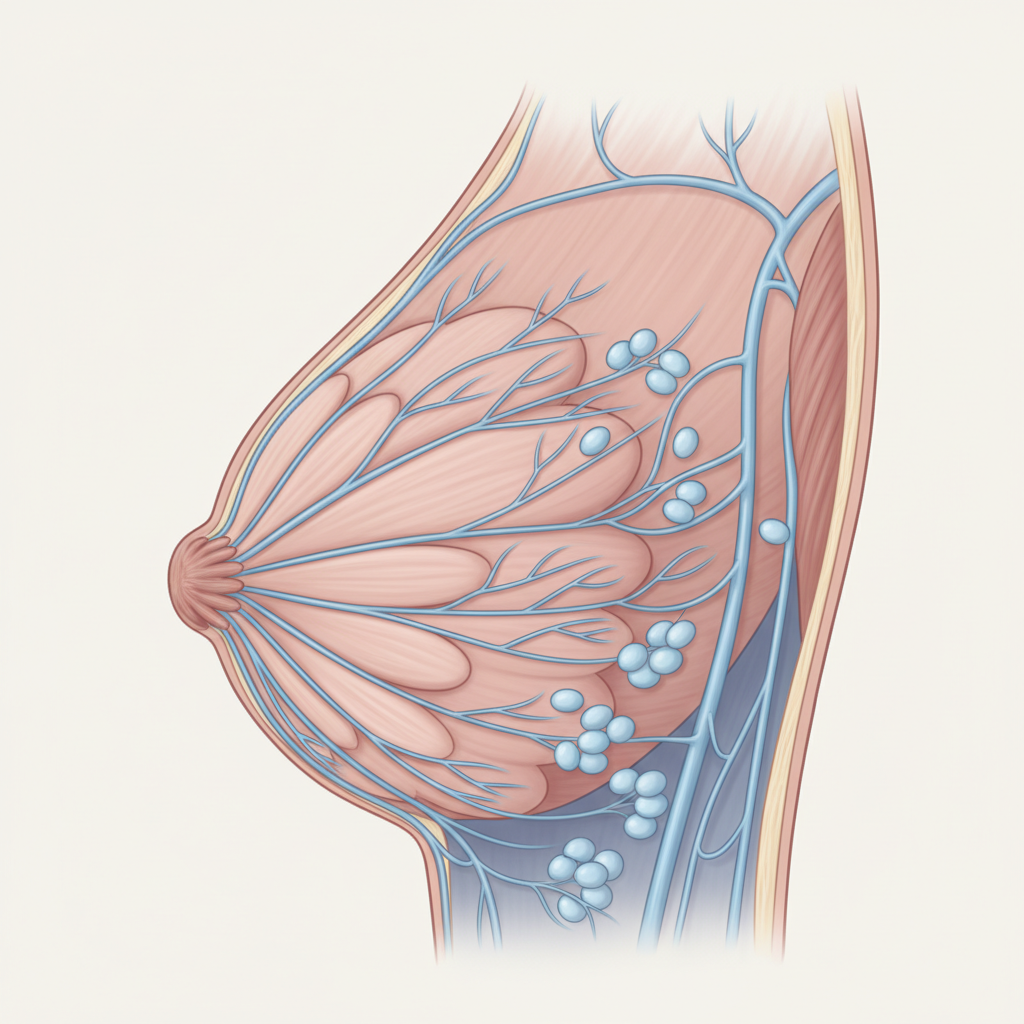
Warning signs that deserve examination
Most breast changes are not cancer — but every one below deserves a specialist's eyes, especially beyond the age of forty.
- ①A painless lump in the breast — the commonest first sign, and the one most often ignored because it doesn't hurt.
- ②Skin dimpling — an orange-peel look or skin pulling inward over any part of the breast.
- ③Nipple retraction — a nipple turning inward or changing direction.
- ④Blood-stained discharge from the nipple, single duct or single side.
- ⑤A change in size or shape of either breast, recent and unexplained.
- ⑥New asymmetry between the breasts that was never there before.
- ⑦An axillary lump — swelling or lumps in the armpit.
- ⑧Any new change persisting beyond two weeks — worth a specialist's examination regardless of what it turns out to be.
What we treat & offer here
◆Breast Conservation Surgery
Lumpectomy with oncoplastic reshaping — equal survival to mastectomy for suitable cancers, with natural appearance kept.
◆Mastectomy — All Types
Simple, skin-sparing and nipple-sparing options chosen for the right reasons, never out of habit.
◆Sentinel Lymph Node Biopsy
The first draining node tested — avoiding full armpit clearance when it isn't needed.
◆Axillary Dissection
When nodes are involved, thorough clearance with attention to arm function and lymphoedema prevention.
◆Benign Breast Lumps
Most lumps are benign — they still deserve proper assessment, tidy removal where needed, and reassurance.
◆Reconstruction Coordination
Planned alongside plastic surgery colleagues so appearance decisions happen before the first cut.
What makes treatment here different
- ◆Oncoplastic technique as defaultCancer clearance AND natural appearance planned together in one operation.
- ◆Rapid pathology reportsMargins confirmed during or immediately after surgery — fewer surprises, fewer returns to theatre.
- ◆Fertility counselling for young womenEgg preservation and family-planning conversations happen before treatment starts, not after.
- ◆Honest staging before promisesScans completed first, so the plan you hear is built on facts.
- ◆Chemo-first when it helpsSome cancers shrink before surgery, turning a big operation into a smaller one.
- ◆Lifetime surveillance planMammograms, examinations and support scheduled years ahead.
From first visit to full recovery
Triple assessment
Examination, imaging and biopsy together give a complete picture fast.
Staging scans
Confirming exactly what we are treating before plans are made.
Tumour board review
Medical and radiation oncology shape the sequence with us.
Surgery
Oncoplastic conservation or mastectomy — decided with you, not for you.
Adjuvant therapy
Radiotherapy, chemotherapy or hormone tablets exactly as pathology dictates.
Survivorship
Surveillance, arm care, and back-to-life goals on a written schedule.
Families usually ask…
For suitable tumours, long-term survival is equal. Conservation adds radiotherapy afterwards; mastectomy may be advised for larger tumours, multifocal disease, or patient preference. Both are discussed openly with numbers, not slogans.
Depends on stage, grade and receptor status — many small hormone-positive cancers avoid it entirely. Where chemotherapy helps, it is sometimes given first to shrink the tumour and widen surgical options.
Oncoplastic techniques exist precisely for this — reshaping at the time of lumpectomy so the treated breast keeps its form. With reconstruction after mastectomy, most women return to clothing and activities without feeling marked.
Desk work: often 2–3 weeks after conservation surgery. Mastectomy or reconstruction: typically 4–6 weeks. A written recovery timeline comes with your discharge summary.
No — but it changes sequencing. Egg or embryo preservation before chemotherapy, and fertility-preserving discussions before surgery, are part of our standard counselling for young patients, not an extra favour.