Taking out the tumour while guarding every remaining breath.
The chest holds the machinery of living — lungs that never rest, an airway that never clocks off. Surgery here is measured twice: remove the cancer completely, and preserve as much breathing capacity as oncology allows. Keyhole-first is the philosophy; judgement decides when.
What is thoracic cancer?
Thoracic oncology covers cancers inside the chest: lung cancer itself, masses of the mediastinum (the central compartment including the thymus), disease of the pleural lining such as mesothelioma, and tumours of the chest wall. Lung cancer remains the most common — and the most preventable-to-treat gap closes every year it is caught early.
The quiet revolution in this field is VATS — video-assisted thoracoscopic surgery. Through a few small cuts between the ribs, a full lobectomy can be completed without spreading the ribs wide. Less pain, fewer breathing complications, quicker discharge — and equal cancer outcomes for suitable tumours. Here, keyhole is the starting question, not the upgrade package.
Fear of breathlessness keeps many people away longer than fear of cancer does. The truth is reassuring: lung reserve is generous, and with pre-operative lung-function testing plus techniques like segmentectomy and sleeve resection, surgery removes only what it must.
And to be said once, clearly: this is a judgment-free consultation room. Smoking history changes risk calculations, not our regard for you. Support to quit is offered as part of treatment, gently and repeatedly.
“You will not be lectured here. You will be helped.”
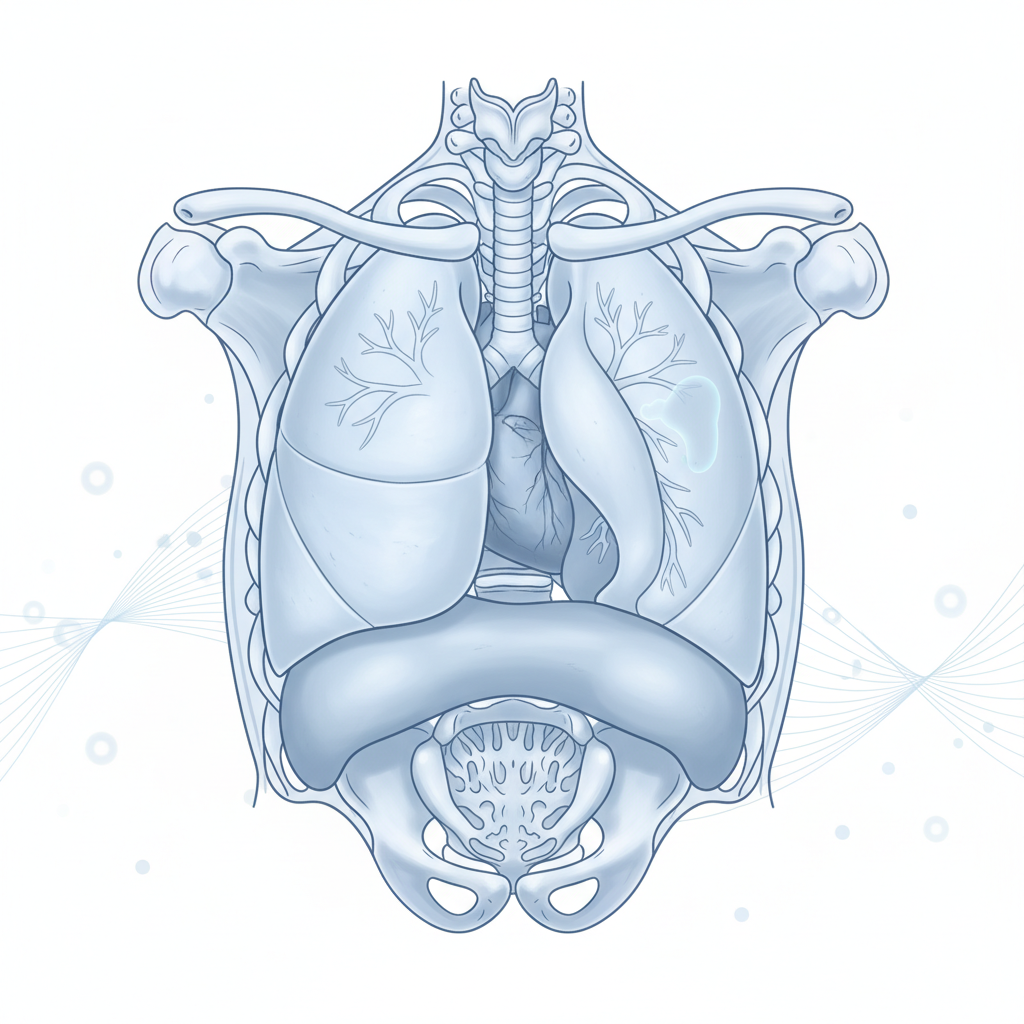
Chest signals that deserve a specialist’s eyes
A cough is usually just a cough. These patterns are different — and each one is worth a proper examination and imaging.
- ①A cough persisting beyond three weeks, new or changed in character.
- ②Breathlessness that has changed — climbing stairs you used to manage easily.
- ③Blood-streaked sputum, even a single fleck, even once.
- ④Chest pain on one side, persistent or worse with deep breaths.
- ⑤Hoarseness of voice without cold or strain to explain it.
- ⑥Pneumonia recurring in the same spot — infection returning where a tumour blocks the airway.
- ⑦Finger clubbing — nails curving over enlarged fingertips, a subtle classic sign.
- ⑧An abnormal shadow on a routine chest X-ray — even with no symptoms at all, it deserves expert review.
Conditions we treat inside the chest
◆Early Lung Cancer
Small tumours and nodules — segmentectomy preserves the maximum of healthy lung.
◆Locally Advanced Lung Cancer
Lobectomy or sleeve resection after board-planned sequencing with chemotherapy or radiation.
◆Mediastinal Masses & Thymoma
Central compartment tumours removed with anaesthesia planning around airway safety.
◆Pleural Disease & Mesothelioma
Diagnosis, fluid control with pleurodesis, and coordinated multimodal care.
◆Chest Wall Tumours
Resection with reconstruction restoring both protection and appearance.
◆Support to Quit Smoking
Offered within every consultation — practical help, repeated kindly, never preached.
Operations performed here
- ◆VATS lobectomy & segmentectomyKeyhole removal of lobe or lung segment through small incisions — less pain, faster recovery, equal cure for suitable cancers.
- ◆Open lobectomy & pneumonectomyChosen decisively when anatomy demands it — the bigger operation done properly, not avoided until forced.
- ◆Sleeve resectionsTumour taken from the airway while healthy lung is kept — the airway rebuilt and joined back.
- ◆ThymectomyThymoma removal through minimally invasive routes wherever anatomy allows.
- ◆Mediastinal mass excisionPlanned jointly with the anaesthesia team so airway and great vessels stay protected throughout.
- ◆Pleurodesis & chest wall resection-reconstructionRecurrent fluid settled definitively; wall defects rebuilt for safety and symmetry.
From first visit to full recovery
CT & PET characterisation
The nodule or mass studied properly — size, density, metabolism, spread.
Tissue diagnosis
Biopsy through the safest route; rarely, imaging alone is conclusive enough to act.
Lung function testing
Breathing capacity measured so the operation fits the person, not just the tumour.
Board plan
Chemotherapy or radiation before surgery when it improves the odds — sequence agreed together.
Surgery, keyhole first
The smallest effective operation; open conversion only when safer.
Chest physio & surveillance
Breathing exercises from day one; scheduled scans guard the years ahead.
Families usually ask…
For suitable tumours, VATS achieves the same cancer outcomes as open surgery with less pain and faster discharge. Open surgery remains the right choice for larger or centrally placed tumours, or when anatomy demands it. You’ll get a specific recommendation with reasons, shown on your own scans.
Most people do. Lung reserve is generous, and lung-function tests beforehand confirm there’s a safe margin. Segmentectomy goes further, removing only the involved portion where possible. Quitting smoking around surgery multiplies these gains — support comes included.
Usually yes — treating tissue diagnosis as fact prevents operations done on suspicion alone. Occasionally imaging is characteristic enough that waiting for biopsy adds more risk than acting. When that rare situation applies, it will be explained openly rather than rushed.
Node involvement changes the plan, not necessarily the possibility. Staging tells us which nodes, how far — and modern combined treatment (chemotherapy or radiation first) allows surgery in selected node-positive cases with good results. Each option is weighed honestly against its evidence.
Yes — for early lung cancer, surgery offers the best chance of cure regardless of smoking history, and fitness for operation is assessed individually, not assumed. This practice treats smoking as a medical history, not a moral one. Come as you are.